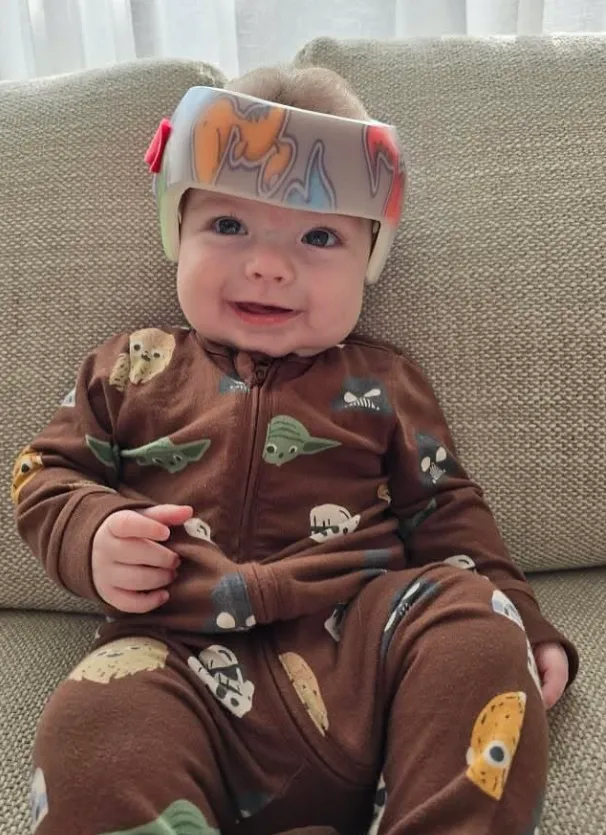
This is Teddy — a bright, gentle little boy whose life began with excitement, hope, and all the dreams new parents carry into the delivery room. He was born via a planned C-section, perfect and peaceful in his mother’s arms. For three days, everything felt normal. Everything felt safe. His parents admired his tiny fingers, his soft cheeks, and the way he curled into them as if he had always belonged there.
But on day three, life shifted.
During a routine checkup, the paediatrician came in to examine him. Teddy’s dad, Alex, playfully joked, “Thank goodness he doesn’t have a head like mine,” referencing his own history with craniosynostosis. What was meant to be a lighthearted remark quickly turned serious when the paediatrician replied, “Let’s do some ultrasounds on his head, just to be sure.”
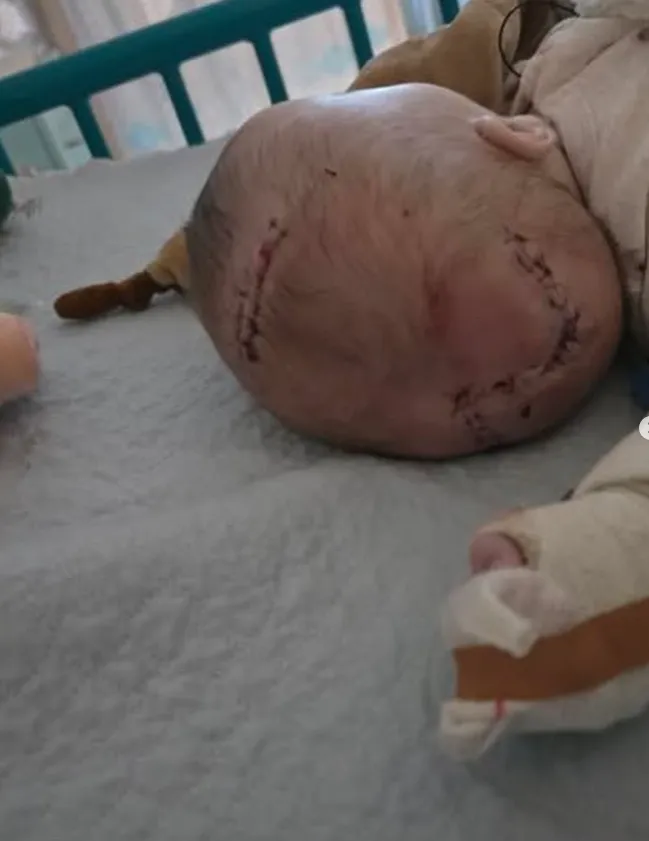
No parent expects the world to change in a single sentence. But for Teddy’s family, that moment marked the beginning of a journey filled with fear, uncertainty, and an unimaginable depth of love.
One morning, without warning, five doctors, nurses, and midwives walked into their hospital room. Their faces were calm but serious. Their voices gentle but heavy.
They had found sagittal craniosynostosis.
The words blurred together — “Royal Children’s Hospital,” “surgery,” “specialists.” Teddy’s mother remembers feeling as if the room had shrunk around her. Her mind raced with questions: Would they take her baby away immediately? How severe was it? What did this mean for Teddy’s future? The fear was overwhelming, and sharing the news with family was nearly impossible. How do you explain something you barely understand yourself?
In the days that followed, Teddy’s diagnosis became a constant weight on their hearts. Sagittal craniosynostosis meant that the bones in his skull had fused too early, restricting brain growth and requiring surgery to reshape and protect his developing head. For his parents, the idea of their tiny newborn needing surgery — real surgery, with anesthesia, scalpels, and risks — felt unbearable.
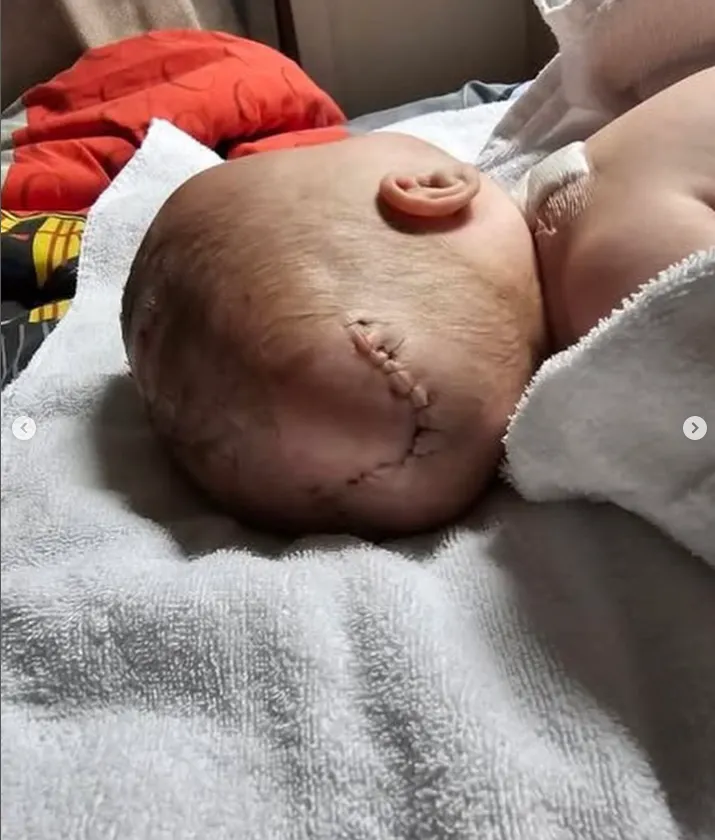
Teddy’s operation was scheduled for the 21st of August, 2024.
In the months leading up to it, Teddy went through more medical testing than some adults face in a lifetime. Scans. MRIs. Blood tests. 3D photographs of his skull. Eye examinations. Each appointment was another reminder of what awaited him — and what awaited his parents. They tried to stay strong, but the fear never left. A three-month-old should be learning to smile, not preparing for major cranial surgery.
When the day finally arrived, Teddy’s mother felt like her heart was splitting in two. She trusted the medical team completely — they were kind, skilled, confident — but no amount of trust could erase the pain of handing over her tiny son. A baby too young to understand where he was or why. Too young to know why his parents were crying. Too young to understand that every scan, every stitch, every hour in surgery was an act of love.
Teddy underwent strip sagittal surgery, a complex procedure that would reshape his skull and give his brain the room it needed to grow. After the surgery, he would spend 12 months in helmet therapy to help guide the healing process.
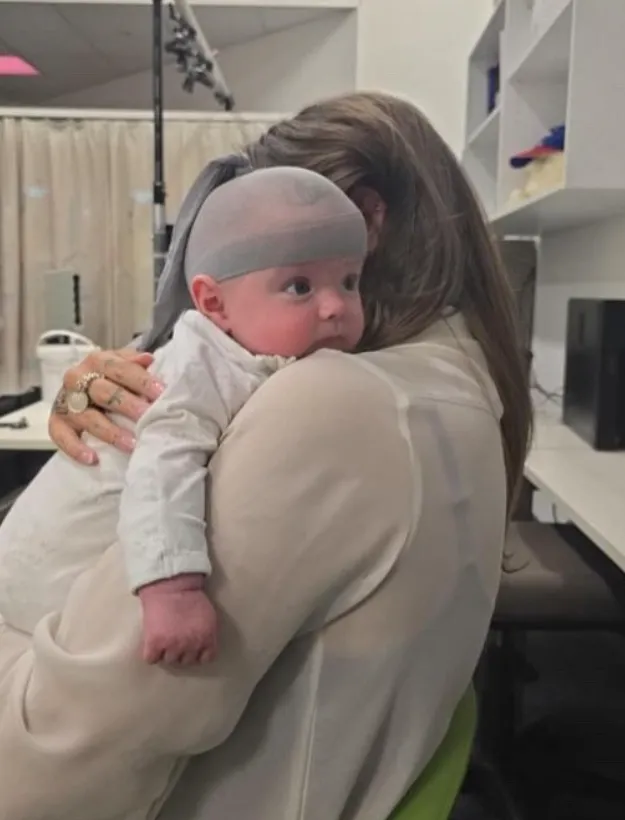
The first night after surgery was the hardest moment of his mother’s life. Teddy didn’t respond well to the pain medication. He made sounds she had never heard before — fragile, heartbreaking cries that shook her to her core. His tiny voice faded completely, and he remained unable to cry for a full week. With IV lines in his arms and monitors connected to every limb, he looked impossibly small, impossibly vulnerable.
“I’m so sorry,” she whispered, over and over, holding him as close as she could. There is a kind of guilt that only a parent of a medically fragile child understands — the guilt of wishing you could take their pain, even for a moment, and knowing you cannot.
But Teddy, even at his smallest, was stronger than anyone realized.
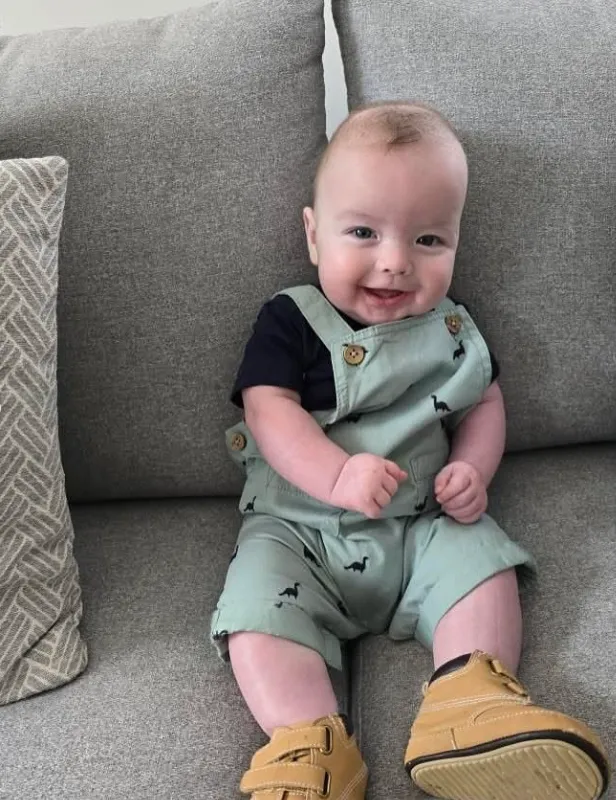
Now, five months post-op, he is thriving. His helmet therapy — once another source of worry — has become part of his everyday routine, and he handles it with an easy resilience. His laugh has returned with full force, bright and contagious. His smile lights up every room. He is growing, he is adapting, and he is proving day after day that strength can exist in bodies barely old enough to crawl.
Teddy’s parents are enormously proud of him — not just for surviving surgery, but for the joy he carries despite everything he has endured. He has faced pain no infant should ever know, yet he remains a radiant, happy, deeply loved little boy.
He is strong.
He is brave.
He is their miracle.
And this is only the beginning of his beautiful, courageous story.