Evanna – Our Little Fighter Who Taught Us the True Meaning of Strength.420
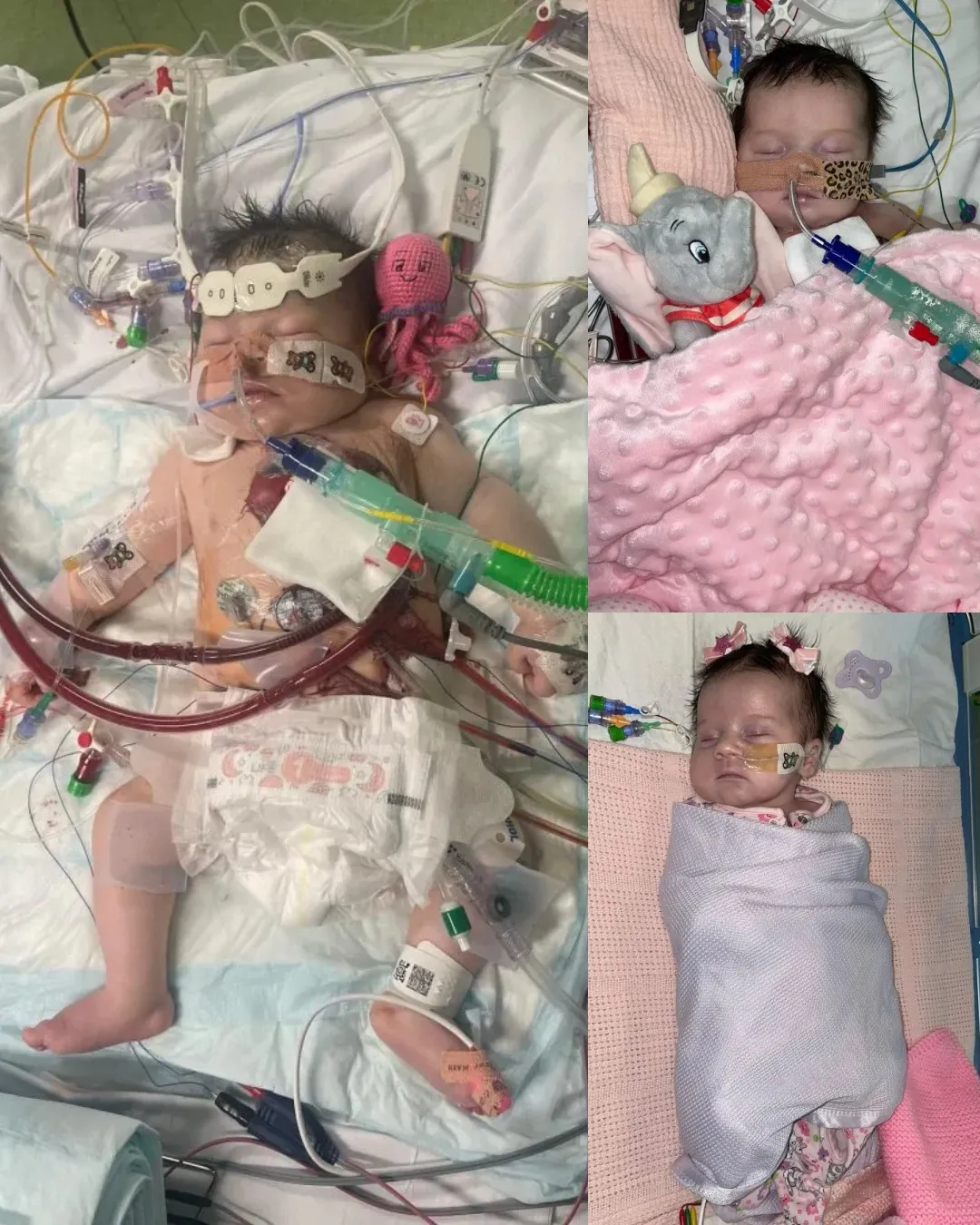
I had a normal pregnancy with my daughter Evanna, including regular check-ups and ultrasounds because of having three previous C-sections. Everything seemed routine, and as I neared the end of my pregnancy, Evanna’s weight dipped slightly, but the midwives reassured me it wasn’t concerning since we were only a week away from a planned C-section.
Evanna was born on the scheduled day, and I immediately noticed something wasn’t quite right. She was vocally grunting when handed to me in the theatre. As my fourth child, I had experience with newborns, and I knew this wasn’t normal. Yet the midwives weren’t concerned, despite my repeated worries. When we arrived on the ward, I asked for a doctor to check her. She was then referred to NICU for observations, but the team reassured me she was probably fine — likely just secretions from the C-section.

Despite the reassurance, my motherly instincts told me otherwise. Evanna was sleepy, uninterested in feeding, and her oxygen levels were low. She was admitted to NICU, immediately placed on oxygen, and started on antibiotics for suspected sepsis. For the next five days, she remained under careful observation until her vital signs stabilized enough for us to take her home over Christmas. Even then, she breathed a little faster than usual and noisily, but the hospital team didn’t raise concerns.
Bringing her home was a bittersweet joy. She was so peaceful and calm, rarely crying, and quickly became the center of our family of six. We were all smitten. But over the next few days, we noticed subtle changes — she was feeding less, more lethargic, and struggled to wake for her bottles. Initially, I dismissed it as a growth spurt, but my instincts persisted.

By day ten, I spoke with the midwife, noting her mottled skin and fatigue. While the midwife seemed unconcerned, I knew something wasn’t right. Two days later, during a family outing, her pallor became more pronounced. Back home, I noticed she was unusually floppy and unresponsive. I tried feeding her, changing her nappy — nothing worked. Her breathing became rapid, and her skin changed colors — red, blue, pale. My heart sank.
I called an ambulance, and within minutes, the first response team arrived. At the local hospital, doctors struggled to understand why Evanna was struggling. Eventually, a consultant detected an enlarged liver and an unusually loud heartbeat. He called for a cardiologist, who performed an echocardiogram while consulting a specialist team. Then came the words every parent fears: Evanna had congenital heart disease (CHD), suspected coarctation of the aorta (CoA) and a ventricular septal defect (VSD).

I screamed, phoning her father, both of us overcome with hysteria and fear. Our world had been turned upside down. An ambulance from the specialist hospital was dispatched immediately. Her father accompanied her while I rushed home to gather a few essentials.
On arrival, Evanna deteriorated and became unresponsive. She was sedated and intubated while a plan for urgent surgery was put in place. On Monday morning, she was taken to theatre for ten hours. My husband and I paced the hospital corridors, feeling helpless yet clinging to hope. At 8 pm, we finally spoke with the surgeon, who informed us that Evanna had to be placed on ECMO — a life support machine — because her heart could not cope alone. Only her aorta had been repaired, and the VSD partially repaired. The chance of survival was only 25%. We were numb.
Seeing Evanna on ECMO, surrounded by wires, drains, and medications including blood thinners and vitamin K to prevent clotting, was horrifying. She looked grey and puffy, asleep but fragile. My heart ached seeing her this way.

Each day on ECMO carried immense risks — stroke, bleeding, and possible machine failure. But Evanna fought. Finally, she returned to theatre with a new surgeon who repaired most of her VSD and her leaky valve. She was successfully taken off life support. Our relief was immense; we cried tears of happiness.
Over the next days in PICU, Evanna gradually recovered. Her oxygen was reduced, drains removed, and she began feeding through an NG tube, progressing to bottle feeds. She was finally stable enough to move to the ward and continue gaining strength.
Though she will require further surgery — a band around her heart to prevent excess blood flow to her lungs — we are overjoyed that our little girl is stable and thriving. Evanna is a fighter. Every day she teaches us resilience, courage, and the true meaning of strength.
We will never forget how lucky we are for the expert care that saved her life. Her journey has shown us the fragility of life, the power of intuition, and the unwavering strength of love. Now, we hope to raise awareness of CHD, so other families may be spared the uncertainty we faced.