Mason was born too soon, a fragile bundle of life weighing just over one kilogram. From the very first moment, his tiny body was a battle against the odds. His parents, Patryk and Gosia, remember the mix of awe and terror they felt when they first held him. A life so small, yet so determined to survive.
The joy of his birth quickly shifted into worry as Mason was rushed to the Neonatal Intensive Care Unit, connected to machines that breathed for him, watched over by nurses and doctors who feared every breath might be his last.
For three long months, his family lived in a world measured by beeps, alarms, and whispered prayers. Every heartbeat, every sigh, every tiny movement was a miracle worth celebrating.
They spoke to him constantly, stroked his tiny fingers, whispered encouragements, and tried to infuse courage into a life so fragile. Each day was a balancing act between hope and fear. And Mason, though too young to speak, fought with every ounce of his small body.
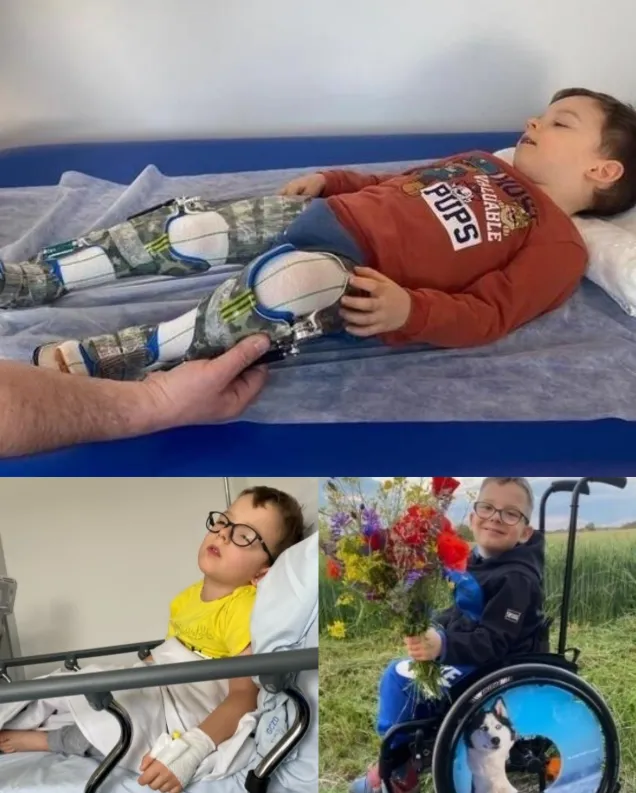
When he was finally stable enough to come home, the family believed the worst might be over. But life had more battles ahead. Not long after returning, doctors confirmed a diagnosis that would shape the rest of Mason’s life: cerebral palsy. The disease left him with limited control over his muscles, constant discomfort, and stiff limbs that refused to obey. For many children, this might have been crushing; for Mason, it became another challenge to meet with determination and courage.
Every day became a test. Physical therapy, stretching, injections, and endless exercises filled his schedule. Mason cried, he struggled, he trembled with pain—but he never gave up. His mother, Gosia, often said, “He’s stronger than we are.” And indeed, Mason’s strength was palpable. Every movement, every tiny improvement, every attempt to lift his head or move his hand was celebrated as a victory, a testament to his fighting spirit.
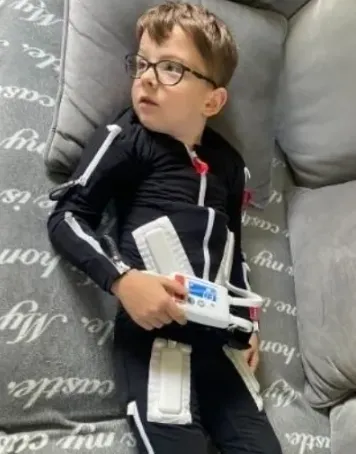
The therapeutic suit, designed to activate weak muscles, reduce spasticity, and improve mobility, became a symbol of hope for Mason. It represented independence, freedom from some of the limitations imposed by his condition, and a glimpse at a future where he might move more freely, play more fully, and live a life with less pain. But the cost of the suit was astronomical, a burden too heavy for his family alone. Still, they never wavered in their commitment to providing Mason with the best chance to thrive.
Financial hurdles were constant. Each therapy session, each specialist visit, each medical intervention added up to a mountain of expenses. Mason required specialized orthopedic equipment, adaptive car seats, and continuous medical care—all essential for his survival and progress. Patryk and Gosia sacrificed, sold belongings, and cut every corner to support Mason, always focused on the goal: a life where he could move, smile, and be free from pain.
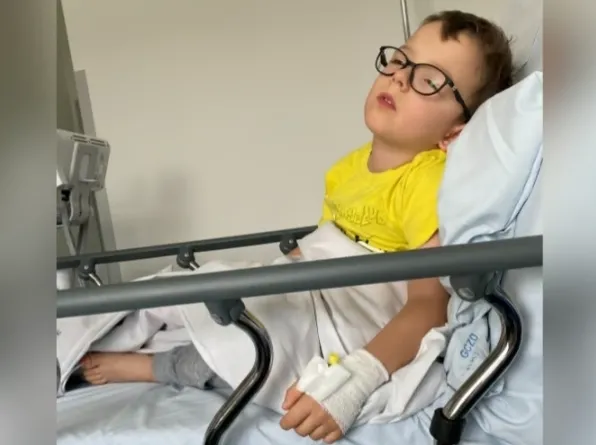
Through it all, Mason’s spirit remained unbroken. Even when exhausted, he smiled. Even when frustrated, he persisted. His determination was inspiring, a force that pulled everyone around him forward. The smallest hand movements, the first successful stretches, the ability to lift a leg—these were triumphs celebrated with laughter, tears, and immeasurable pride. For Mason, progress wasn’t just physical; it was emotional, spiritual, and a testament to the power of resilience.
He dreamed big. Though walking unaided was still beyond reach, Mason envisioned himself running, climbing, exploring, and playing just like other children. Each therapy session, each attempt at movement, brought him closer to that dream. Every family member, therapist, and friend who witnessed his struggle felt the weight of his courage. He taught them that perseverance is not about avoiding failure but about confronting it every day with hope.
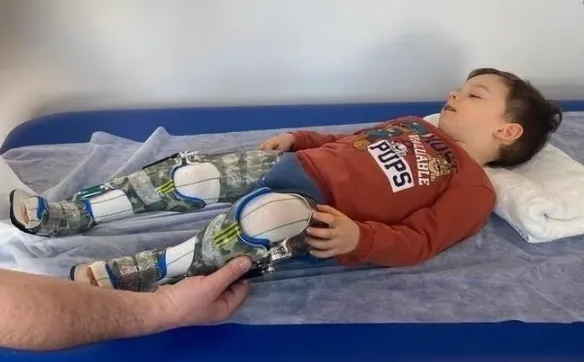
Despite the relentless medical challenges, Mason’s life was filled with joy and laughter. He delighted in playful moments, games, music, and the simple pleasures that made childhood magical. He connected deeply with his family, his siblings, and friends. Even in moments of pain, he would giggle at a joke, react to a funny face, or clap with excitement when he achieved a small milestone. His joy became contagious, a reminder to everyone around him that life’s beauty is not measured by ease but by the courage to continue despite difficulties.
Mason’s parents never ceased to marvel at his inner strength. Each day spent helping him stretch, lift, or move was a lesson in patience and love. Gosia often whispered encouragements into his ear, reminding him how much he was loved, how much he had already achieved, and how proud everyone was of his determination. Mason responded not with words but with action: a squeeze of the hand, a determined push, a smile that lit up the room.
The community, too, became part of Mason’s journey. Fundraisers, donations, and public support helped provide the equipment, therapy, and care necessary to improve his quality of life. Neighbors, friends, and even strangers were inspired by his story, drawn to the courage and optimism of a boy whose body was small but whose heart was enormous. Mason became a symbol of hope, a reminder that perseverance and love can transform challenges into opportunities for growth.
Even on the hardest days, when progress seemed impossible, Mason refused to surrender. He met therapy sessions with focus, determination, and even playfulness. He discovered ways to make exercises into games, to inject humor into repetition, and to celebrate each success with joy. Through these small victories, Mason not only improved physically but also reinforced a mindset of courage, resilience, and determination that became his signature.
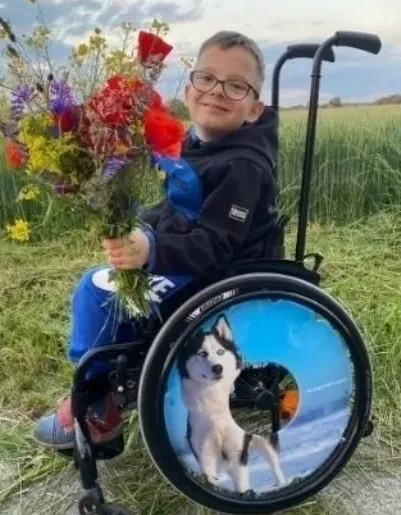
Every milestone became a triumph. The first time he could lift his head independently, the first successful attempt to move his legs, the ability to reach for a toy—each moment was a testament to the human spirit, to the power of love, and to the importance of not giving up. Patryk and Gosia celebrated each achievement as though Mason had conquered the world, understanding that every step forward was a testament to his relentless courage.
Mason’s story is not just about overcoming physical limitations; it is about the embodiment of hope. His life teaches that even in the face of extreme adversity, there is a way to find strength, joy, and purpose. His small victories ripple outward, inspiring not only his family but everyone who hears his story. Children battling similar conditions find motivation; parents find courage to keep fighting; strangers find renewed faith in the power of the human spirit.
Though his journey is ongoing, Mason’s progress illustrates a profound truth: resilience is cultivated, not granted. Every therapy session, every adjustment, every effort to stretch or move his body is a brick laid in the foundation of his independence. Each day of perseverance builds a path not just for physical mobility but for emotional and spiritual fortitude, teaching lessons that extend far beyond any medical or therapeutic achievement.
In Mason’s world, hope is active, tangible, and vital. His parents describe the joy of small triumphs—the lift of a hand, the flex of a foot, a playful laugh—as moments that reinforce their belief in miracles. Each smile from Mason validates the sacrifices, the sleepless nights, the relentless effort, and the unwavering love that his family pours into his care.
The specialized therapeutic suit, when acquired, promises not just physical improvement but a chance at experiencing the world more fully. For Mason, being able to move with less pain, to participate more actively in play, and to explore the limits of his body is more than a treatment—it is freedom, autonomy, and a step toward the life he deserves. It is the culmination of courage, persistence, and the tireless support of everyone who loves him.
Mason’s story reminds us that heroism is not always visible on battlefields or grand stages. Sometimes, it resides in the quiet, daily struggle of a one-kilogram baby learning to move, in the hands of parents who never give up, and in the community that rallies behind a single child with boundless determination. Each day Mason lives, laughs, and strives, he exemplifies courage beyond measure.
The lessons Mason imparts are profound: that love can sustain, that hope can drive action, that persistence can reshape what seems impossible, and that even the smallest among us can have an enormous impact. His journey demonstrates that resilience is not merely about survival; it is about thriving within the constraints of circumstance, about finding joy in the process, and about inspiring others through the example of steadfast determination.
Every step Mason takes—however small—is a testament to his spirit. Every smile he shares is a triumph over adversity. Every day spent moving closer to independence is a victory celebrated by his family, his therapists, and all who witness his journey. Mason embodies the truth that courage is measured not by size, age, or circumstance, but by the willingness to face each challenge head-on, with love, hope, and relentless determination.
Mason’s story is still being written. Each therapy session, each small improvement, and each moment of joy adds to a life that already embodies extraordinary courage. His journey continues to inspire, motivate, and teach everyone who hears of him that life, even in its most fragile form, is precious, powerful, and capable of remarkable triumphs.
In Mason, we see the embodiment of resilience. In his fight, we see the value of persistence and hope. In his joy, we see the transformative power of love. And in every moment of progress, we are reminded that even the smallest fighters can achieve the biggest dreams, and that courage—true courage—resides in the heart, not the size, of a child.
Mason’s life is a beacon. It illuminates the path for others facing seemingly insurmountable obstacles, showing that strength, love, and perseverance can turn even the most daunting battles into stories of hope. And in every step he takes, Mason proves that one kilogram of courage can move mountains, inspire communities, and transform the world.
“Sara Derbis: A Young Girl’s Lifelong Battle with Spina Bifida, Hydrocephalus, and Severe Lower Limb Deformities”
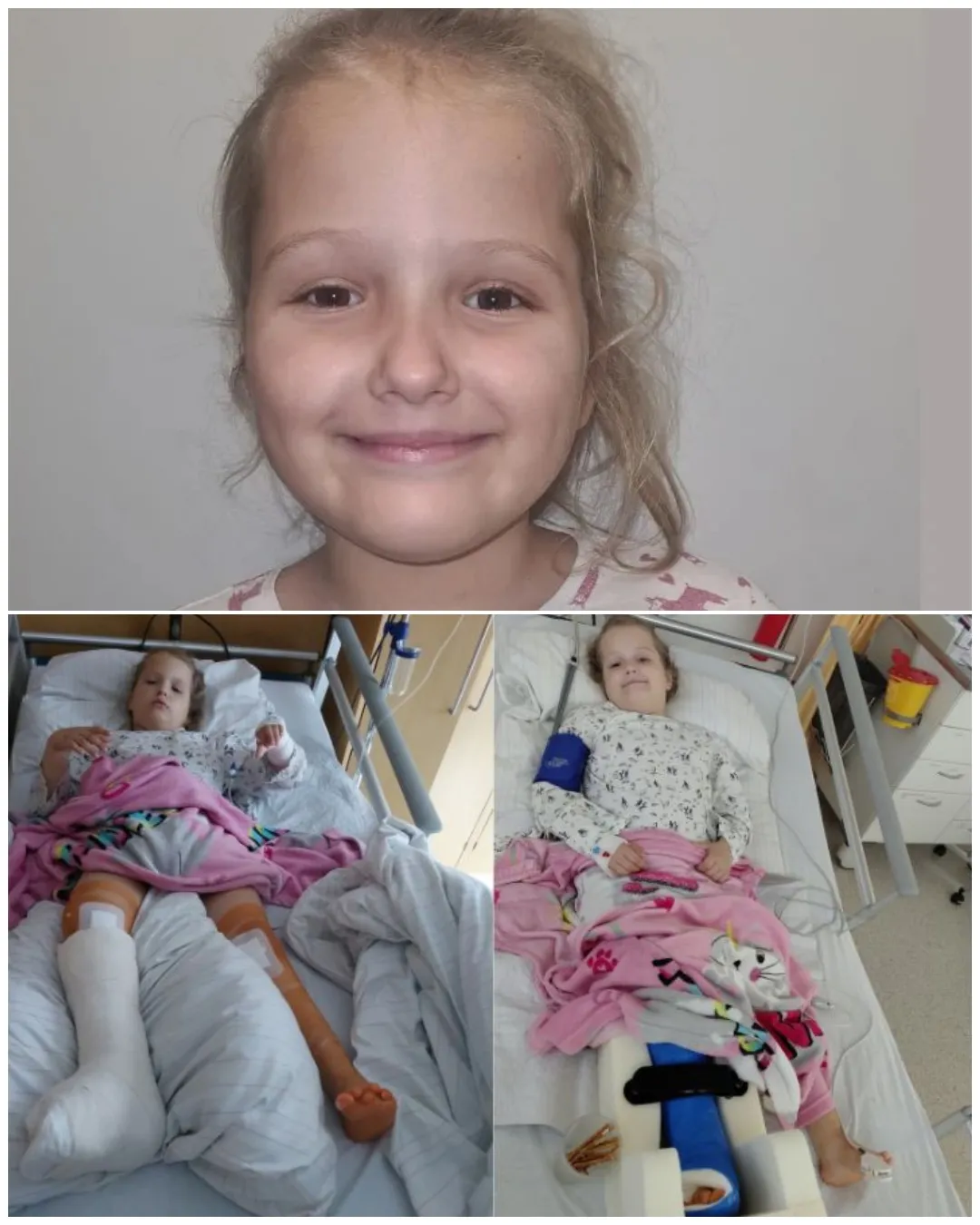
Sara Derbis, now six years old, has lived a life defined by complex congenital medical conditions. Born as part of a twin pregnancy, her arrival at 32 weeks was fraught with challenges. While her twin brother, David, was healthy, Sara was diagnosed prenatally with severe congenital malformations. These included spina bifida, myelomeningocele, and hydrocephalus, conditions that immediately indicated lifelong medical intervention and a path filled with both surgeries and rehabilitation.

Upon birth, Sara’s lower body was severely affected. The spina bifida and myelomeningocele caused paralysis of her lower limbs, as well as neurogenic bladder and bowel dysfunction. Additionally, her feet presented with clubfoot, while the spinal malformation contributed to sensory deficits, muscle atrophy, and hypertonia in her lower extremities. These abnormalities meant that Sara could not bear weight on her legs, was unable to walk, and required specialized orthotic support for mobility.
From the very first day, Sara faced critical surgeries to prevent further neurological damage and stabilize her spinal cord. On her first day of life, surgeons repaired her myelomeningocele, closing the spinal defect to protect her exposed spinal cord. This procedure, essential for survival, required meticulous precision to minimize the risk of permanent paralysis and prevent infection.
By her first birthday, Sara underwent a second spinal surgery aimed at further separating and stabilizing the spinal cord. This surgery carried significant risks, including potential injury to the lower extremities and permanent mobility limitations. Postoperative care involved prolonged hospitalization, careful wound monitoring, and initiation of early physiotherapy to maintain muscle tone and prevent contractures.
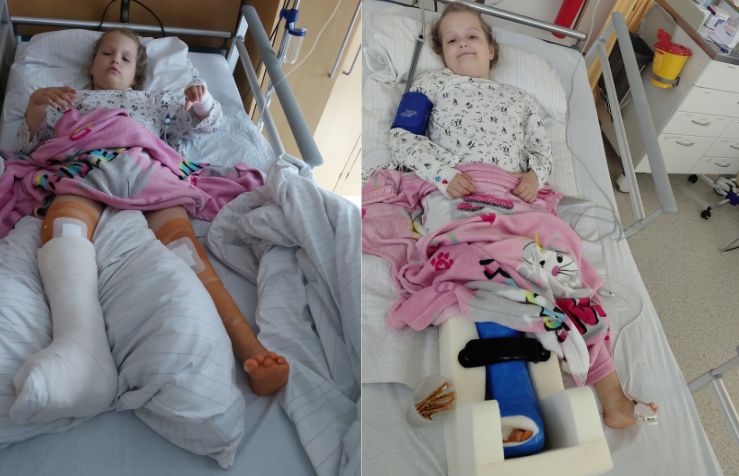
As Sara grew, orthopedic complications became increasingly prominent. Both legs displayed deformities caused by abnormal bone development and the effects of spina bifida on her musculoskeletal system. Clubfoot, misalignment of the knees, and shortened bones limited her ability to stand or walk. Despite previous surgeries and orthotic interventions, her lower limbs continued to require corrective surgical procedures to allow for improved posture, balance, and potential ambulation.
The next significant stage of treatment involved a complex series of orthopedic interventions in Aschau, Germany. These procedures addressed her congenital clubfoot and misaligned lower limbs. Surgeons used specialized metal plates and pins to correct alignment and gradually lengthen her bones. Following surgery, Sara endured several weeks in casts and braces, during which muscle atrophy and joint stiffness required intensive physical therapy to preserve as much mobility as possible.
Sara’s orthopedic challenges are compounded by her neurological condition. The paralysis and spasticity in her lower limbs, caused by spina bifida and secondary hydrocephalus, make muscle control and coordination extremely limited. Each movement requires careful support and monitoring to prevent falls and injuries. She cannot walk independently and relies on specialized assistive devices and braces to move safely.
In addition to mobility issues, Sara has required constant urological management. Neurogenic bladder and bowel dysfunction, common in patients with myelomeningocele, necessitate intermittent catheterization and careful monitoring to prevent urinary tract infections and maintain renal function. These interventions are critical to preserving her long-term kidney health and preventing secondary complications.
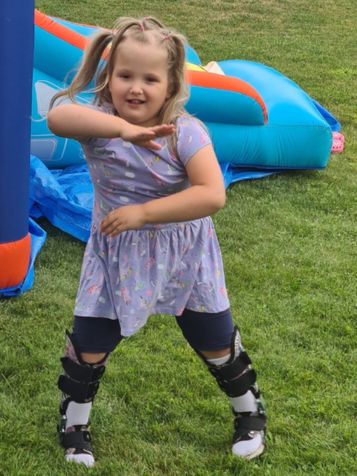
Sara’s orthopedic treatment is a long-term, staged process. Her deformities require multiple corrective surgeries over the years, often spaced to allow for growth and recovery. Each operation involves significant pain management, postoperative immobilization, and intensive rehabilitation. Recovery from surgery is particularly challenging for a young child due to both the physical discomfort and the cognitive understanding of her limitations.
Her current condition includes shortened and misaligned lower limbs, residual contractures, and hypertonic muscles. These factors contribute to difficulties with balance, weight-bearing, and functional mobility. Even routine activities, such as sitting upright or transferring from bed to chair, require assistance and precise handling to prevent falls or injury.
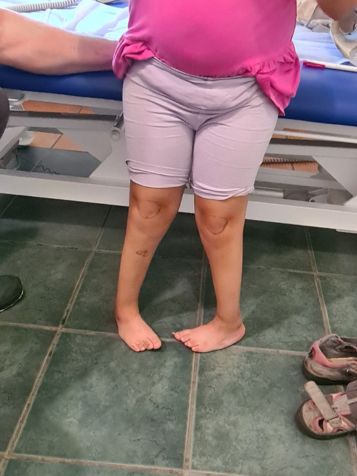
Sara also contends with the psychological impact of her medical conditions. She is fully aware of her differences compared to peers, which has led to periods of frustration, sadness, and social isolation. Experiences of being excluded or bullied by other children have affected her emotional development, creating the need for integrated psychosocial support alongside her medical care.
To address her ongoing orthopedic needs, Sara has undergone staged surgical interventions on both legs. These procedures involve osteotomies, which are precise surgical cuts of the bone, followed by placement of metal plates and fixation devices to correct alignment and prevent further deformity. Each surgery requires careful monitoring of bone healing and growth, as well as strict adherence to immobilization protocols.
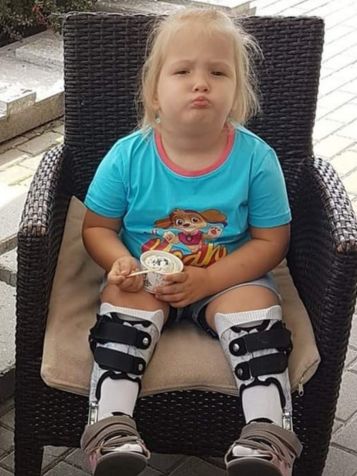
Following orthopedic surgery, Sara undergoes a lengthy period of immobilization in casts or braces. During this time, her muscles, joints, and bones adapt to the corrected alignment. Postoperative therapy is crucial to restore range of motion, strengthen muscles, and prevent joint contractures. Sara’s daily routine includes physiotherapy exercises tailored to her unique condition, focusing on stretching spastic muscles, improving balance, and gradually promoting functional movement.
Her rehabilitation program is intensive and ongoing. It includes assisted standing exercises, strengthening activities for the upper body to support mobility, and coordination training for eventual walking with orthoses. Therapy is adapted to her tolerance, neurological status, and surgical healing.
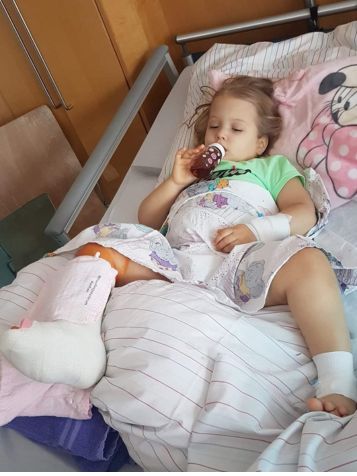
Sara’s congenital condition, including spina bifida and associated lower limb deformities, requires multidisciplinary oversight. Neurosurgeons, orthopedic surgeons, physiotherapists, occupational therapists, and pediatricians coordinate care to ensure her safety, growth, and functional development. Monitoring extends to orthopedic imaging, neurological assessments, and evaluation of adaptive equipment, ensuring her skeletal and neurological systems progress appropriately.
Her current developmental milestones are limited by her physical condition. While she can sit with support, she is not yet able to stand or walk independently. Fine motor skills are also affected by her neurological status, requiring ongoing occupational therapy to support hand function and self-care activities.
Sara’s orthopedic trajectory is anticipated to continue into adolescence. Multiple corrective surgeries and ongoing therapy are required as her bones grow, aiming to achieve functional alignment, minimize pain, and maximize independence. Each surgical intervention carries inherent risks, including infection, delayed bone healing, and the potential need for revision surgery.
The combination of spina bifida, myelomeningocele, hydrocephalus, and lower limb deformities presents complex challenges. Sara’s treatment plan emphasizes proactive intervention, regular imaging, and long-term rehabilitation to optimize function and prevent secondary complications, including scoliosis, contractures, and muscle atrophy.
Despite these significant challenges, Sara has demonstrated resilience and adaptability. Her ability to engage in therapy, respond to stimuli, and tolerate surgical interventions reflects both her physical strength and her determination. The presence of supportive caregivers ensures that she receives attentive, continuous monitoring, which is critical for her ongoing development.
Her orthopedic condition is accompanied by chronic pain, requiring careful management to ensure comfort and participation in therapy. Pain control is carefully tailored to her age, developmental stage, and medical condition, balancing pharmacologic interventions with non-pharmacologic methods, such as positioning, gentle massage, and therapeutic exercises.
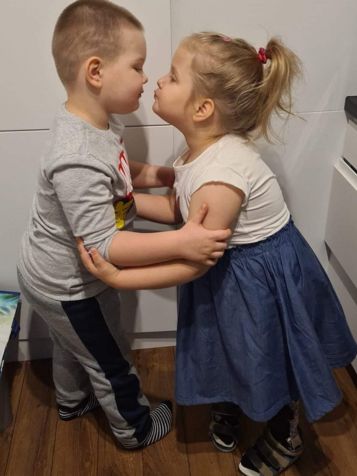
Sara’s prognosis focuses on maximizing functional ability, achieving alignment in her lower limbs, and supporting neurological development. Long-term goals include independent mobility with orthotic assistance, prevention of further musculoskeletal deformity, and the promotion of overall quality of life.
Even with profound congenital conditions, Sara continues to engage with her environment and demonstrates moments of interaction, responsiveness, and emotional expression. These milestones, while small, are essential markers of her ongoing development and the effectiveness of her comprehensive medical and therapeutic care.
Her condition exemplifies the intersection of severe neurological and orthopedic disorders. It demonstrates the necessity of staged surgical intervention, continuous therapy, and specialized monitoring to support functional development and prevent complications.
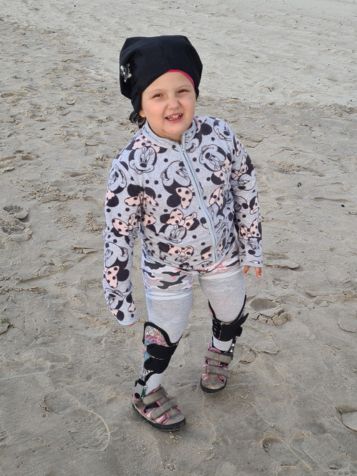
Sara Derbis’ story illustrates the medical realities faced by children born with complex congenital malformations. Her life is shaped by spina bifida, myelomeningocele, hydrocephalus, lower limb deformities, and associated functional limitations. Her ongoing care emphasizes early, multidisciplinary intervention, rigorous rehabilitation, and careful monitoring to optimize growth, mobility, and quality of life.
In summary, Sara’s congenital conditions—spinal dysraphism, clubfoot, leg deformities, lower limb paralysis, neurogenic bladder and bowel, and orthopedic malformations—require a lifetime of coordinated medical intervention. Her journey reflects the importance of specialized surgical care, continuous rehabilitation, and holistic management to ensure safety, functional potential, and developmental progress. Each milestone achieved, each small improvement in posture or mobility, is a testament to her resilience and the effectiveness of careful, multidisciplinary medical care.