Our beautiful daughter Scarlett was just 17 months old when her life—and ours—was forever changed by Shiga toxin–producing E. coli (STEC).

On the evening of June 10, 2022, Scarlett’s first symptoms appeared suddenly and violently. She developed
bloody diarrhea, followed quickly by extreme lethargy. Every hour, we were changing her diaper—each one filled with blood and diarrhea. Panic set in fast. We called her pediatrician, who told us to come in first thing the next morning.
Six days earlier, Scarlett had spent several hours interacting with a baby goat. Looking back, we firmly believe this was the source of her E. coli O157:H7 infection.
On
Saturday, June 11, we took Scarlett to her pediatrician. Initially, the doctor suspected salmonella and prescribed an antibiotic. By what now feels like divine intervention, Scarlett vomited shortly after taking it. Antibiotics can dramatically worsen E. coli infections, and that moment likely saved her life. The pediatrician also arranged for Scarlett to be admitted to the hospital, where an IV was started and a stool sample was collected.
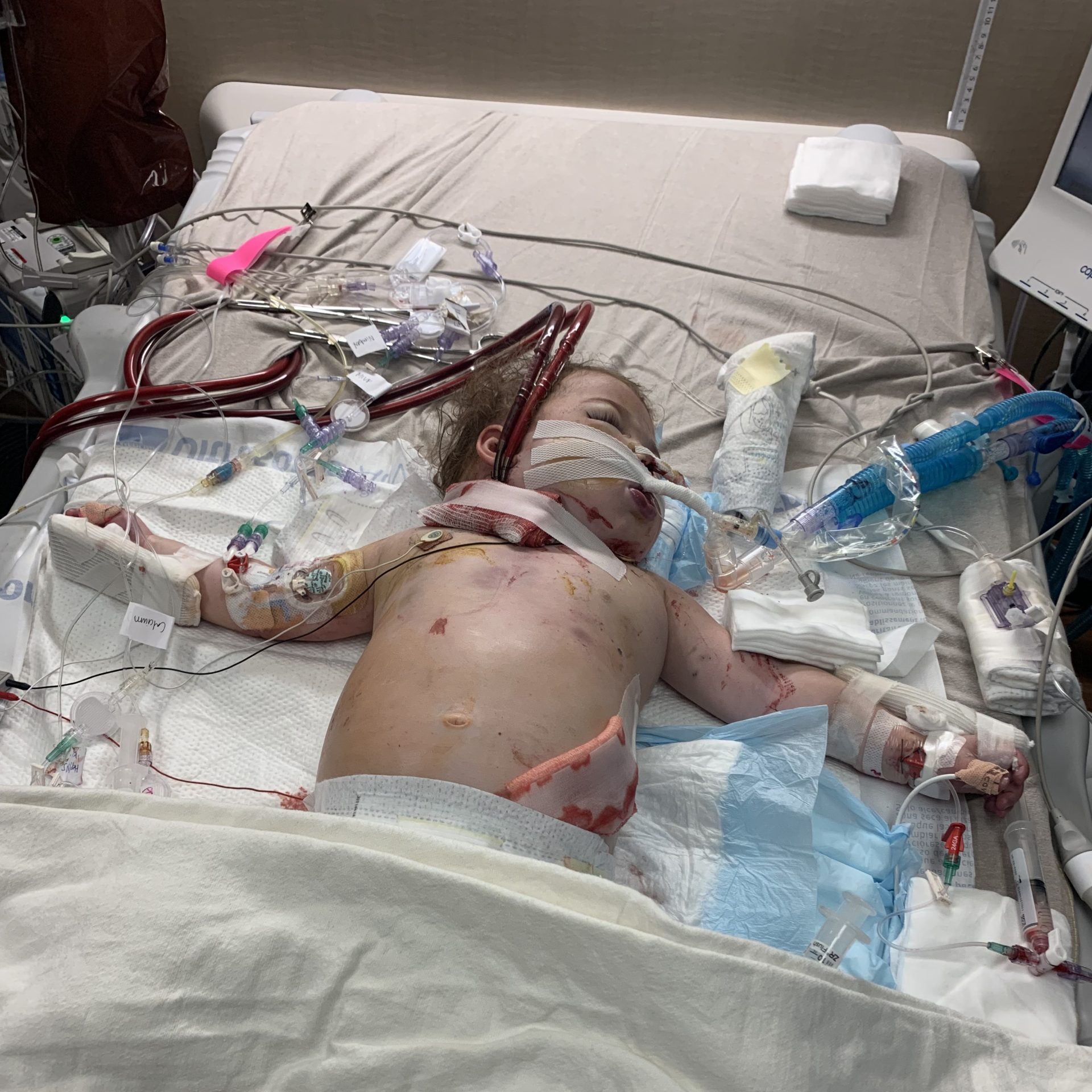
On Sunday, June 12, the results came back: E. coli O157:H7. From that point on, hospitalization felt like being strapped into a terrifying carnival ride that wouldn’t stop. Scarlett’s condition deteriorated rapidly. Communication was slow and confusing. When we were told she had developed
Hemolytic Uremic Syndrome (HUS), the doctor said they only saw one or two cases a year. There was no clear treatment plan, no discussion of possible outcomes—only fear.
Scarlett was moved to the
Pediatric Intensive Care Unit (PICU). Doctors attempted to stimulate urine output with medication, but nothing worked. We quickly realized she needed care beyond what this hospital could provide and began urgently requesting a transfer.
On Monday, June 13, Scarlett was airlifted to New Orleans. The PICU team immediately began preparing her for dialysis, but everything took painfully long. Scarlett needed surgery to place a dialysis catheter, but her heart rate was dangerously high—over
200 beats per minute—so an EKG was required first to ensure she could survive anesthesia. We arrived around 10:00 a.m., but Scarlett didn’t start dialysis until nearly midnight.
That night, things spiraled. The dialysis machine failed three times, unable to remove fluid. Scarlett’s heart rate remained dangerously high, and her blood pressure dropped lower and lower.
Then came Tuesday, June 14.
At 7:25 a.m., Scarlett coded.
For the next two hours and thirty-six minutes, time ceased to exist. Continuous CPR was performed. Scarlett received
42 doses of epinephrine. We sat helplessly in the room as a chaplain arrived to comfort us. We heard a doctor say the words no parent should ever hear:
“We need to think about calling this.” Meaning time of death.
But the nurses refused to give up.
Surgeons were called from their homes to perform emergency ECMO surgery—placing Scarlett on a heart-lung machine. We watched in horror as a massive needle was pushed into her side to drain fluid. Every sound, every image is burned into our memories forever. We were finally escorted out just before surgery began and waited in the next room, shattered.
When the surgeons finally came to speak with us, they looked defeated. They couldn’t make eye contact. They told us there was maybe a one percent chance of survival—but that for now, Scarlett was still alive.
Scarlett remained on ECMO for eight days. Doctors warned us there could be significant brain damage. An MRI would be needed. Access to Scarlett was limited due to COVID precautions—we were only allowed to see her briefly each day and received updates from nurses instead of holding our child.
The night Scarlett was taken off ECMO was the first night we were allowed to stay in the room. Thank God we were there—because a fluid miscalculation nearly caused her to code again. Once stabilized, she underwent an MRI.
The results were devastating: anoxic brain injury.
We were told she would likely never walk, never talk, and have no meaningful quality of life. The words crushed us. Around
18 days into her hospitalization, doctors began discussing end-of-life care and hospice. We were told dialysis would be stopped after 30 days if she didn’t produce urine. The future they painted was so bleak it felt like we were being pushed toward letting her die.
We refused.
We chose to fight for Scarlett’s life—though we did sign a DNR, a decision that broke our hearts in ways we still can’t describe.
Scarlett endured unimaginable trauma:
cardiac arrest, stroke, GI failure, countless blood, plasma, and platelet transfusions, 25 days of dialysis, ventilation, chest tubes, NG tube, G-tube, PICC lines, and two doses of Soliris. Her tiny body fought every moment.
A week later, with little improvement, the end-of-life conversation returned. We begged—begged—for a transfer.
On July 7, Scarlett was transferred to Children’s Hospital of New Orleans.
And that’s when the miracle began.
On July 8, after nearly a month in acute kidney failure, Scarlett peed for the first time.
Over the next 40+ days, she improved day by day. As sedation was weaned, her movements became purposeful. She had been paralyzed on her left side—until the dialysis port was removed, and movement slowly returned. She required surgery for a G-tube and struggled with feeding and oral aversion, having to relearn how to eat.
Then, against every prediction, on August 25, Scarlett stood up, talked, and walked out of the hospital.
It was the happiest day of our lives.
Coming home was unexpectedly hard. Hospital life had become structured and supported. At home, reality hit. John returned to work. Support faded. Brenna carried the heavy load—feeding Scarlett through her G-tube up to 20 times a day, managing 14 therapy appointments a week, caring for Scarlett’s sister Stella, and keeping the household running. Life was chaotic. Exhausting. Overwhelming.
But we counted our blessings.
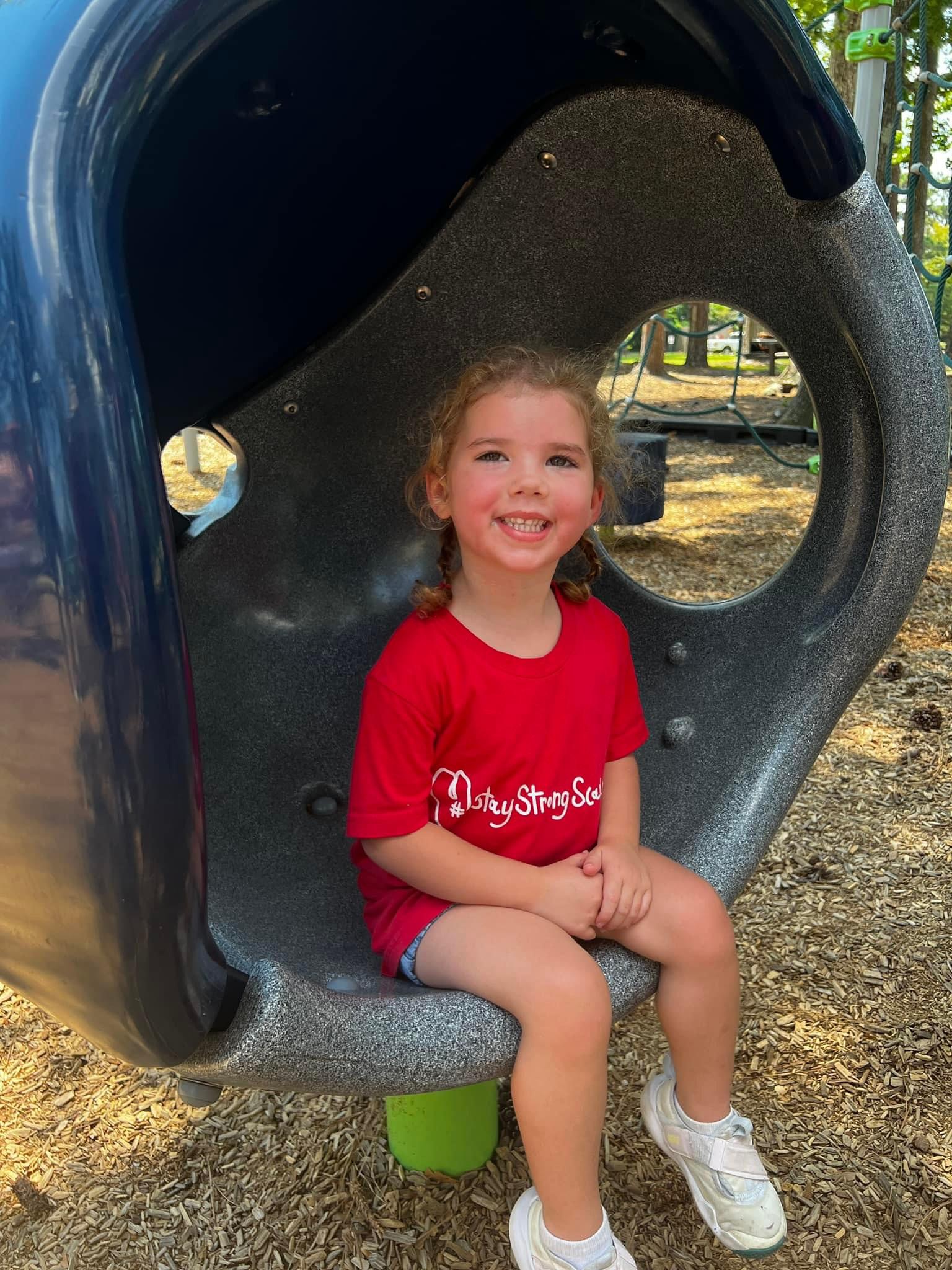
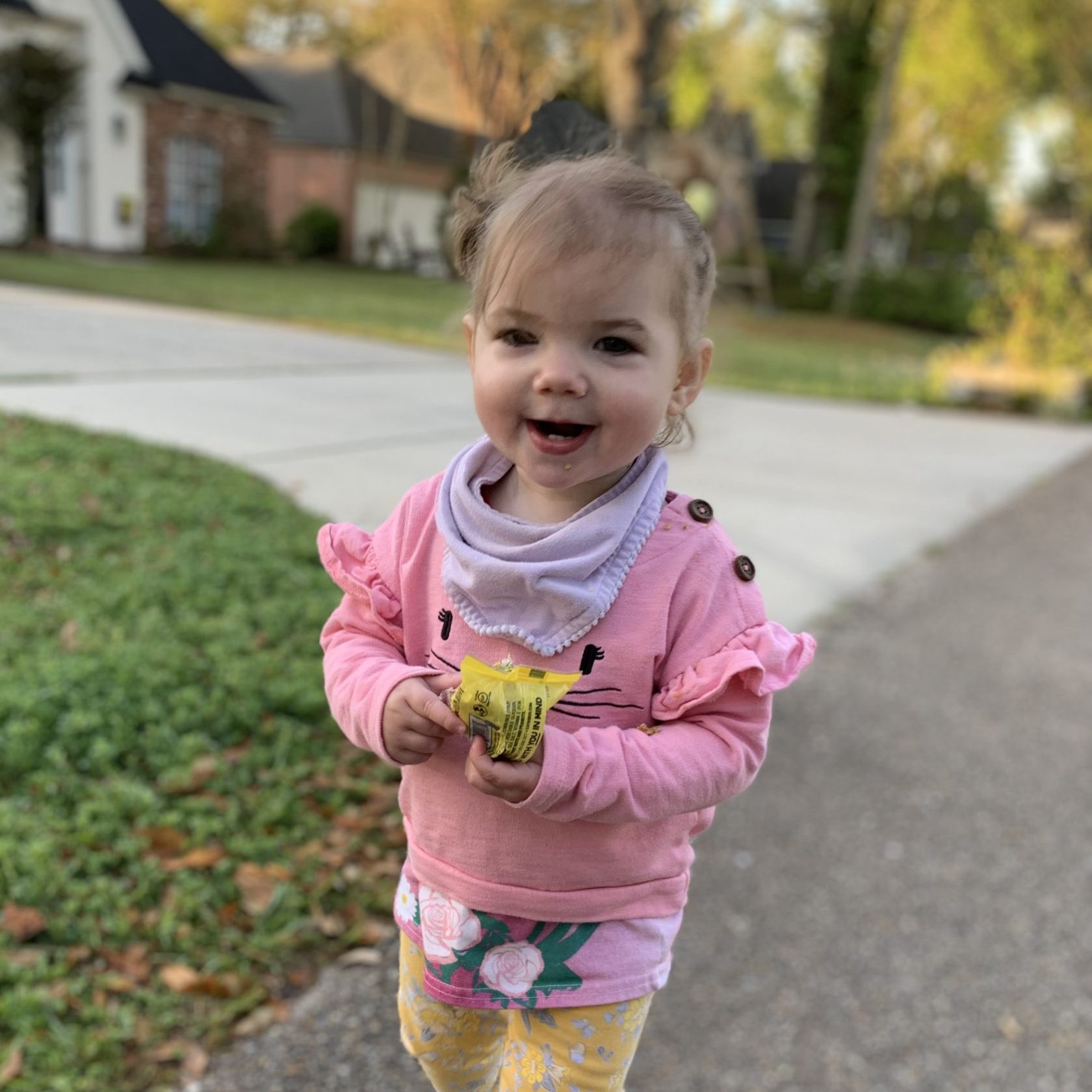
Two years later, Scarlett continues to defy every odd. Her kidneys function at 70% (Stage 2 CKD). She has weaned completely off the G-tube for food and only uses it for fluids due to vocal cord paralysis. She walks, talks, laughs, rides her scooter at full speed, barks like a puppy, terrorizes her big sister, and loves fiercely.
Scarlett is not a statistic.
She is a miracle.
And she is capable of anything.