When Amaya entered the world in August 2021, she did so far earlier than anyone had imagined or prepared for. At just twenty-three weeks gestation, her arrival was not accompanied by celebration, but by fear, urgency, and a silence heavy with uncertainty.

For her parents, Mischa and Jamie, time seemed to fracture the moment she was born. One second they were expectant parents clinging to hope, and the next they were standing at the edge of a reality where survival itself was not guaranteed.
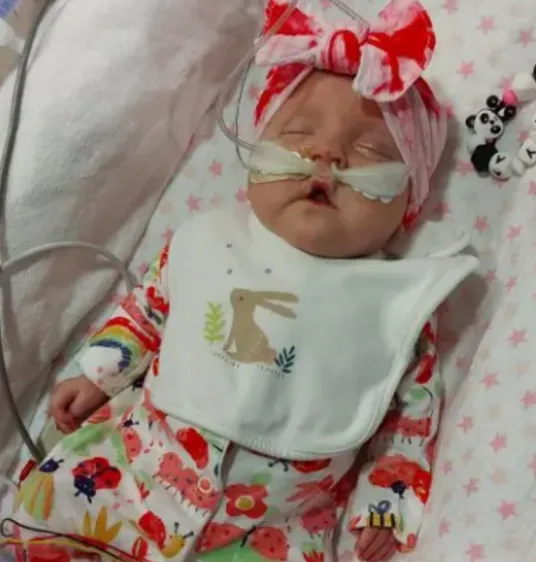
Amaya was impossibly small, her body fragile in ways words struggle to capture. Doctors moved swiftly, surrounding her with machines that would breathe for her, warm her, and fight to keep her alive.
Within hours, the challenges began to reveal themselves. A lung hemorrhage threatened her already fragile breathing, while brain bleeds introduced risks no parent should ever have to consider for their newborn.
The word prognosis entered Mischa and Jamie’s lives far too soon. It was spoken carefully by doctors who balanced honesty with compassion, never offering certainty where none existed.
Every day became a question mark. Would Amaya survive the night, would her body tolerate the next intervention, would her tiny heart keep beating.
Her survival was not a single moment of triumph, but a series of relentless battles fought hour by hour. Each breath she took felt borrowed, precious, and fragile.
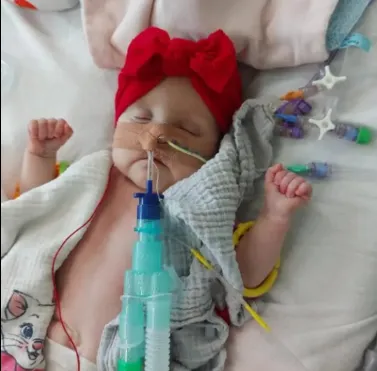
The neonatal intensive care unit became the center of Mischa and Jamie’s universe. Time there moved differently, measured not in days or weeks, but in alarms, lab results, and whispered updates.
They learned to read monitors the way others read clocks. Numbers became symbols of hope or fear, capable of lifting spirits or crushing them in seconds.
Amaya’s first weeks were filled with interventions no newborn should endure. Tubes, lines, and machines became extensions of her body as doctors fought to give her time.
As complications emerged, so did new words that would forever change her parents’ understanding of medicine. Hydrocephalus, pulmonary hypertension, feeding intolerance, each diagnosis layering uncertainty upon uncertainty.
Surgeries followed, each one carrying risks that felt unbearable. Handing over a baby so small for an operation required a trust that felt almost impossible to summon.
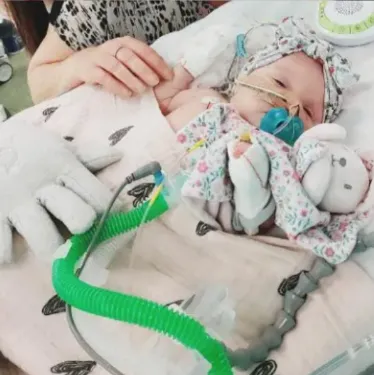
Mischa and Jamie learned what it meant to live suspended between hope and fear. They celebrated progress quietly, knowing how quickly it could be undone.
Amaya’s strength revealed itself in ways that defied logic. Time and again, she survived challenges doctors worried might overwhelm her.
Days turned into weeks, and weeks into months. What was expected to be a short hospital stay stretched into a year-long journey within sterile walls.
Living between home and hospital took a toll that few can truly understand. The emotional exhaustion of loving a critically ill child was compounded by practical realities that never paused.
Finding a place to rest, eat, and gather strength became as critical as medical care itself. In that space, support arrived through Ronald McDonald House Camberwell, offering Mischa and Jamie more than just accommodation.
It offered proximity to their daughter when every moment mattered. It offered a quiet place to cry, to breathe, and to gather the strength needed to return to Amaya’s bedside.
Being close meant they could respond instantly when doctors called. It meant late-night walks back from the hospital without the added burden of distance.
Equally vital was the care Amaya received from the medical teams at Evelina London. Their expertise and dedication became the backbone of Amaya’s survival.
Doctors, nurses, and specialists approached her care with relentless focus and compassion. They treated Amaya not as a case, but as a child whose life mattered deeply.
They answered questions patiently, even when fear asked the same ones repeatedly. They stood beside Mischa and Jamie through setbacks and small victories alike.
Feeding proved to be one of Amaya’s most persistent challenges. Her body struggled to tolerate nourishment, turning something so basic into a daily hurdle.
Progress in feeding came slowly, often reversing without warning. Each step forward required patience, creativity, and constant adjustment.
Pulmonary hypertension added another layer of complexity. Breathing, something most take for granted, required constant monitoring and support.
Hydrocephalus brought its own risks, demanding careful observation and further intervention. Each new complication felt like another mountain rising just as the last one had been climbed.
And yet, Amaya remained. She endured procedures that tested the limits of her tiny body.
Her parents watched in awe as she continued to fight. Strength, they learned, does not always come in size or volume.
It comes in persistence. It comes in the refusal to give up, even when the odds are overwhelming.
The hospital became a second home, filled with routines shaped by survival. Morning rounds, medication schedules, and therapy sessions replaced ordinary family life.
There were days of crushing exhaustion. Days when hope felt thin and fear pressed heavily on every thought.
But there were also moments of light. A stable scan, a calm night, a slight weight gain that felt monumental.
Mischa and Jamie learned to live moment by moment. Long-term plans felt impossible when each day demanded all their energy.
Community support flowed in quiet, meaningful ways. Messages, prayers, and gestures reminded them they were not alone in this fight.
The year Amaya spent in the hospital reshaped everything. It changed how her parents understood time, resilience, and gratitude.
Eventually, something began to shift. Slowly, almost imperceptibly at first, Amaya started to stabilize.
Machines were removed one by one. Interventions became less frequent, and hope grew more tangible.
The day they spoke about bringing her home felt unreal. After a year of hospital life, the idea of leaving felt both exhilarating and terrifying.
Homecoming did not erase the journey. It simply marked a new chapter, one filled with continued care, vigilance, and cautious optimism.
At home, Amaya continued to grow stronger. Her body, once so fragile, began to assert itself in new ways.
Milestones arrived on their own timeline. Each one carried extra meaning, forged through struggle and patience.
Her laughter filled rooms that once held only fear. Her curiosity began to shape her world.
Today, Amaya is thriving. She is not defined by the diagnoses that once threatened her life.
She is a living testament to resilience, to expert medical care, and to the power of parental love that refuses to give up.
Mischa and Jamie look at her now with a mixture of awe and gratitude. The memories of those early days remain, but they no longer dominate the present.
Instead, they serve as reminders of how far she has come. Of how survival can turn into strength.
Amaya’s story is not just about medicine or miracles. It is about endurance, community, and compassion woven together over time.
It is about the importance of spaces that support families, not just patients. About the difference it makes to be close, to be held up, to be seen.
It is about medical teams who show up every day, prepared to fight for lives most will never know. About parents who learn how strong they can be when there is no other choice.
Amaya’s journey began in uncertainty. It unfolded through fear, setbacks, and relentless perseverance.
And today, it stands as proof that beginnings do not determine endings. That even the most fragile starts can grow into something beautiful.
She is here. She is thriving. And her life carries the quiet power of everything she overcame.