Until she was two years old, Rosie was just like any other little girl.
She laughed easily. She ran toward animals and strangers alike with fearless curiosity. She loved being in the middle of everything — the noise, the movement, the joy. To her parents, Emma Vukic and Max Bridge, Rosie was “super lovable and affectionate,” a child whose energy filled every room she entered.
“She’s extremely happy,” Emma said. “She’s filled with love and curiosity. Everyone connects with Rosie.”
But somewhere around her second birthday, something subtle began to change.
Rosie’s speech didn’t progress the way it should have. At her best, she could say around 70 words — enough to reassure her parents that things might simply take time. Many children develop language later. Emma and Max watched closely but weren’t immediately alarmed.

Then Rosie began to lose the words she had.
“She didn’t just stop improving,” Max said. “She regressed.”
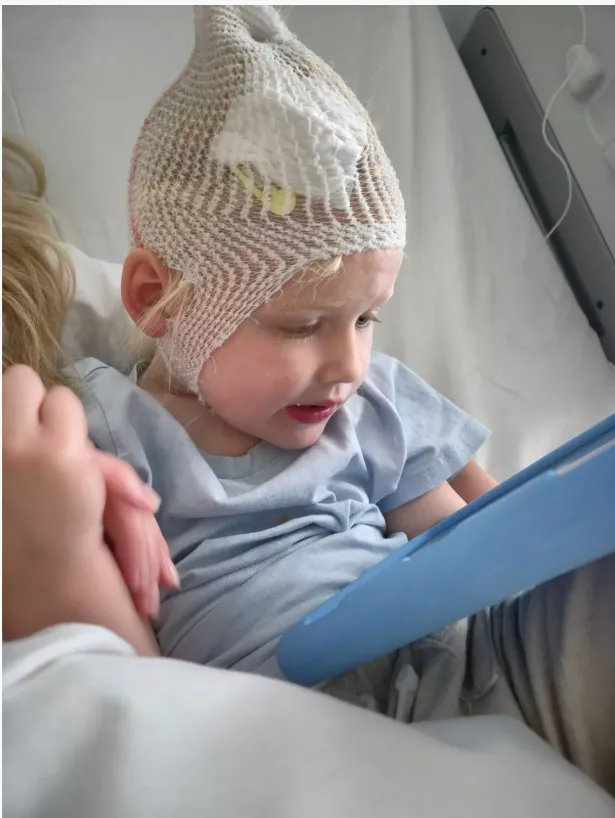
At first, the changes were confusing rather than frightening. Rosie showed behaviours that could have pointed toward mild autism — jaw clenching, head banging, sensory-seeking behaviour, bursts of hyperactivity. Doctors monitored her. Her parents adjusted. They hoped.
Then, on September 2, 2024, just before her third birthday, Rosie had her first seizure.
It would not be her last.
Since that day, Rosie has suffered around 3,000 seizures — some brief, others violent and terrifying. On her worst day, she endured 140 seizures in 24 hours. Some caused her body to stiffen and shake uncontrollably. Others came without warning, dropping her to the floor as if “someone had turned the lights off.”
Her longest seizure lasted 17 minutes.
Rosie was diagnosed with complex, drug-resistant epilepsy, and despite multiple medications, the seizures continued. Emma and Max lived in a constant state of alert, bracing themselves for the next collapse, the next ambulance, the next night without sleep.
In January, doctors recommended genetic testing.
The wait for results stretched on for months — months filled with fear, exhaustion, and unanswered questions. Then, on August 8, the diagnosis arrived.
Rosie has Batten disease CLN2.
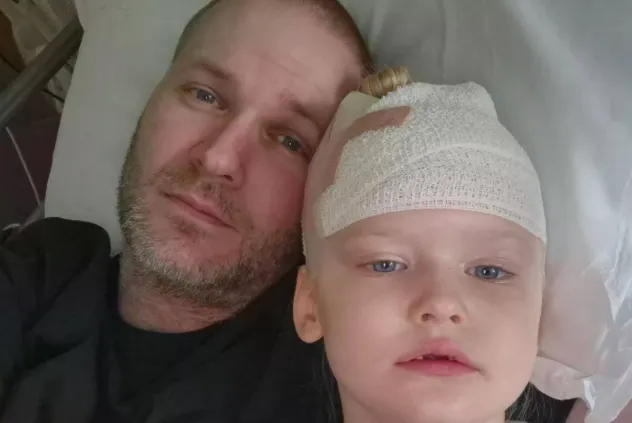
It is a rare, degenerative genetic disorder that affects just 30 to 50 children in the UK. The disease slowly destroys the nervous system. First come seizures. Then loss of speech. Loss of movement. Loss of vision. Loss of the ability to swallow. Paralysis. Dementia. And, eventually, death.
Without treatment, life expectancy is 10 to 12 years.
“Our hearts were completely ripped into pieces,” Emma said. “It was the worst thing we could have imagined. How do you process someone telling you your child is going to die so young?”
Max described the diagnosis as entering a state of “prolonged grief.”
“You don’t grieve once,” he said. “You grieve over and over again. At every milestone she loses, you grieve again.”
Rosie has already lost much.
She can no longer walk independently. Her speech continues to fade. Her parents believe she is already experiencing childhood dementia — forgetting skills she once had, struggling to process the world around her.
“She’s regressed a lot in the past year,” Emma said quietly.
The disease cannot be cured. But Rosie was diagnosed early enough to access a treatment — enzyme replacement therapy — which may slow the progression. Every two weeks, for the rest of her life, Rosie will receive infusions directly into her brain.
The treatment will not save her life.
But it may give her more time.
“More birthdays. More memories,” Max said. “The end is the same, but children with treatment get longer with their families.”
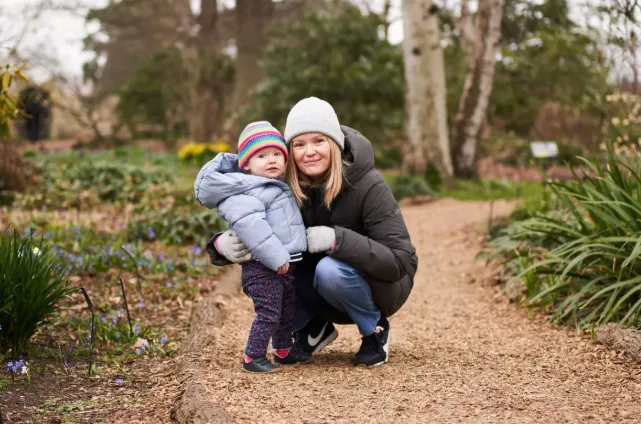
That time is everything.
Emma and Max now live in two realities at once. In one, they plan medical appointments, therapies, and infusions. In the other, they plan joy — trips, laughter, and memories while Rosie can still experience them.
They have set up a GoFundMe to give Rosie the best possible life with whatever time she has left. They dream of taking her to Disneyland Paris, of filling her days with music therapy, water therapy, rebound therapy — experiences that bring comfort, stimulation, and happiness.
“We’re trying to fit a lifetime of love into a few years,” Emma said.
The fundraiser has raised more than £19,000, supported by strangers moved by Rosie’s story and families who understand the weight of rare disease.
Emma and Max are also speaking out to raise awareness of Batten disease CLN2 — especially as future access to the treatment Rosie receives may be at risk due to funding decisions.
“No family should feel this lost,” Max said. “There needs to be more research, more support, and more urgency.”
For now, Rosie remains at the centre of everything.

“She’s my best mate,” Max said. “She’s the most beautiful little girl you’ll ever see.”
Rosie does not understand what is happening to her. She only knows love — the arms that hold her, the parents who refuse to stop showing up, the world they are trying to keep bright for as long as they can.
And while her future is painfully uncertain, one thing is already clear:
Rosie is deeply, fiercely loved — and every moment she is here matters.