When I found out I was pregnant with Oscar, everything felt perfect. The pregnancy had been smooth, and each day brought a growing sense of excitement and anticipation for the little life inside me. I imagined nursery colors, tiny clothes, and first smiles, completely unaware that one routine appointment could change the trajectory of our lives forever.

At 20 weeks, we went in for what should have been just another check-up. I had no reason to worry, no sense that anything could be different from the joyful expectation I had held for months. But as the sonographer examined Oscar’s tiny heart, an unusual silence fell over the room. The air seemed to shift. My heart sank.
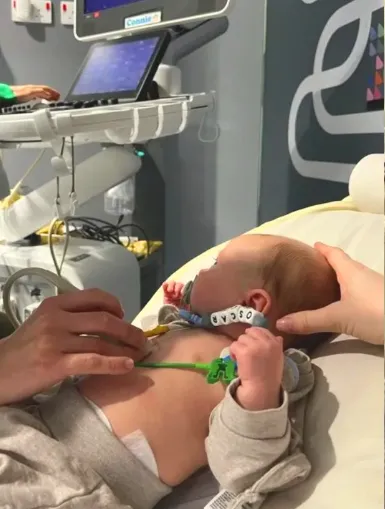
The technician, a newly qualified ultrasound practitioner, had a senior colleague with her. Together, they spent longer than usual scrutinizing Oscar’s heart, their brows furrowed, their voices hushed. I could feel their concern, though no words had yet been spoken. Anxiety began to build inside me, gnawing at the edges of my mind, turning anticipation into fear.
I watched as they exchanged quiet glances, whispering to one another, trying to decide how to phrase what they had found. It was surreal, like time had slowed, the moment stretching into eternity. My hand gripped my partner’s tightly, seeking reassurance I wasn’t sure existed. I wanted to hear them say something comforting, anything that would prevent the worst-case scenario from taking root in my mind.
Finally, they suggested we visit the fetal medicine unit for further assessment. My heart pounded in my chest. I remember the rush of information, the words “heart defect” echoing over and over, and the overwhelming sensation of not being able to breathe.
Within just 48 hours, we were transferred to a specialist hospital, surrounded by the sterile smell of new wards and the soft hum of life-saving equipment.
At the specialist center, we met doctors who explained that Oscar’s heart was not developing as it should. He had pulmonary atresia, a condition where the pulmonary valve is missing or severely malformed, and possibly a bicuspid aortic valve, though certainty could not come until birth. The doctors were cautious with words, careful not to overwhelm us, yet the weight of their cautious optimism pressed down on my chest.
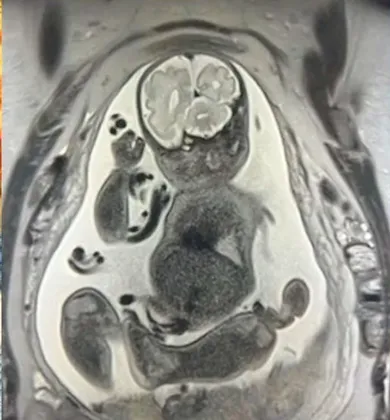
The days between the initial diagnosis and the birth were some of the longest I have ever lived. Every kick, every flutter, every hiccup from Oscar reminded me of the little life inside, fragile yet determined. I found myself oscillating between hope and fear, clinging to every positive thought while preparing my heart for the possibility of heartbreak.
We began a whirlwind of appointments, tests, and consultations, each visit providing slightly more clarity but never complete reassurance. I learned medical terms I had never heard before, words like “cyanosis,” “duct-dependent circulation,” and “palliative procedures” now etched into my memory. I became an expert overnight, but no knowledge could ease the worry for my child.
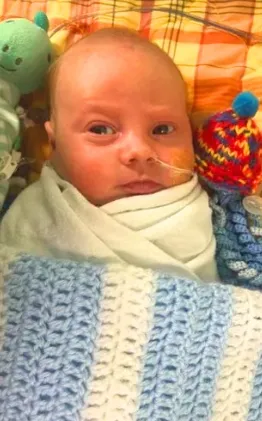
Despite the uncertainty, there were moments of calm, moments where Oscar would move inside me, and for a few seconds, I could forget the medical jargon and remember the simple joy of life. I would whisper to him, telling him to be strong, telling him that we loved him already, that we were ready to fight alongside him no matter what came. Those moments were our secret world, a sanctuary amidst the storm of hospital visits and anxiety-filled nights.
When the birth day arrived, emotions were overwhelming. We had rehearsed procedures, prepared for NICU stays, and met surgeons and cardiologists who would take over what we could not control. My heart was full of anticipation and fear, the two colliding in a whirlwind of tears, prayers, and whispered hopes.
Oscar arrived via planned cesarean, a tiny bundle of vulnerability and potential. The moment he took his first breath, I knew the real fight had only just begun.
The NICU team surrounded him immediately, hooking him to monitors, preparing for interventions that were now essential to his survival. Every beep, every flicker on a screen became a reminder that life for him would always involve struggle, resilience, and extraordinary courage.
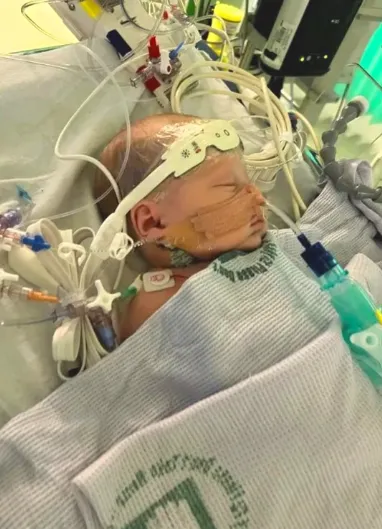
The first hours in the NICU were harrowing. Watching him hooked up to tubes, struggling to breathe, yet fighting with every ounce of strength, was both terrifying and awe-inspiring. My partner and I took turns holding his tiny hand, whispering encouragement, feeling helpless yet determined to provide all the love and support we could muster.
In the following days, Oscar underwent echocardiograms, catheter assessments, and careful monitoring. Each day brought a mix of progress and setbacks. His tiny heart proved stronger than expected, yet fragile enough that every decision from the medical team carried weighty consequences. We learned that survival would not be a guarantee, but a daily triumph.
Every milestone, no matter how small, became a celebration. The first time he was able to breathe without support for a few minutes. The first tiny smile amidst exhaustion. The first touch of our hands against his fragile skin—these were victories in a life that had already demanded more than most could imagine.
We discovered that hope is not just an emotion—it is an active practice. Every choice, every day, every loving word spoken over Oscar contributed to the scaffolding that kept him alive and thriving. Our prayers, our fears, our vigilance—they were all instruments in a delicate symphony of survival.
Months passed, filled with NICU rounds, procedures, and endless observations. There were sleepless nights, hospital stays, and moments of crushing uncertainty. Yet, through it all, Oscar grew stronger, proving resilience is not just a trait but a lived experience, nurtured by love and sustained by determination.

His first interventions were critical. Surgeries to open the pulmonary valve, manage blood flow, and ensure oxygenation required precision and skill. Each time he came through, fragile yet alive, my gratitude for the medical team overwhelmed me, and my admiration for my child grew deeper.
We also learned the meaning of community in ways we hadn’t imagined. Supportive family, friends, and organizations offered meals, rides, prayers, and encouragement. Their love became a lifeline, reminding us that we were not alone in navigating the challenges Oscar faced.
Even with advances in medicine, nothing could have prepared us for the emotional toll. Watching a child fight for every breath, every heartbeat, every moment of normalcy, reshapes a parent’s heart forever. The smallest achievements—a feeding, a tiny grasp of a finger, a flutter of awareness—carry the weight of monumental victories.
Through months of care, Oscar’s body grew stronger. He began to regulate his oxygen levels more consistently, requiring fewer interventions. His tiny fists flexed with determination, his eyes sparkled with awareness, and his family learned to celebrate incremental progress with profound gratitude.
Yet, each triumph was tempered by the knowledge that his journey was far from over. Additional surgeries, catheter procedures, and routine monitoring would be lifelong realities. Still, hope persisted. Love persisted. And Oscar’s remarkable spirit persisted.
As Oscar approached six months old, he started to smile more, interact more, and show the personality that had been hidden beneath the rigors of his medical interventions. His parents marveled at the tiny being who had endured so much and yet radiated such vitality. Every coo, every fluttering hand movement, every sign of life became a symbol of perseverance.
Through it all, we learned that courage is contagious. Oscar’s determination inspired not just us, but the nurses, doctors, and visitors who witnessed his daily triumphs. In those hospital corridors, hope was tangible, carried in whispers, in prayers, and in the steadfast presence of a family unwilling to let fear dictate their child’s destiny.
Now, as Oscar continues to grow and thrive, his journey remains a testament to the human spirit. Every milestone—from his first unsupported breath to his first laugh—echoes with triumph over fear, uncertainty, and medical complexity.
His story reminds us that miracles are not always sudden; they are cultivated, nurtured, and achieved one day at a time. And while the path may be long, challenging, and fraught with uncertainty, love, resilience, and hope create the foundation for triumph.
Oscar’s life is a living testament to courage. Every breath, every heartbeat, every joyful glance carries the weight of battles fought and victories earned. And as he grows, his story will continue to inspire families, caregivers, and anyone who has faced impossible odds.