At twelve years old, Kuba should be running across schoolyards, kicking footballs, and racing his friends toward the future. Instead, his life has been defined by crutches, pain, and the slow, relentless collapse of a body that refuses to grow the way it should. Born with hypophosphatemic rickets, a rare genetic disorder, Kuba’s childhood has unfolded as a quiet war against his own bones.

At birth, nothing appeared wrong. He was a healthy-looking baby, wrapped in hope and ordinary dreams. But when he tried to stand, his legs began to bend, twist, and betray him, marking the beginning of a struggle that would shape every year of his life.
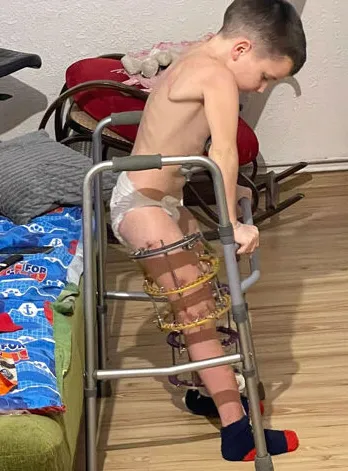
For Kuba, standing was never a milestone—it was a warning. His legs warped under the pressure of his growing body, unable to support even his own weight. What should have been a simple step became the first sign that his life would never be ordinary.
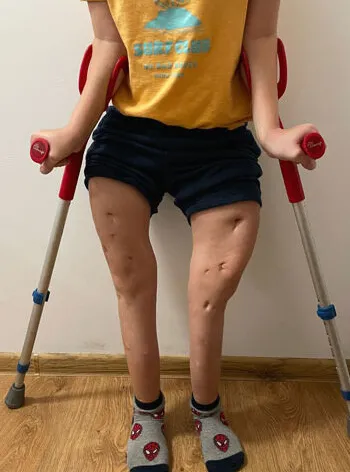
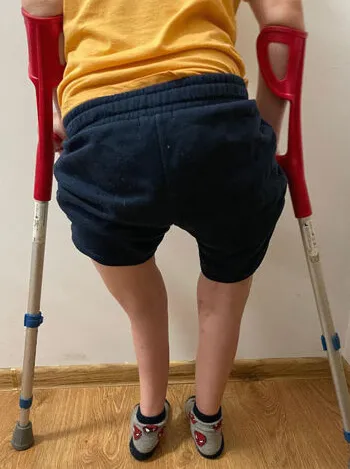
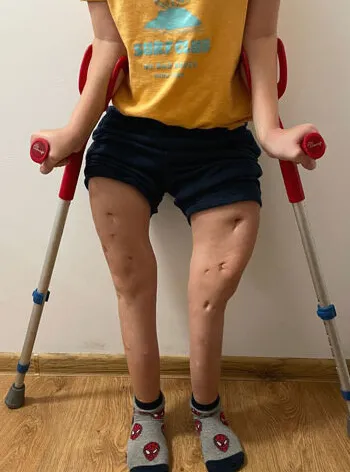
As he grew, the deformities worsened. His legs developed severe valgus and varus deviations, abnormal anteversion, limited knee movement, and a 2.5-centimeter shortening of his left leg. Each abnormality compounded the next, turning walking into a painful, exhausting act of endurance.
Today, Kuba cannot walk without crutches. Every movement sends pain through his bones, a constant reminder that his body is failing him. Running, jumping, or playing football—things other children do without thinking—exist for him only as distant dreams.
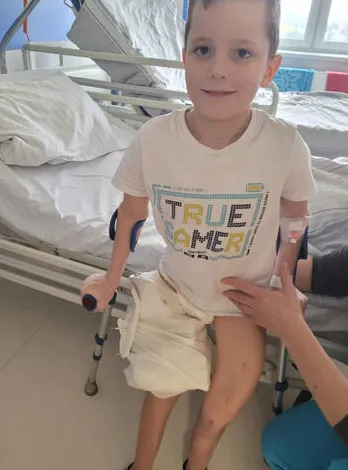
The physical pain, however, is only part of his suffering. The emotional wounds have cut just as deeply. Kuba has endured stares, whispers, and cruel comments from peers who see his twisted legs before they see the boy behind them.
School has not been a safe place. Missed classes due to surgeries and recovery periods have isolated him further. While other children build friendships on playgrounds, Kuba has learned loneliness in hospital corridors.
His condition has stolen not only mobility but innocence. Childhood, for him, has been measured not in birthdays or holidays, but in surgeries and setbacks. Each year has brought new challenges instead of freedom.
Kuba’s family situation adds another layer of hardship. His mother does not have custody, leaving his father and grandmother as his primary caregivers. Together, they shoulder the responsibility of raising a child whose needs far exceed what any family should have to face alone.
They have done everything they can. They have rearranged their lives, finances, and futures around Kuba’s care. But love, as powerful as it is, cannot straighten bones or erase pain.
The medical journey began early. Diagnosed at just two years old, Kuba was placed on a path of aggressive intervention. Doctors hoped that early surgeries could correct his deformities before they became irreversible.
Over the years, Kuba has undergone twelve surgeries. Each one brought hope, fear, and recovery that tested his strength beyond his years. Procedures using the Blount staple method and the Ilizarov apparatus attempted to realign and lengthen his bones.
The Ilizarov method, in particular, was brutal. Metal frames surrounded his legs, slowly stretching bone millimeter by millimeter. Pain became part of his daily routine, something he learned to endure in silence.
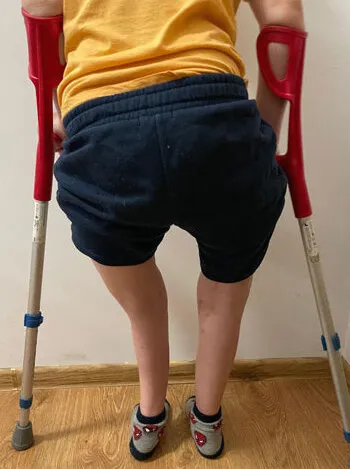
Despite these efforts, his legs continued to bow. Each surgery corrected one problem while revealing another. Progress was fragile, temporary, and heartbreakingly incomplete.
In May 2023, genetic testing finally delivered the answer. Kuba’s condition was identified as hypophosphatemic rickets linked to an X chromosome abnormality. By the time the diagnosis was confirmed, irreversible damage had already taken hold.
This was not a cosmetic issue. It was no longer about appearance—it was about survival, independence, and the ability to live without constant pain. Without proper correction, Kuba faced a future of worsening deformities and permanent disability.
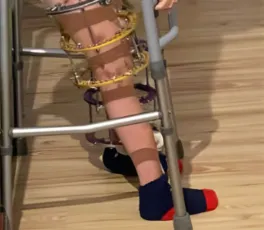
Doctors presented a new possibility: a two-stage, highly specialized surgery at the Paley Institute in Warsaw. This procedure offered something Kuba had never truly known—hope for walking independently.
The surgery is complex and demanding. It requires precise bone reconstruction, extensive rehabilitation, and months of recovery. But if successful, it could free Kuba from crutches and daily pain.
The cost, however, is staggering. The full treatment and rehabilitation are estimated at 315,462 PLN. For Kuba’s father and grandmother, this number is overwhelming—far beyond what they can earn or save.
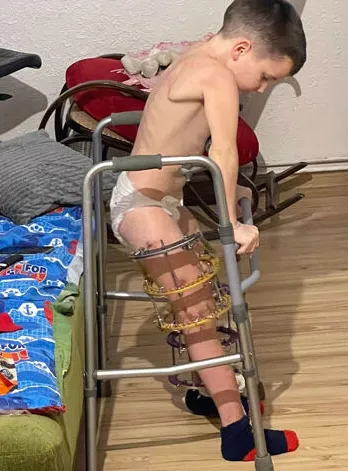
Even before this surgery, expenses have piled up relentlessly. As of November 2024, Kuba requires two additional leg surgeries costing more than 25,000 PLN. Rehabilitation, medications, medical equipment, and constant travel to specialists continue to drain the family’s resources.
Every bill represents another reminder of how fragile their situation is. They are not asking for luxury or comfort—only for the chance to give Kuba a functional body. The weight of knowing what could save him, yet being unable to afford it, is crushing.
Despite everything, Kuba remains remarkably hopeful. He does not dream of extraordinary things. He wants to walk without pain, attend school regularly, and blend in rather than stand out.
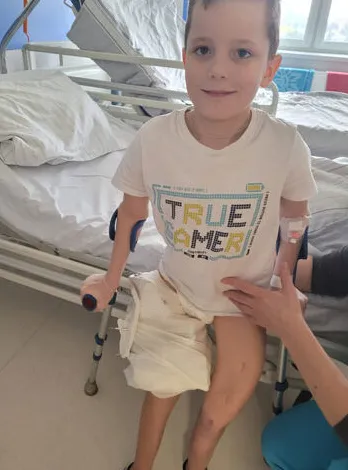
He wants to stop being “the boy with crutches.” He wants his legs to carry him instead of imprison him. His dream is simple, and that is what makes it so devastatingly powerful.
For his father and grandmother, this fight has become their entire world. They have exhausted every option within their means. Now, they are turning outward, asking for help not because they want to—but because they must.
This is where community becomes life-changing. Donations, shared stories, and collective compassion can transform an impossible situation into a survivable one. Each contribution, no matter the size, moves Kuba closer to freedom.
Kuba’s story is not unique, but it is urgent. Children with rare genetic disorders often fall through the cracks of healthcare systems and financial support. Their futures depend not only on medicine, but on human empathy.
This is not just about funding a surgery. It is about restoring dignity, independence, and childhood. It is about ensuring that a boy does not grow into a man trapped in pain because help came too late.
With the surgery at the Paley Institute, Kuba could walk without crutches for the first time in his life. He could attend school without fear of ridicule. He could experience movement not as suffering, but as freedom.
The outcome is still uncertain. But without action, the result is guaranteed—continued pain, worsening deformities, and a future defined by limitation. Time is not on Kuba’s side.
Kuba’s journey reminds us that resilience does not erase the need for help. Strength does not cancel out injustice. Even the bravest children cannot fight genetic disease alone.
He has endured more than most adults ever will. Now, he needs others to stand with him. His future depends on it.
Kuba does not ask for pity. He asks for a chance. A chance to walk, to grow, and to live without pain.
And sometimes, a single chance is all it takes to change a life forever.