Nothing prepares you for the moment someone tells you there is something wrong with your baby’s heart.
There is no training for it. No gentle rehearsal. No slow unfolding.

One minute you are living in the soft haze of new motherhood, and the next you are staring at a doctor’s lips as they form words you never imagined would belong to your child.
When I was pregnant with Ivy, everything felt normal.
Her scans were reassuring. Each appointment ended with the quiet relief that all parents cling to. We counted kicks. We folded tiny clothes. We imagined her face, her laugh, her place in our family.
We carried her with the same hopes and excitement that come with waiting for a daughter to arrive.
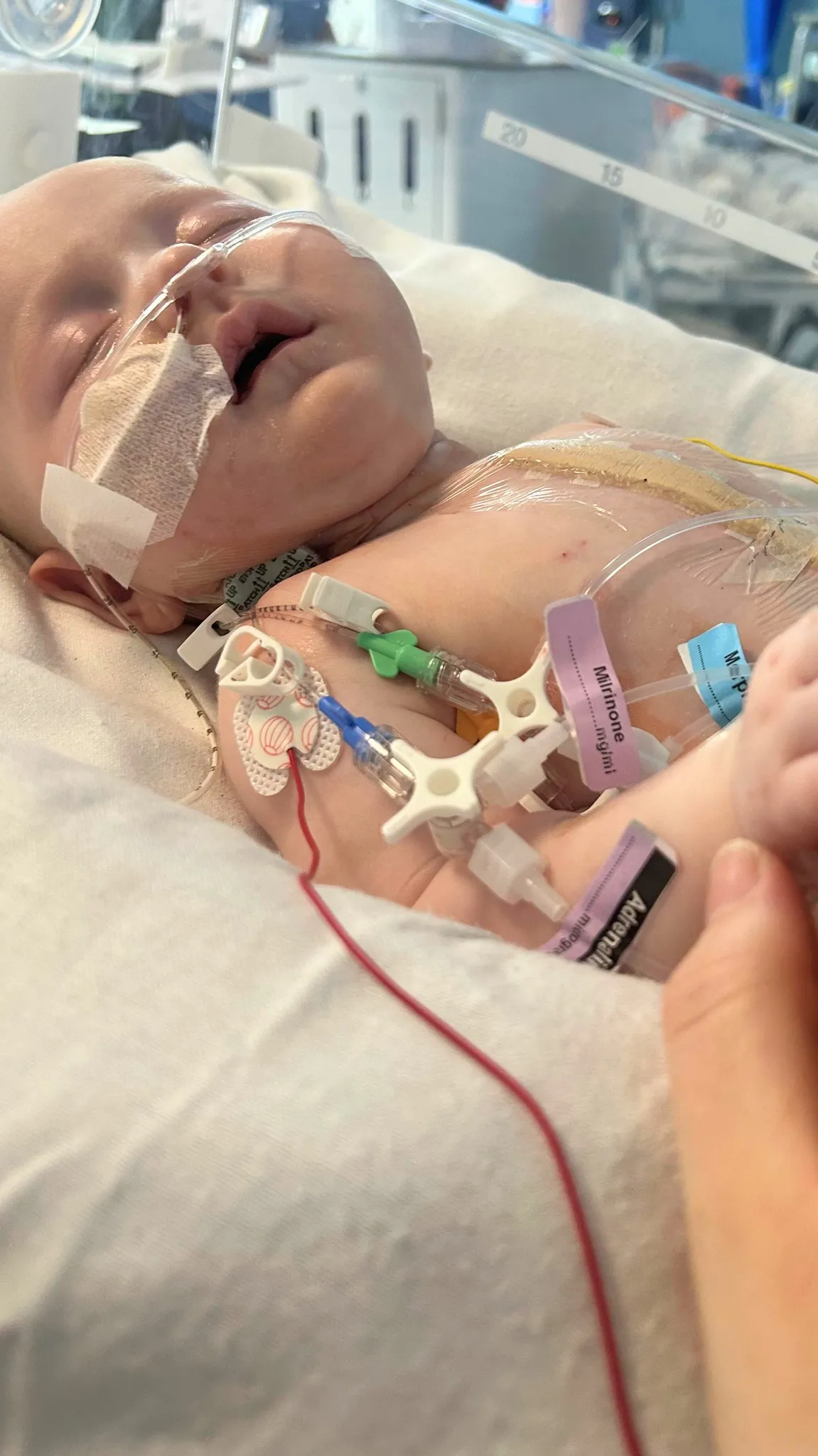
We did not know that her heart had a hole in it.
A ventricular septal defect — a VSD — a gap between the lower chambers of her heart that allowed blood to flow in ways it shouldn’t.
I now understand that VSDs cannot always be seen on ultrasound scans. But at the time, that knowledge did not soften the shock.
Looking back, I sometimes wonder if knowing during pregnancy would have changed everything. Would I have counted each kick with fear instead of joy? Would I have spent those months Googling statistics instead of dreaming about her nursery?
Perhaps, in some strange and complicated way, not knowing allowed me to love her pregnancy freely.
But the diagnosis, when it came, still felt like the ground had disappeared beneath my feet.
Ivy is my second baby.
At home, I already had a toddler — busy, loud, beautifully demanding. Suddenly, I had two under two. My days were a blur of nappies, feeds, snack cups, and interrupted sleep.
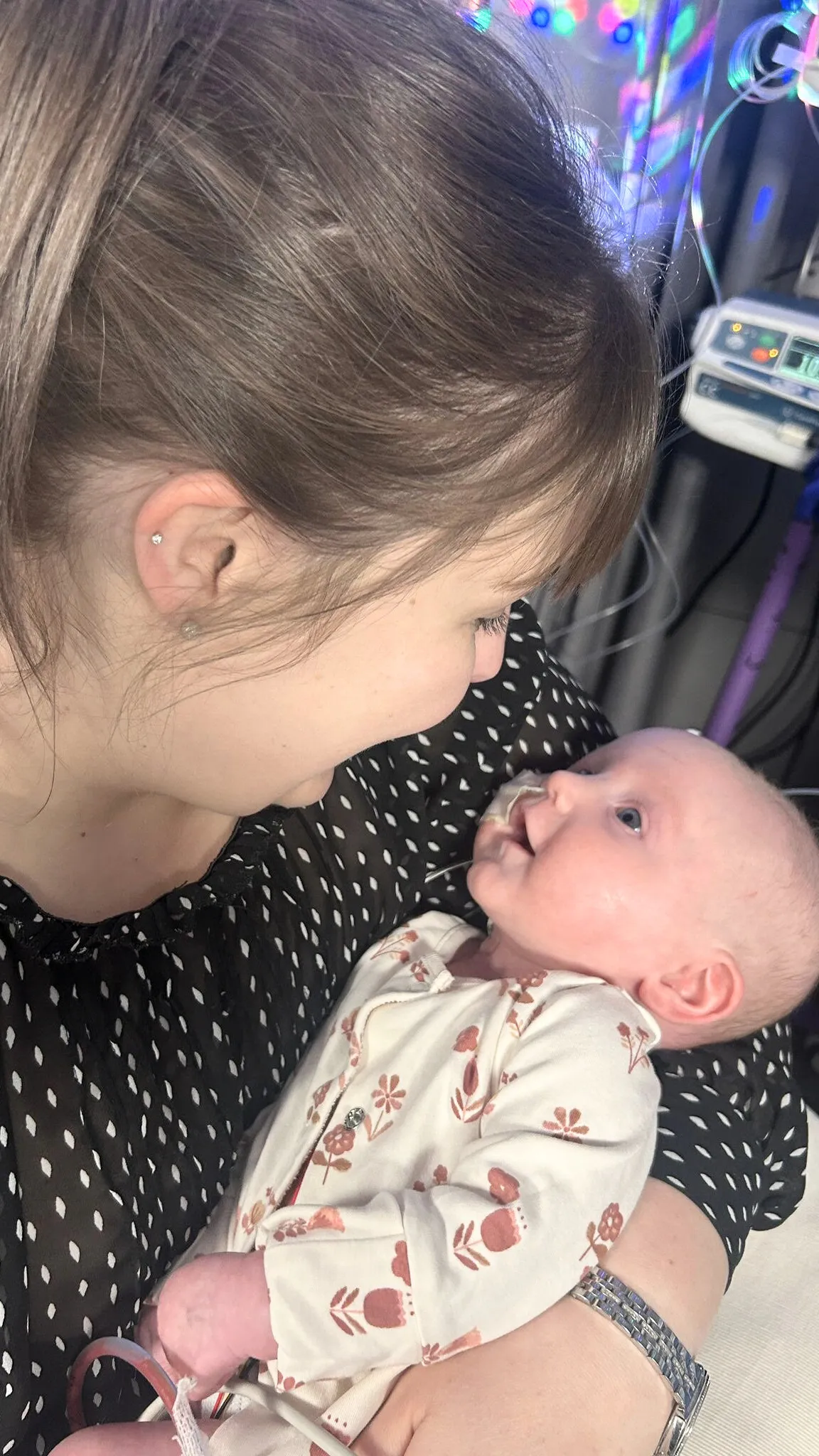
At her routine six-week GP check, the doctor paused.
He listened to her chest longer than usual.
Then he said the word that would reroute our lives: murmur.
A loud systolic murmur.
My heart began to race before I even understood what it meant.
When further investigations confirmed the VSD, my mind did not go to statistics or treatment plans.
It went straight to blame.
What did I miss?
How could I not know something was wrong with my baby’s little heart?
I am a midwife. I support other women through pregnancy and newborn care. I know the signs we are trained to look for.
Surely I should have spotted something.
I replayed everything in my head. Every feed. Every night. Every tiny moment.
Had I been too distracted by my toddler? Too exhausted? Too stretched thin to see what was right in front of me?
The truth is, the signs were subtle.
A couple of times Ivy had felt sweaty, but I assumed I had overheated her in the car seat with too many blankets and a hat. Her breathing was on the faster side, but it always had been, so I thought that was just her normal.
Otherwise, she seemed like a perfectly healthy newborn.
Our cardiologist was gentle in a way that felt like a gift.
They explained that with many VSDs, symptoms do not appear immediately. In the first few weeks of life, the pressures in a baby’s heart and lungs are still adjusting from life inside the womb. It is only around six weeks, when those pressures shift, that the extra blood flow begins to cause noticeable signs.
There was nothing I had missed.
Nothing I could have known.
Hearing that did not erase the guilt instantly, but it loosened its grip.
From that moment on, our world became medical.
Appointments. Echocardiograms. Weight checks.
We learned the language of cardiology — shunts, pressures, chambers, oxygen saturation. Words that once belonged to textbooks now belonged to my daughter.
Feeding became a battle.
Ivy tired easily. She would start strong, then fade halfway through. Her little body was working harder than it should have been, her heart pumping overtime just to keep up.
Despite breastfeeding and top-ups, she struggled to gain weight.
I spent hours watching her breathe.
Counting feeds.
Counting nappies.
Listening to the rhythm of her chest rising and falling.
I loved her fiercely.
And I feared for her just as fiercely.
When we were told that Ivy would need open heart surgery, I felt something inside me shatter — and harden — at the same time.
How do you hand your baby over for something so enormous?
How do you trust that strangers, no matter how skilled, will open your child’s chest and repair what nature got wrong?
The day of her surgery is carved into my memory with unbearable clarity.
We dressed her in a tiny hospital gown. We kissed her forehead again and again, memorising the feel of her skin. We handed her over to the surgical team, and I watched them wheel her away.
Four and a half hours.
That is how long the surgery lasted.
Four and a half hours of pacing corridors, staring at phones, jumping every time a door opened.
Time did not move normally that day. It stretched. It dragged. It pressed heavily against my chest.
When we finally heard that the repair had gone well, I felt my body release a breath I had been holding for weeks.
Ivy amazed everyone.
She did so well that she was extubated in recovery. We never saw her on a ventilator. She spent less than twenty-four hours in PICU before moving to the ward.
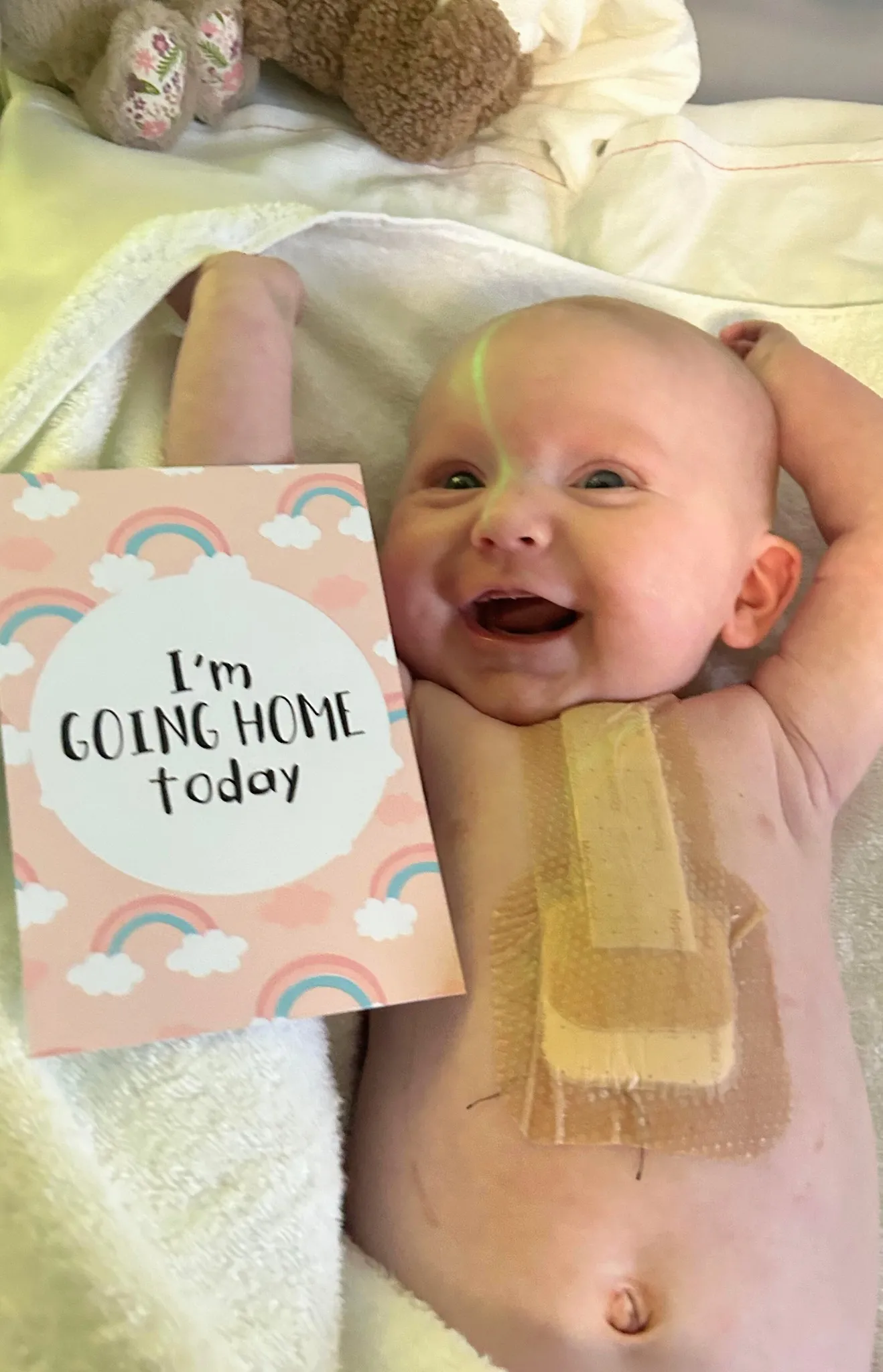
Six days after open heart surgery, we brought her home.
Home.
It felt surreal to carry her through our front door knowing what she had just endured.
One of the most striking things, looking back, was her colour.
Before surgery, she had been pale. We had grown so used to that version of her that we did not fully see it anymore.
After surgery, she looked different.
Pink.
Warm.
Bright.
It was as if someone had turned up the saturation on her life.
I remember staring at her in disbelief.
This is what she was meant to look like.
It felt like meeting a whole new version of my baby — the one her body had been trying so hard to be.
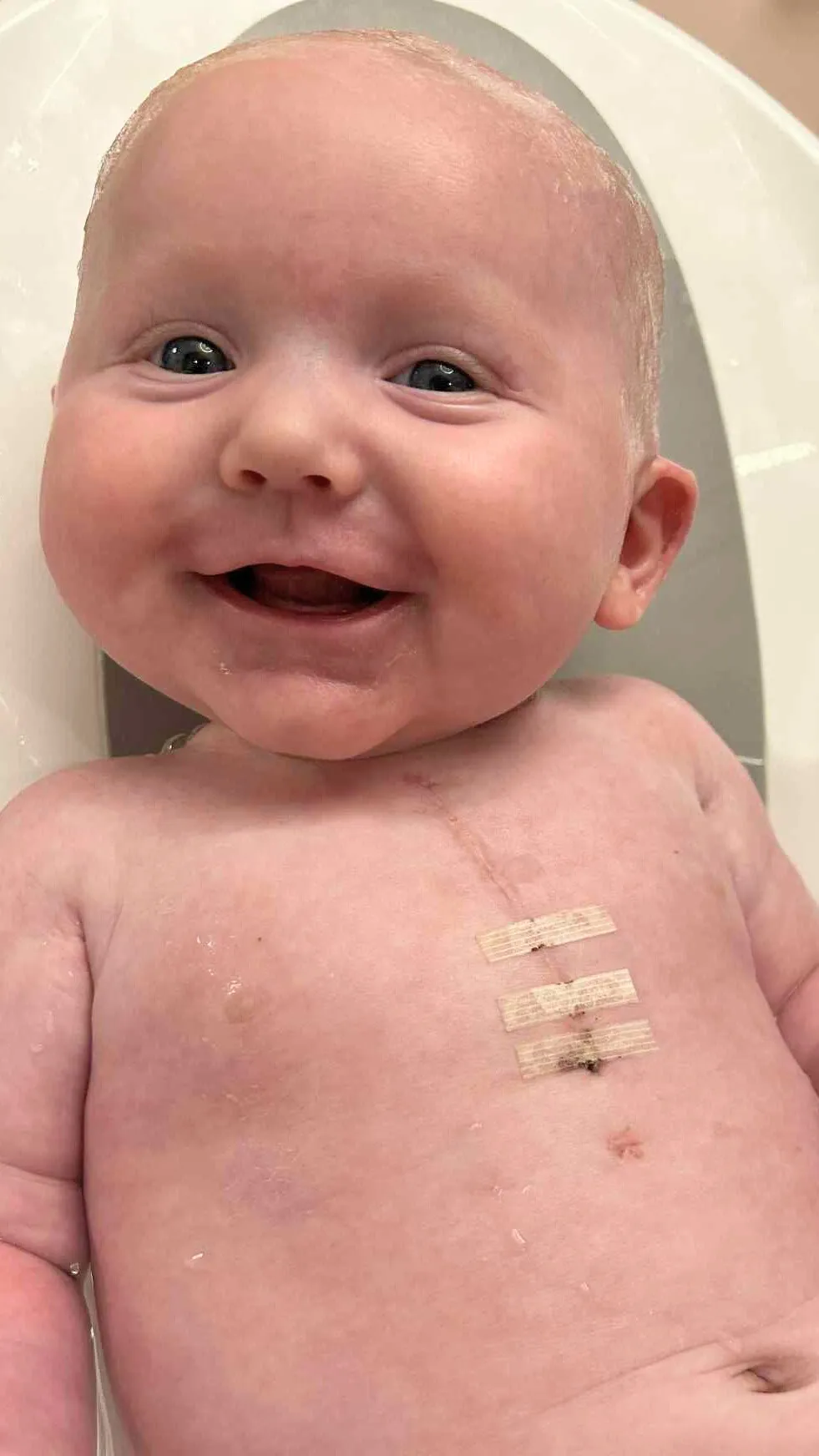
Now, at five months old, Ivy is smiling and growing.
Her scar is healing beautifully, a thin line down her chest that tells a story of courage she will one day understand. She laughs with her sibling. She reaches for toys. She feeds with strength that once felt impossible.
She has been through more in her short life than many people face in decades.
And she has done it quietly.
Steadily.
Bravely.
People tell you babies are resilient.
But when you witness it in your own child — when you see them endure surgery, recovery, and discomfort, and still wake up smiling — it changes you.
It reshapes your understanding of strength.
To any parent standing at the beginning of a heart journey, especially those carrying guilt or wondering what they missed, please hear this:
These conditions can be invisible until they are not.
You did not cause this.
You did not overlook something obvious.
Sometimes, hearts hide their struggles until the body can no longer compensate.
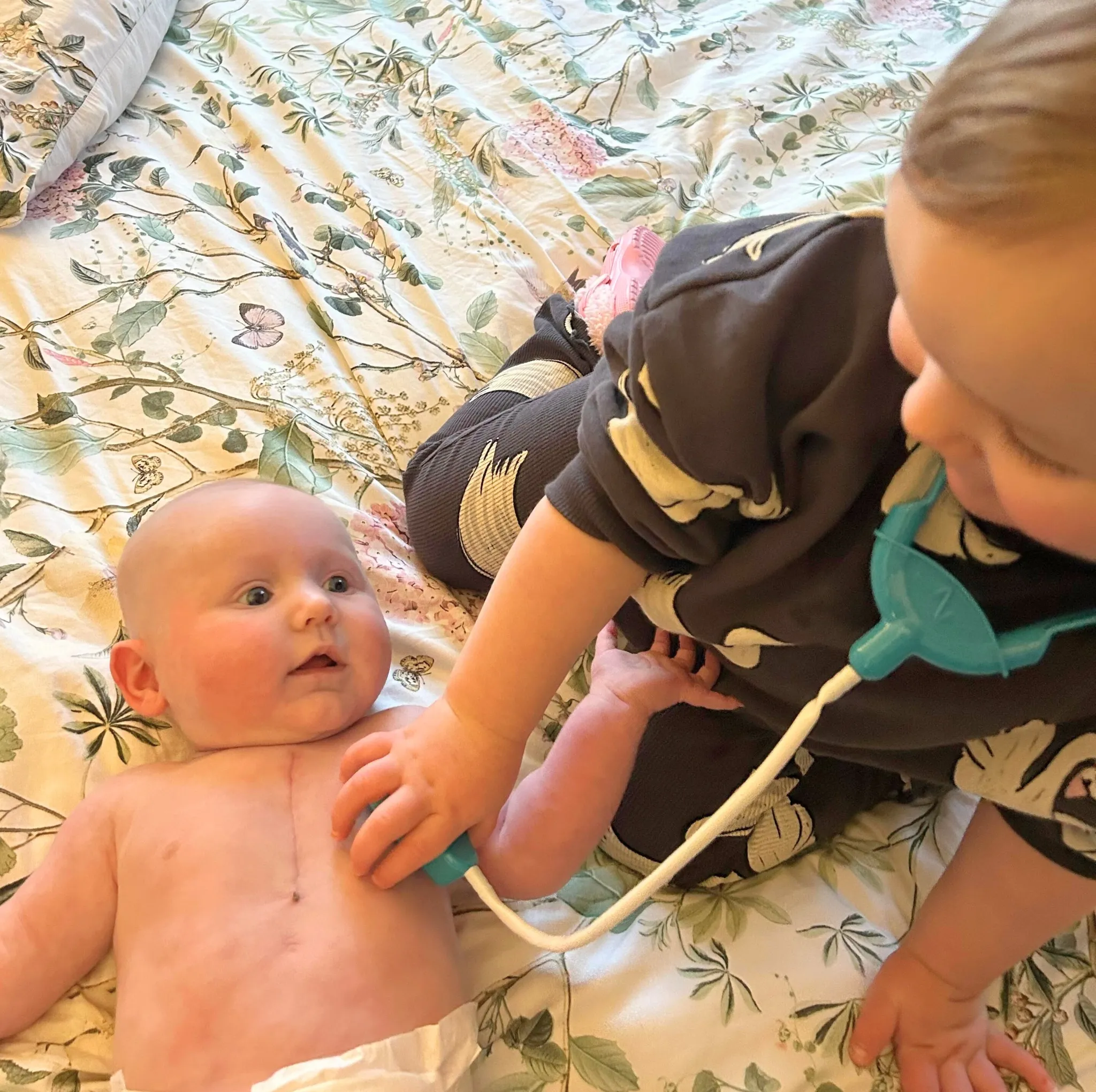
Ivy’s heart needed repairing.
And now it beats stronger because of it.
We are endlessly grateful for the support and awareness provided by Tiny Tickers, whose resources and advocacy make families like ours feel less alone. Knowing that there are professionals, charities, and other parents walking this path alongside us makes even the heaviest days feel lighter.
Ivy is our heart warrior.
And every time I see the pink glow in her cheeks, I am reminded that even the smallest hearts can carry immeasurable strength.