Some families can point to the exact moment their lives split into “before” and “after.”
For Caitlyn, that moment did not come with sirens or flashing lights. It came quietly, the way trauma often does, disguised as a normal school day that ended with her son coming home in pain and no one able—or willing—to explain why.

Joseph is a boy who already carries more than most children ever should. He lives with scoliosis and physical disabilities that require constant care, patience, and protection. His body has always demanded attention, planning, and vigilance. Caitlyn learned early how to advocate for him, how to trust systems she hoped would keep him safe when she couldn’t be there herself.
That trust would later become the deepest wound of all.
Pain entered their story not as a single moment, but as something that lingered and worsened. Joseph came home hurting after a reported incident at school. Caitlyn says she was given little information at first, reassured in ways that felt too quick, too vague. Her son was crying. He was visibly uncomfortable. And yet, she says, he was sent home and told to walk it off.
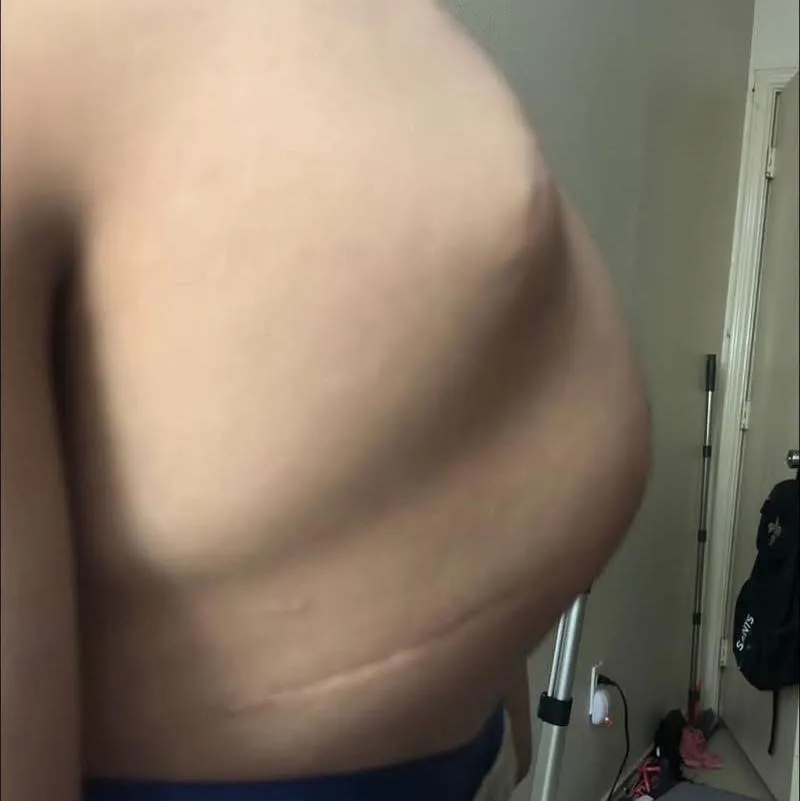
A phrase that now echoes in her mind like an accusation.
Fear followed when the pain didn’t fade.
Days passed. Joseph’s discomfort grew. Caitlyn knew her child well enough to recognize when something was deeply wrong. When doctors finally examined him thoroughly, the truth came into focus with devastating clarity. The hardware supporting Joseph’s spine—hardware placed there to help him stand, move, live—had been damaged.
Broken.
What should have protected him had failed, and the consequences were severe.
From that moment on, nothing in their lives returned to normal. Fear settled into their home, not as panic, but as a constant, low-burning presence. Caitlyn worried about every movement Joseph made. Every complaint of pain. Every school day that followed. The place that was meant to be safe had become something terrifying.
Joseph’s fear was more visible.
School, once part of his routine, became a source of dread. Caitlyn says he began throwing up daily before leaving the house. Anxiety took over his small body, manifesting in ways no child should have to experience. Trust had been broken, and with it, the sense of safety that children rely on to grow.
Setbacks arrived one after another.
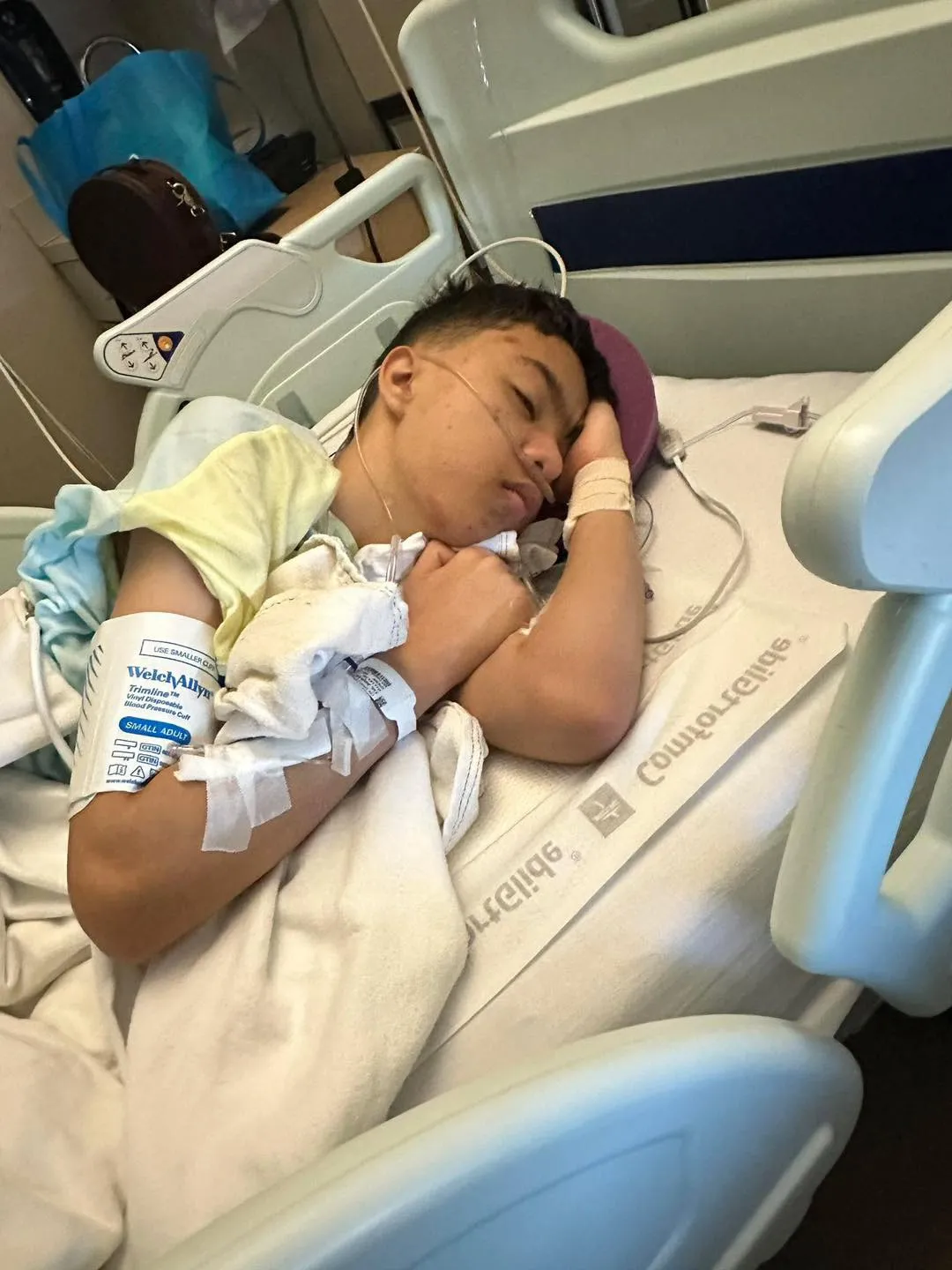
Doctors explained that Joseph would need another surgery. Not a simple one. A long, complex procedure to revise the spinal hardware, to stabilize what had been damaged, to give his bones a chance to heal again. It would mean more rods. More screws. More permanence.
It would mean a new body to learn, again.
The morning of surgery came with a familiar dread. At Driscoll Children’s Hospital, Caitlyn watched her son disappear through doors she has learned to hate. Seven hours passed in a waiting room that felt suspended in time. Seven hours of imagining worst-case scenarios. Seven hours of replaying everything that led them there.
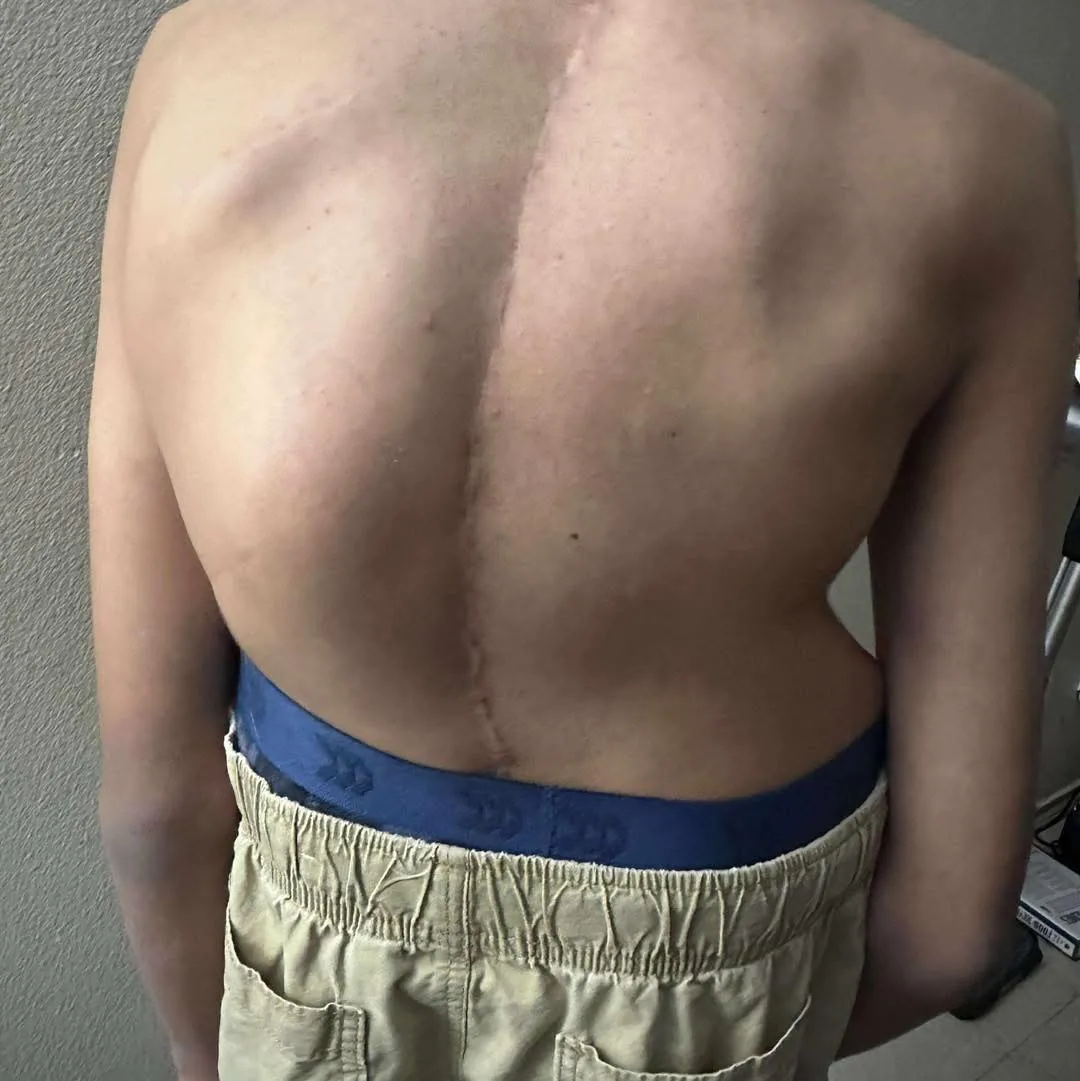
The surgery itself was grueling. Surgeons worked carefully, methodically, installing additional hardware to stabilize Joseph’s spine. Each piece of metal was both a lifeline and a reminder that his body would never be the same.
When the surgery ended, relief did not rush in. It crept.
Joseph was back in recovery, alive, monitored, surrounded by machines that hummed softly in the background. Caitlyn finally exhaled—but only a little. Experience has taught her that survival is not the end of the story. It is just the beginning of another long chapter.
Endurance has become her constant companion.
Caitlyn carries many emotions at once, some of them difficult to name. Grief for the life Joseph had before the injury. Exhaustion from months of advocating, waiting, worrying. Anxiety about the future and what this new reality will demand from both of them.
And anger.
Anger that she trusted others to protect her son. Anger that something so serious was minimized. Anger that answers came slowly, if at all. Anger that Joseph’s fear of schools and teachers now runs so deep it affects his body daily.
Some of the things Joseph once loved are no longer possible. Activities that brought him joy are now memories. His “new normal” includes limitations he did not choose, restrictions written into his spine in metal and screws.
And yet, despite everything, Joseph keeps going.
He endures pain he cannot fully explain. He adapts to a body that behaves differently than it used to. He learns, again and again, what he can and cannot do. His strength does not look like heroics. It looks like waking up. It looks like trying. It looks like trusting his mother when the world has given him reasons not to trust easily.
Hope, in this story, is fragile—but real.
It lives in the careful progress of recovery. In each day Joseph’s body heals a little more. In the prayers whispered in hospital rooms and sent from people who have never met him but care deeply about his fight.
Hope also lives in Caitlyn’s determination.
She wants healing for her son’s body, yes. But she also wants clarity. Accountability. Truth. She believes both things matter. That physical recovery and emotional justice are not separate paths, but parallel ones.
She speaks out not because it is easy, but because silence would cost too much.
Tonight, Joseph rests in recovery, surrounded by the quiet resilience that has come to define his life. Caitlyn stays close, as she always does, holding space for both what has been lost and what might still be possible.
Their journey is not over. The road ahead remains uncertain, shaped by surgeries, healing, and the slow rebuilding of trust.
But there is still hope.
Hope that Joseph’s body will heal.
Hope that his fear will soften with time.
Hope that accountability will bring understanding.
Hope that one day, his life will be defined by more than what happened to him.
And until that day comes, Caitlyn will keep standing beside her son—enduring, advocating, believing—because love, when tested like this, does not disappear.
It becomes stronger.