When Connor Florio was born, he weighed less than eleven ounces.
That’s not a typo.

Less than eleven ounces — about the weight of a human heart. Small enough to fit in the palm of his father’s hand. Small enough that nurses had to move with extraordinary precision just to touch him safely. Small enough that the first question wasn’t about milestones or baby names — it was about survival.
Connor arrived on July 13, 2018, at just 26 weeks gestation. An emergency cesarean section at Westchester Medical Center brought him into a world he was not yet ready to meet. The delivery room, instead of being filled with celebration, was thick with urgency. Machines waited. Specialists stood by. Every second mattered.
Pain came first.
For John and Jamie Florio, becoming parents did not begin with holding their newborn against their chest. It began with watching a team of doctors rush their baby away to the NICU. Instead of lullabies, there were alarms. Instead of swaddling blankets, there were wires and tubes. Instead of newborn photos, there were charts tracking oxygen saturation and heart rate.
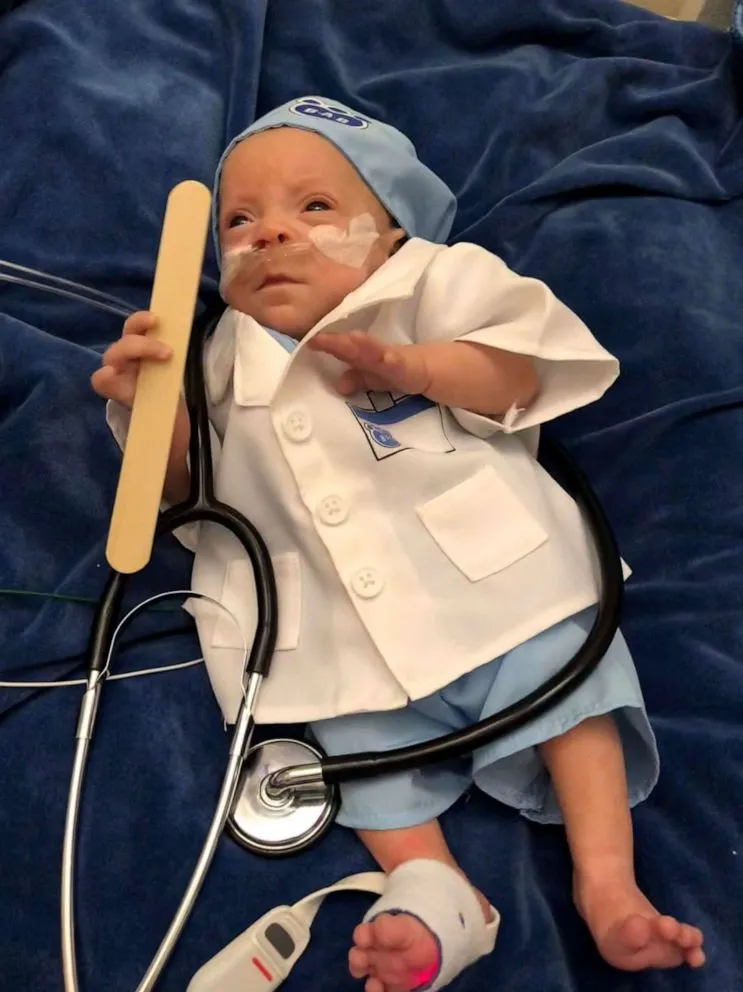
Connor was transferred to the NICU at Maria Fareri Children’s Hospital. There, doctors diagnosed him with chronic lung disease, bronchopulmonary dysplasia, and small for gestational age, among other complications. His lungs were underdeveloped. His body was fragile beyond imagination. The phrase “critical condition” became part of daily vocabulary.
Fear followed immediately behind the diagnosis.
Every day in the NICU is a rollercoaster. One stable hour does not guarantee the next. For premature babies, progress can be undone in moments. John and Jamie learned to measure time differently. A good day was one without setbacks. A good day was steady oxygen levels. A good day was no new complications.
They watched their son fight for breaths most of us take without thinking.
They learned how to place their hands gently through incubator walls, how to speak softly so as not to overstimulate him. They memorized the rhythm of machines that breathed for him. They celebrated tiny victories — a fraction of an ounce gained, a slightly stronger heartbeat, a day without infection.
But there were setbacks.
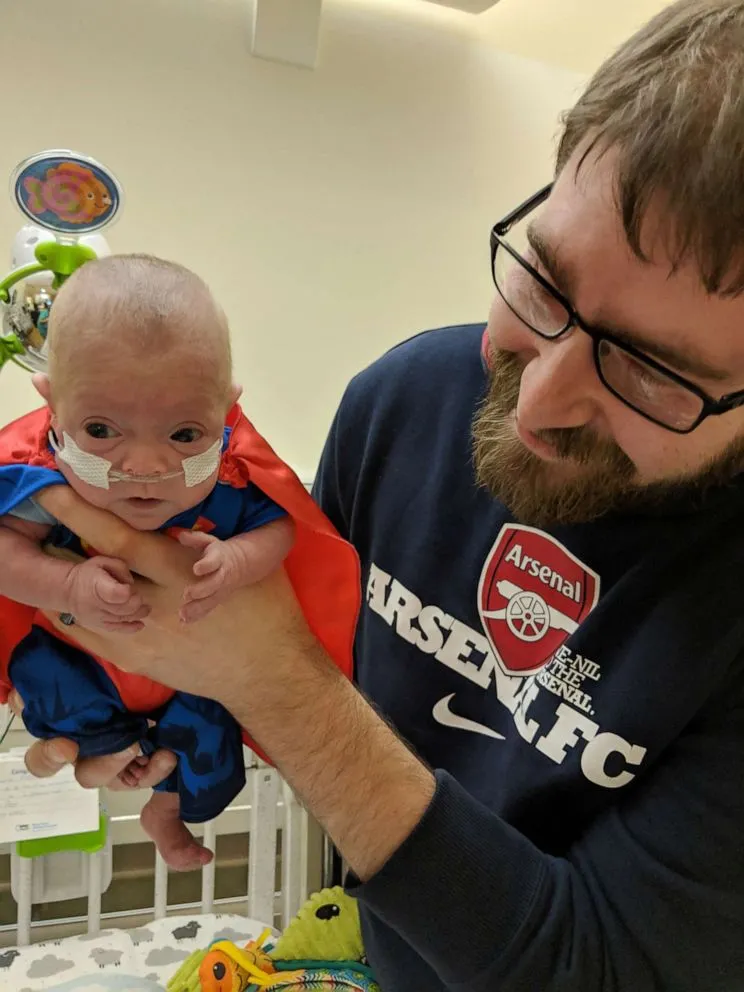
Infections threatened his fragile system. His lungs struggled to keep up with the demands of life outside the womb. Chronic lung disease meant prolonged respiratory support. There were days when doctors adjusted ventilator settings and prepared the Florios for possibilities no parent ever wants to hear.
Each setback felt like starting over.
Each complication reopened wounds that had barely begun to heal.
The NICU became home.
Days turned into weeks. Weeks into months. Other babies came and went. Some families left with balloons and car seats. John and Jamie stayed. They decorated Connor’s space with small reminders of normalcy. They learned the names of nurses on every shift. They marked holidays beside an incubator instead of a Christmas tree.
Endurance settled in quietly.
It lived in the way John showed up every day with steady hands, even when his heart was racing. It lived in Jamie’s whispered encouragement as she leaned over her son’s incubator, telling him to keep fighting. It lived in their decision to believe in tomorrow, even when today felt uncertain.
Connor’s body grew stronger inch by inch.
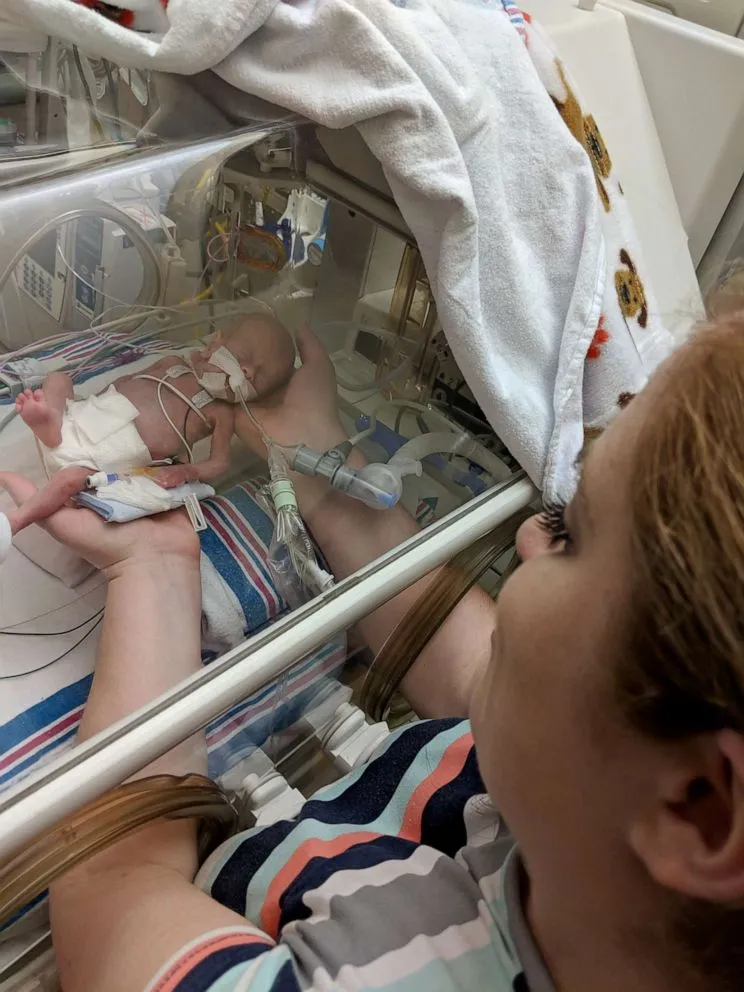
He graduated from one machine to another. Ventilator settings decreased. Feeding tubes were adjusted. Therapists began working with him gently, encouraging development despite months of medical intervention. It was slow. It was exhausting. But it was forward.
After 270 days in the hospital — nearly nine months of alarms, procedures, and prayers — something extraordinary happened.
Connor went home.
On April 9, 2019, he was discharged from Blythedale Children’s Hospital in Valhalla, New York. The day felt surreal. For the first time, John and Jamie could place their son in a car seat not for another transfer between units, but for a ride home.
Home.
The word carried weight they had almost forgotten.
Connor was eight months old by then. Still on medications. Still requiring supplemental oxygen. Still medically complex. But he was alive. He was playful. He was calm. John described him as a baby who loved watching the world around him. A little boy who didn’t cry much. A child who didn’t even seem to mind the family dog greeting him with curious licks.
After 270 days of hospital ceilings, Connor finally had his own.
Pain marked the beginning of his story. Fear hovered over every early breath. Setbacks stretched their resilience to its limits. But endurance carried this family through nearly nine months of uncertainty.
Hope arrived quietly — not as a dramatic miracle, but as discharge papers signed and a front door opened.
Connor’s journey does not erase the scars of those months. Chronic lung disease does not disappear overnight. Prematurity leaves lasting footprints. There will be follow-up appointments. There will be therapies. There will be careful monitoring of growth and development.
But there will also be firsts.
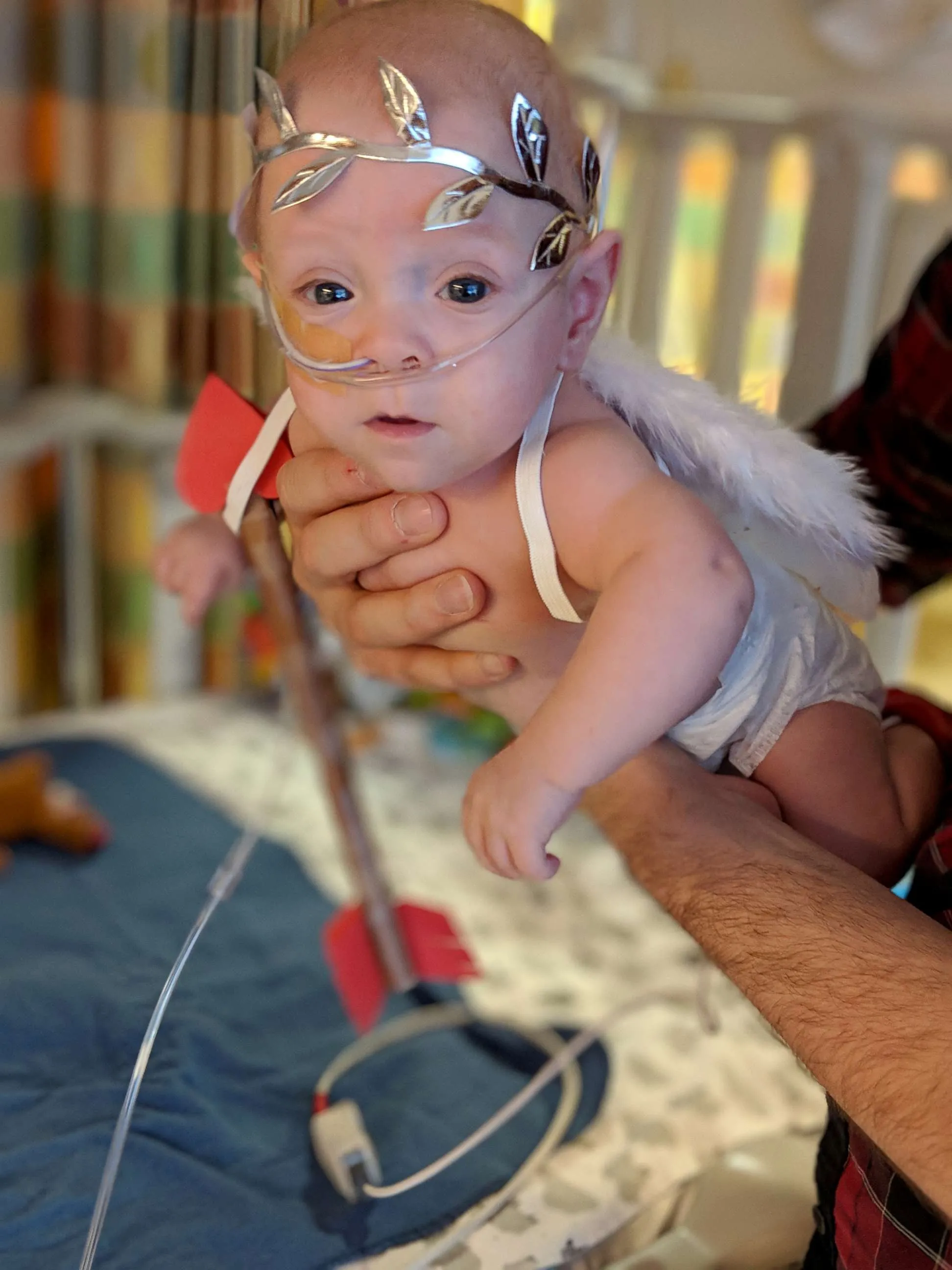
First nights in his own crib. First family dinners around a table that once had an empty chair. First holidays celebrated outside hospital walls.
For families navigating extreme prematurity, the road is long and expensive — emotionally and financially. Extended NICU stays require specialized care, respiratory equipment, medications, and follow-up services that extend far beyond discharge. The burden is heavy. The unknowns are constant.
But Connor Florio’s story stands as proof that even the smallest beginnings can grow into something extraordinary.
Less than eleven ounces.
That was how he started.
Now he is a baby who watches the world with curious eyes, who finds comfort in his parents’ arms, who represents 270 days of relentless perseverance.
If you ever wonder how strong a human heart can be, remember this: Connor was born about the size of one.
And he has been fighting ever since.