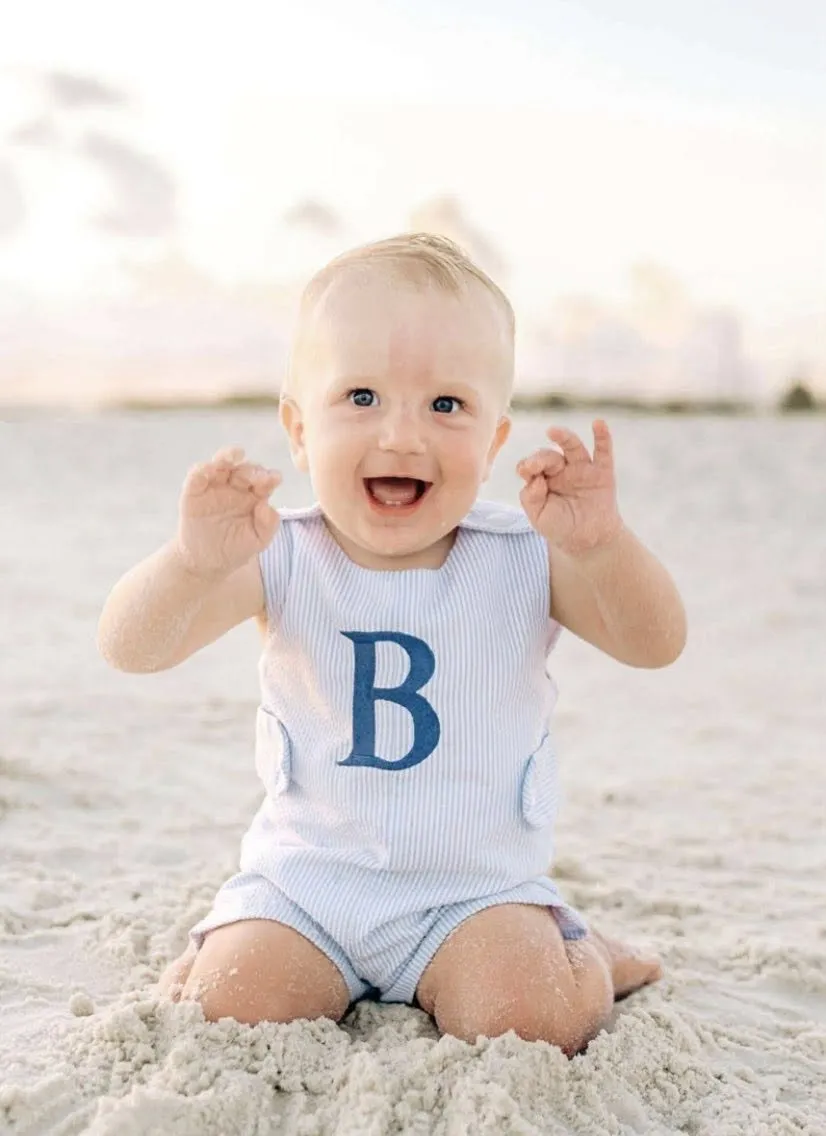
Banks loves golf cart rides, boat rides, and anything that lets him keep moving, the kind of movement that feels like freedom to a toddler who has only just discovered how exciting the world can be. He is curious in that boundless, joyful way that belongs only to very young children, always reaching, always pointing, always wanting to be part of whatever is happening next.

At just about sixteen months old, Banks lights up at the sound of Barney, lunges happily toward every ball he sees, and refuses to sit still for long, as if life itself is something he’s afraid to miss.
But right now, Banks is moving through chemotherapy.
It is a sentence no family ever expects to say about a baby who is barely old enough to form full sentences of his own. A child who should be worrying about snacks and naps is instead learning what it means to be poked, prodded, monitored, and protected. Banks is still the same happy, curious toddler at heart, but his days now unfold in a world shaped by medicine, schedules, and caution.
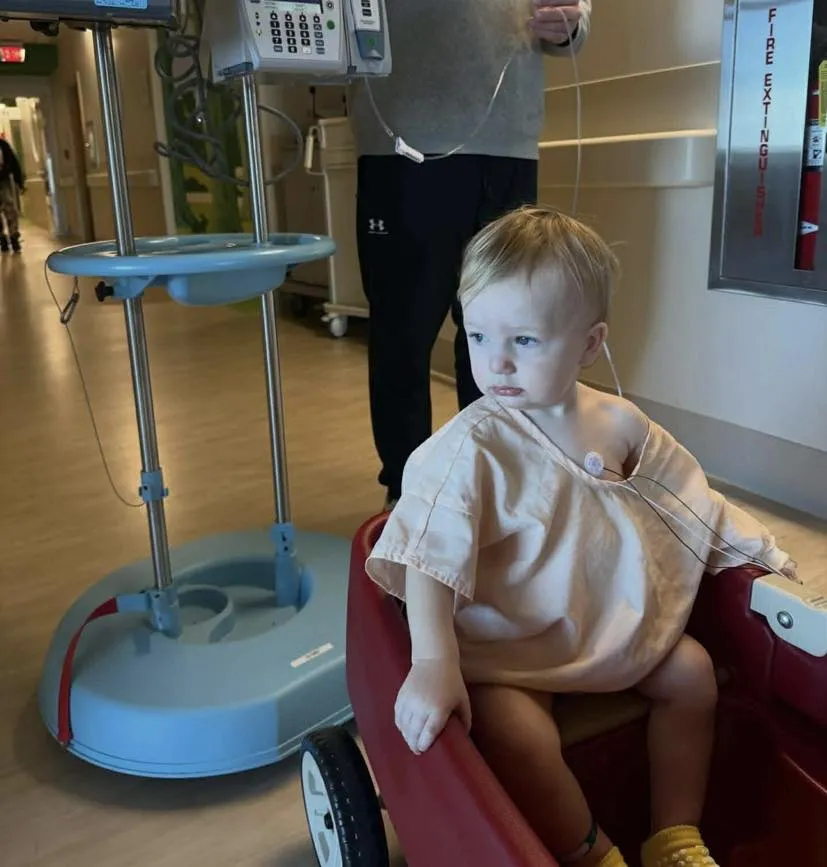
Just over the week of Christmas, when most families were gathering around lights and wrapping paper, doctors made a discovery that stopped time for Banks’ parents. A tumor was found blocking his kidney. Not a small mass that could be watched or waited on, but something shocking in its size—about as large as a youth football. The word tumor arrived suddenly and violently, crashing into a season that had been filled with plans, traditions, and the ordinary joys of having a growing baby.
Everything changed at once.
Surgeons moved quickly, knowing there was no time to hesitate. Banks underwent surgery to remove his left kidney along with the tumor, a procedure that would be daunting for anyone, let alone a child who had only been in the world for sixteen months. His parents handed him over to medical teams with shaking hands and silent prayers, trusting strangers to do what love alone could not.
When the surgery was over, the news carried both relief and weight. The encouraging part came first: the cancer had not spread to Banks’ lymph nodes. For families facing childhood cancer, those words feel like a lifeline, something solid to hold onto in a storm of uncertainty. But the relief did not erase the reality that remained. The cancer was classified as stage II, meaning the fight was far from over.
Banks had already begun chemotherapy.
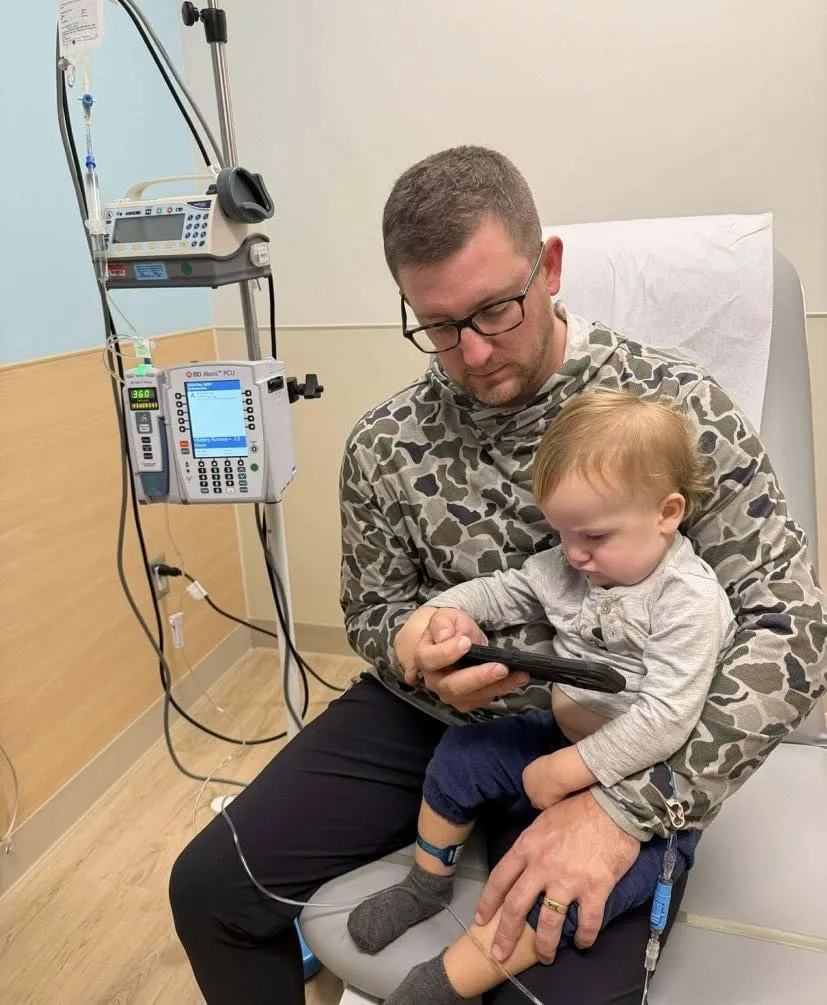
Two different treatments every week.
Five months ahead.
A schedule that does not pause for birthdays, milestones, or moments of exhaustion.
In the days after surgery, something remarkable happened. Banks began to feel like himself again—almost instantly. His parents watched as the child they knew started to reemerge, as if a heavy weight had been lifted from his tiny body. He had more energy. He moved more freely. He walked, talked, and smiled with a brightness that felt like a gift after weeks of fear. That relief was real, and for a moment, it allowed everyone around him to breathe again.
It was as if removing the tumor gave Banks back a piece of the childhood cancer had tried to steal.
But chemotherapy has a way of reminding families that nothing about this journey is simple. As the treatments continued, the harder days began to appear alongside the good ones. The fatigue crept in. The discomfort lingered.
Some days were filled with smiles and motion, while others demanded rest, patience, and careful watching. The rhythm of Banks’ life became unpredictable, shaped by how his small body responded week by week.
Through it all, his parents learned to celebrate cautiously. A good morning did not guarantee a good afternoon. A burst of energy could be followed by exhaustion. They learned to live in the present, to take joy where it appeared, and to hold space for the difficult moments without letting them define the entire day.
There is still uncertainty ahead.
Doctors are waiting on pathology results to determine whether Banks’ cancer is genetic, a question that carries significant weight. If the cancer is found to be genetic, it could change everything—altering his treatment plan and possibly adding more chemotherapy to an already demanding road. For now, that answer remains out of reach, suspended in the space between tests and time.
Until then, the focus is both simple and overwhelming.
Help a baby heal.
Keep him healthy.
Protect him from germs so his body can continue receiving treatment.
For a toddler, this means fewer outings, fewer crowds, fewer chances to explore the world the way he naturally wants to. For his parents, it means constant vigilance, careful planning, and a level of responsibility that feels impossibly heavy when paired with love this deep. Every sniffle matters. Every exposure is considered. Every decision is weighed against the question of what will keep Banks safest today.
And yet, Banks keeps showing up as himself.
Despite the hospital visits and treatment days, he remains joyful. Determined. Curious. He still wants to move. Still wants to play. Still wants to reach for every ball in sight. His laughter still breaks through the hardest moments, reminding everyone around him that he is not defined by cancer, even as he fights it.
His family has begun calling this season “Banks’ Battle,” a name that holds both the reality of what he is facing and the hope they refuse to let go of. It is not a battle he chose, but it is one he is meeting with a resilience far beyond his years. One small step at a time. One treatment at a time. One carefully protected day at a time.
In quiet moments, his parents reflect on how quickly life changed. How a baby who loved golf cart rides and boat rides now knows the inside of oncology rooms. How a tumor the size of a youth football tried to rewrite their son’s story. And how, despite everything, Banks continues to push forward, surrounded by love that feels stronger than fear.
They hold tightly to hope—not the loud, unrealistic kind, but the steady hope that carries families through long nights and uncertain mornings. Hope that treatment is working. Hope that the pathology results will bring clarity rather than more questions. Hope that one day, chemotherapy will be something they talk about in the past tense.
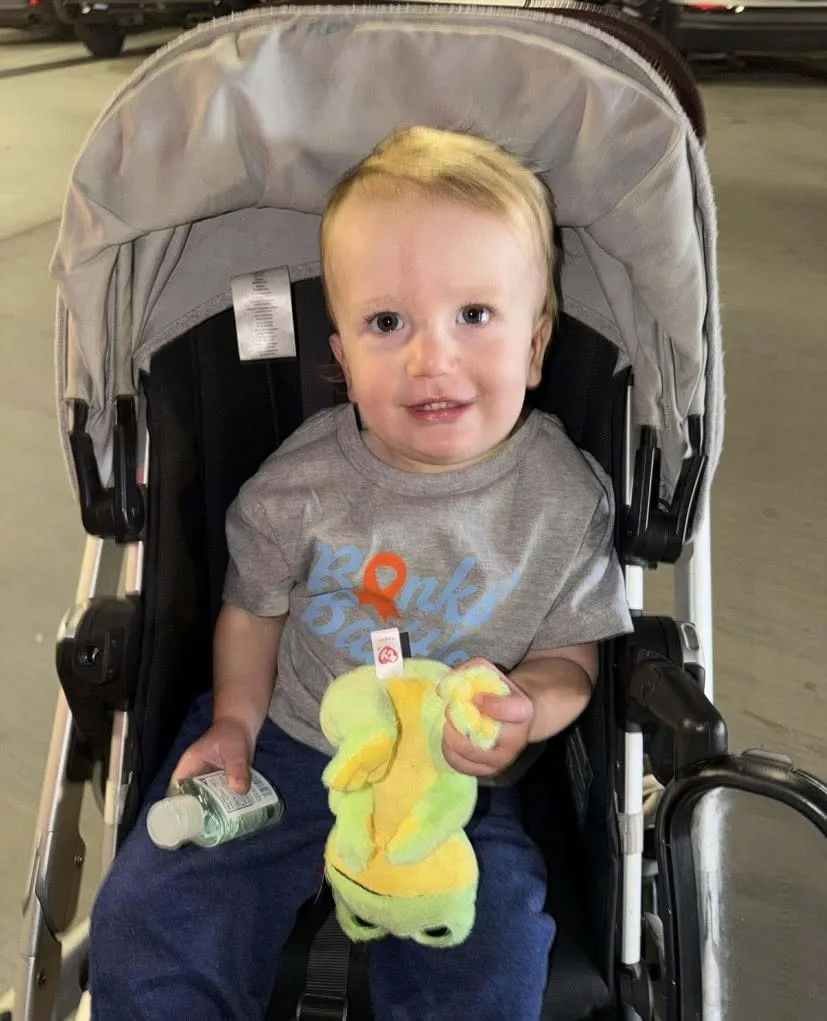
For now, they ask for prayers. Not only for healing, but for strength, protection, and endurance. For wisdom in every decision. For peace in moments when worry threatens to take over. And for the ability to keep seeing Banks not just as a patient, but as the joyful little boy he has always been.
Banks’ Battle is far from over. There are months ahead filled with appointments, medications, and waiting. But there is also laughter. Movement. Curiosity. And a child who continues to remind everyone around him what courage looks like in its purest form.
At sixteen months old, Banks does not understand cancer. He does not know what stage II means or why chemotherapy is necessary. He knows only that he is loved, that he is cared for, and that the world is still full of things worth reaching for.
And so he keeps going.
One smile.
One step.
One small, brave moment at a time.