Nobody wakes up expecting the exact moment their life will fracture, but for Stacey Doctor, that moment arrived without warning on a long, empty stretch of highway. One second she was a tired, pregnant mother of two, focused on the familiar pressures of parenting and travel.

The next, she was staring at her three-year-old son, Garrett, and realizing that something inside their ordinary day had gone terribly wrong.
They had traveled nearly six hours from their isolated northern community to the nearest city to take care of errands that required distance and planning—an eye exam for their oldest daughter, Kennedi, groceries, diapers, and supplies they wouldn’t easily access again.
They stayed overnight in a small motel, expecting nothing more than mild inconvenience and exhaustion. Garrett had been cranky since morning, upset after falling out of bed and refusing breakfast. His mood followed them through the day, clingy and irritable, but nothing about it raised alarm. It felt like a hard day, not a dangerous one.
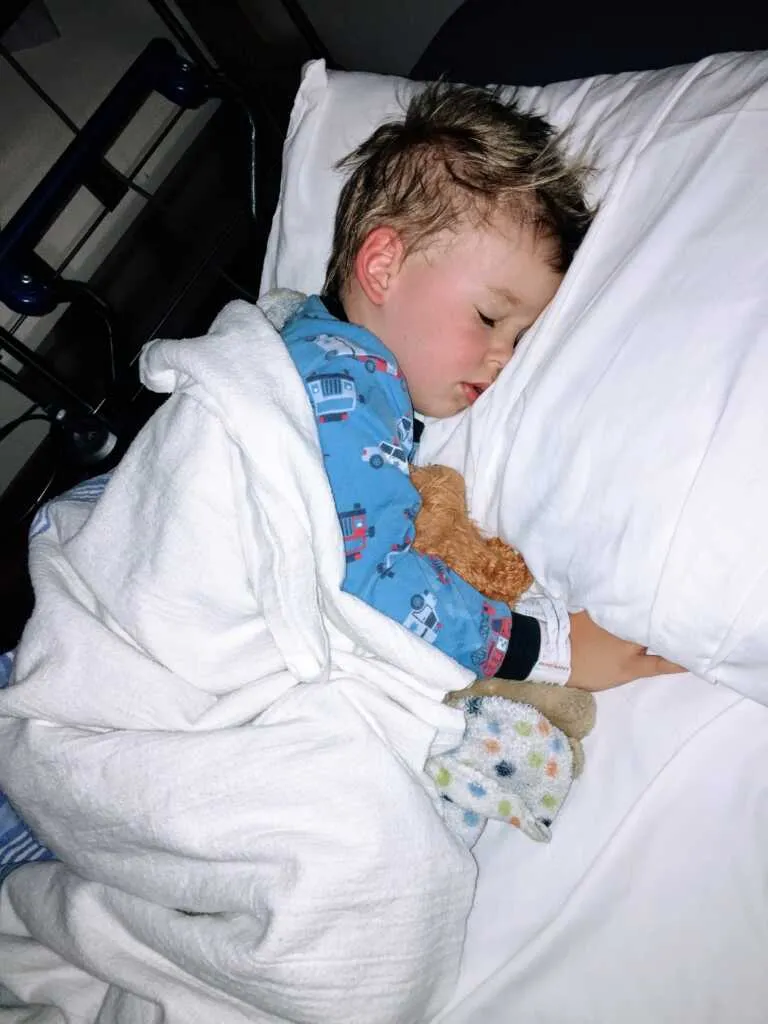
About an hour into the drive home, Kennedi suddenly burst into laughter. Stacey laughed too, turning in her seat to see what her daughter was pointing at. That was when her world shifted. Garrett’s body looked wrong. His arms were drawn tightly to his chest, his eyes open but rolled back, orange drool sliding down his chin as his body bounced rhythmically in his car seat.
A strange sound came from him, something Stacey had never heard before and never wanted to hear again. She froze for a split second, then screamed his name, reaching back and hitting his legs, desperate for a response that never came.
Fear arrived in a violent rush. Her husband pulled the truck onto the gravel shoulder of the highway, and Stacey scrambled out, half barefoot, hands shaking so badly she could barely unbuckle the car seat. They were completely alone—no cell service, no traffic, nothing but trees and sky. She didn’t know if Garrett was choking, having a stroke, or dying in her arms.
She only knew that whatever was happening was terrifying and completely beyond her control. They laid him down on the tailgate, Stacey searching frantically for a pulse, trying to hear his breathing over the pounding of her own heart. Time stretched unbearably until, suddenly, Garrett went still. His chest rose. He took a breath.
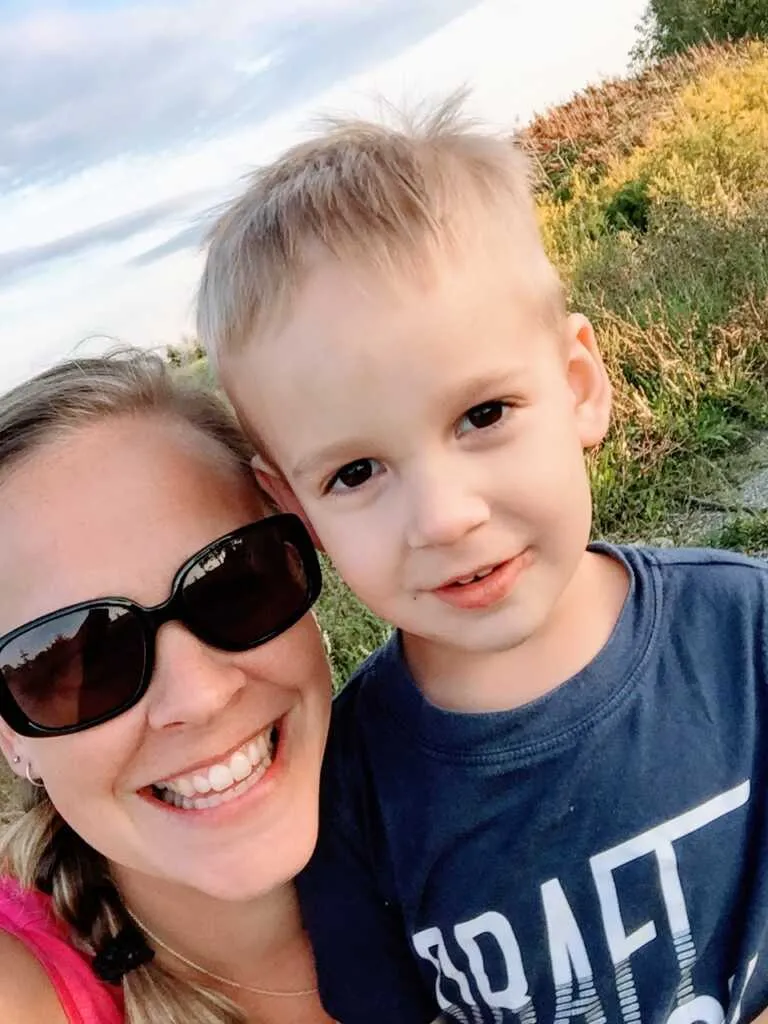
They raced to the nearest town, clinging to urgency and hope. At the small clinic, doctors assumed Garrett had experienced a febrile seizure. Tests came back normal. A CT scan, bloodwork, and an EEG showed nothing concerning. Stacey didn’t feel convinced, but exhaustion and the desire for reassurance overpowered her instincts. They were sent home and told there was nothing to worry about.
Ten days later, Garrett had another seizure. Six hours after that, he had a third. All were tonic-clonic, violent and unmistakable. This time, the word epilepsy entered Stacey’s life and never left.
The diagnosis felt surreal, especially after being told so confidently that everything had been normal just days earlier. Fear settled into their home, quiet but relentless.
The months that followed were worse than the seizures themselves. Medication after medication was prescribed, each one carrying the promise of relief and delivering devastation instead. Stacey watched her bright, energetic little boy fade into someone she barely recognized. His balance disappeared. His speech became slurred.
His eyes grew dark and distant. He slept endlessly and suffered more frequent, more severe seizures. Within six weeks, Garrett was having as many as twenty seizures a day. He fell constantly, injuring his head and face as Stacey searched desperately for something that would help without harming him further.
In the middle of this chaos, Stacey gave birth to her youngest child, Sadie. She arrived like a fragile beam of light in an otherwise suffocating darkness. Sadie did not fix the nightmare they were living, but she gave Stacey a reason to keep moving.
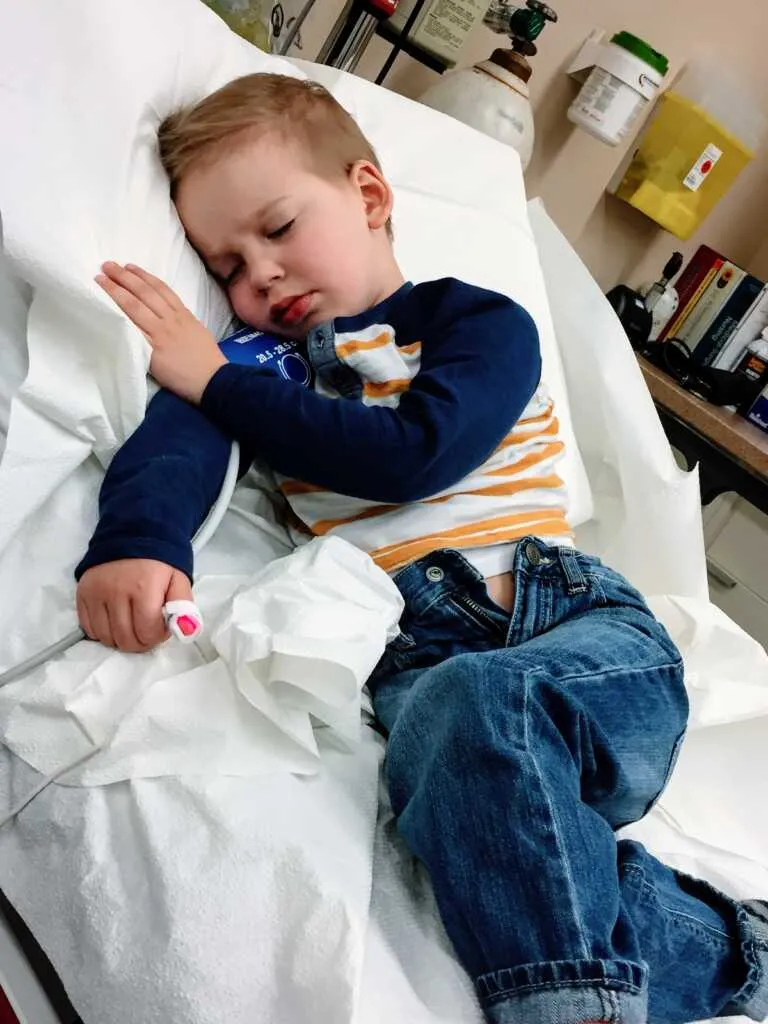
Stacey carried her in a baby carrier while holding Garrett’s hand, trying to shield him from falls, from pain, from a world that suddenly felt unsafe. She meticulously recorded every seizure, every medication, every bite of food, convinced that somewhere in the details was an answer no one else could see.
Nights were the hardest. While the house slept, Stacey sat alone at her computer, searching relentlessly for explanations. Progressive epilepsy. Degenerative syndromes. Poor prognoses. Every search result delivered a new wave of terror. Still, she refused to accept that this was Garrett’s future. Endurance became obsession.
She pushed for referrals, demanded testing, and sought second opinions. When Garrett turned four, Stacey packed up her newborn and her seizing child and flew to Toronto, leaving her husband and eldest behind. She didn’t know how long she would be gone. She only knew she couldn’t stop.
During the flight, Garrett seized seven times. Stacey hovered over him, shielding him from view, refusing help, afraid that any interruption would delay the answers she needed so badly. Once in Toronto, the testing was exhaustive—MRIs, EEGs, spinal taps, genetic testing—but still no clear cause emerged. Hope thinned, but it did not disappear.
On the drive home months later, Garrett suffered his worst seizure yet. Rescue medication failed. His body went limp. At the Montreal Children’s Hospital, Stacey stood frozen as a code blue was called, watching doctors rush to save her son’s life. Garrett survived. A new medication finally stopped his daytime seizures, though the nightly ones remained, unpredictable and relentless.
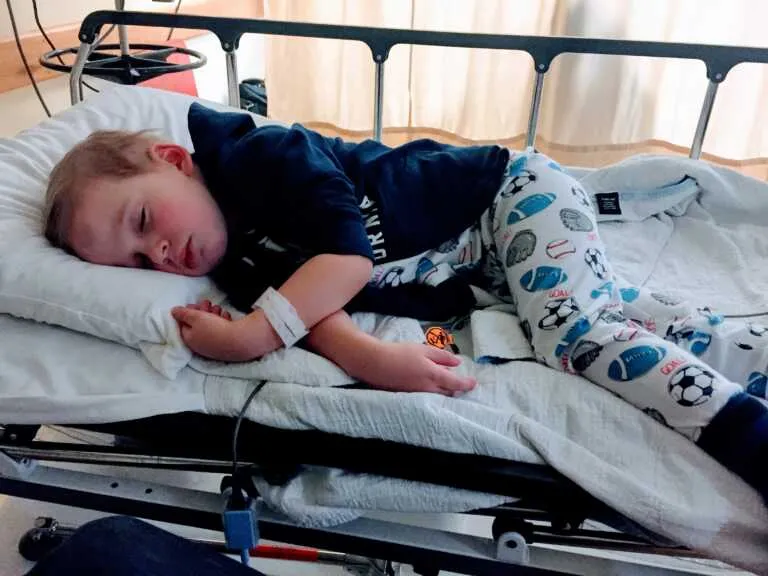
Today, Garrett is nine years old. He still lives with seizures and cognitive challenges. He still struggles with side effects.
But he also laughs, builds Legos, plays video games, and snuggles his mother without apology. A seizure response dog named Freedom now walks beside him, offering comfort, alerting to danger, and providing a constant source of unconditional love.
Hope looks different now. It is no longer a cure or a clear diagnosis. It is quality of life. It is progress measured in inches. It is the refusal to stop searching. Garrett’s epilepsy remains undiagnosed, frightening, and unpredictable, but surrender is not an option.
Stacey knows they may never have answers, yet she also knows this: they will keep trying, keep advocating, and keep loving Garrett fiercely. Because hope, she has learned, is not found in certainty. It is found in persistence.