For most parents, a baby’s first cry is a sound that cuts through fear and replaces it with relief. It is proof of breath, of life, of a beginning that feels safe enough to believe in.
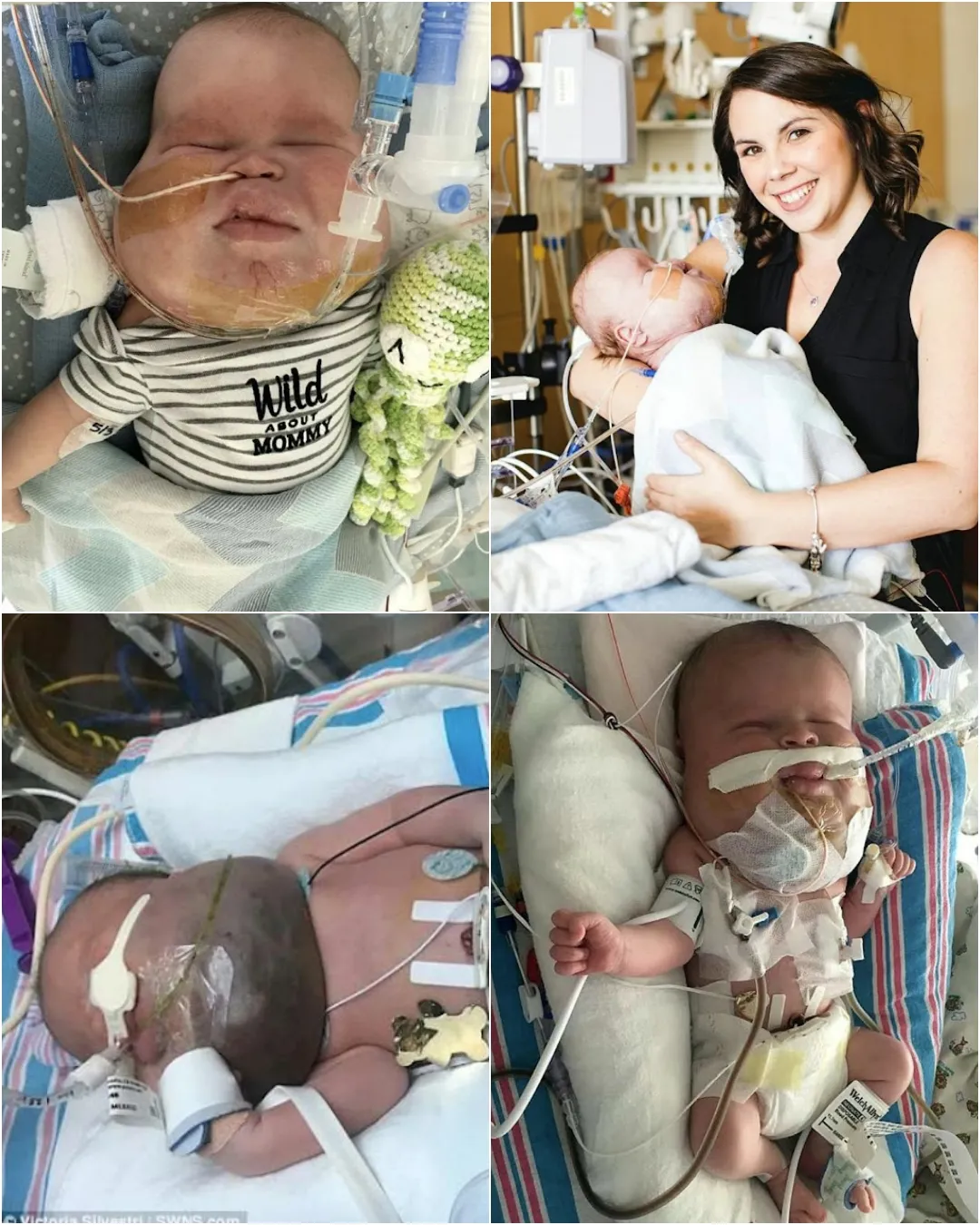
For Victoria Silvestri, that sound has never come. Instead, she has lived every day since her son was born listening to a silence that carries more weight than any noise ever could.
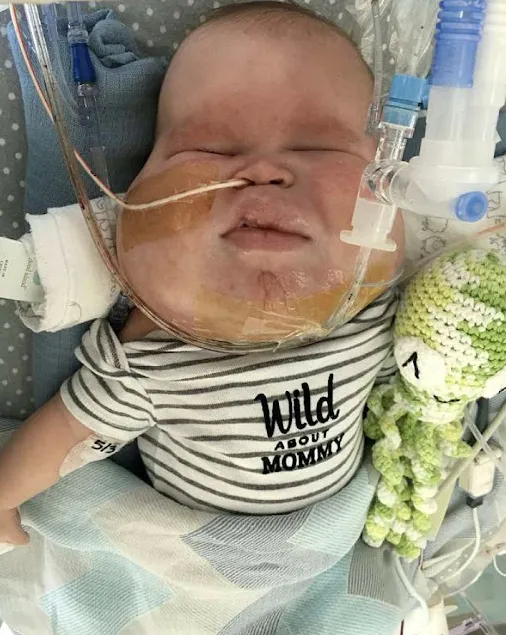
Victoria was only twenty-seven years old when her pregnancy took a turn she never saw coming. At her routine eighteen-week scan, the room changed in a way she would never forget.
Doctors grew quiet. Measurements were repeated. The screen held their attention longer than it should have.
They told her her unborn son had cystic hygroma, a rare condition that caused hundreds of fluid-filled cysts to form across the lower half of his face. The cysts spread over his cheeks, chin, lips, and neck, distorting his tiny features before he had even been born.
More terrifying than how it looked was what it threatened. The cysts wrapped dangerously close around his airway, raising questions about whether he would be able to breathe at all.
From that moment forward, fear became a constant companion. It followed Victoria into every appointment, every night of restless sleep, every quiet moment when her hand rested on her growing belly.
She researched everything she could. She asked endless questions, trying to prepare herself for a future no one could clearly describe.
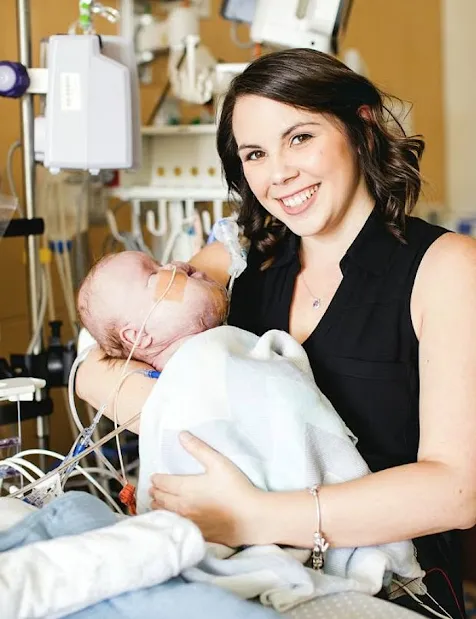
Still, nothing could truly prepare her for the day Gavin entered the world.
She was scheduled for a C-section on February eighth, carefully planned to ensure every specialist needed would be in the room. But Gavin had his own timeline.
Labor began a full week early.
Her husband, Joe Silvestri, also twenty-seven, was out of state coaching a college basketball game. There was no way for him to make it back in time.
Instead of holding Victoria’s hand in the delivery room, Joe watched the birth of his son through FaceTime. Miles away, powerless, he watched as their baby fought for his very first breath.
The delivery room was full. Doctors, nurses, specialists, and equipment crowded the space, each person focused on one thing only.
Keeping Gavin alive.
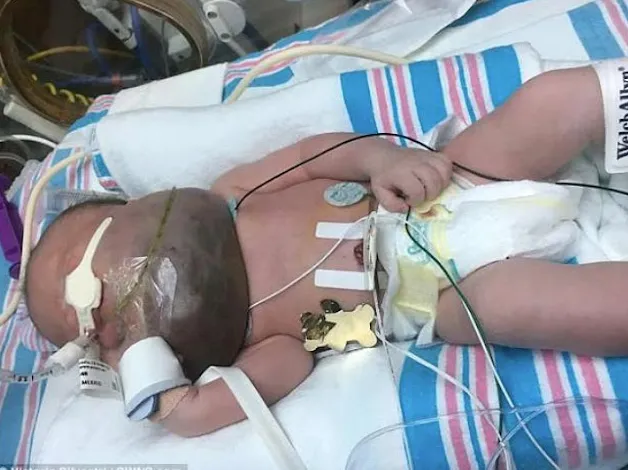
The birth was high-risk, but everything unfolded exactly as planned. In a moment that should have been filled with cries and celebration, Gavin was born and immediately rushed away.
There was no pause to hold him. No time to count fingers or whisper his name.
He was taken straight to intensive care at Nicklaus Children’s Hospital in Florida, where he has remained ever since.
When Victoria finally saw him, she was not shocked. She had been preparing herself since the diagnosis.
“All I saw was my baby,” she would later say. “I wasn’t shocked at all.”
Inside the womb, the cysts had formed tightly around Gavin’s windpipe, leaving his airway dangerously restricted. During the C-section, doctors inserted a breathing tube directly into his trachea to keep him alive.
That tube has remained ever since. And because of it, Gavin cannot cry.
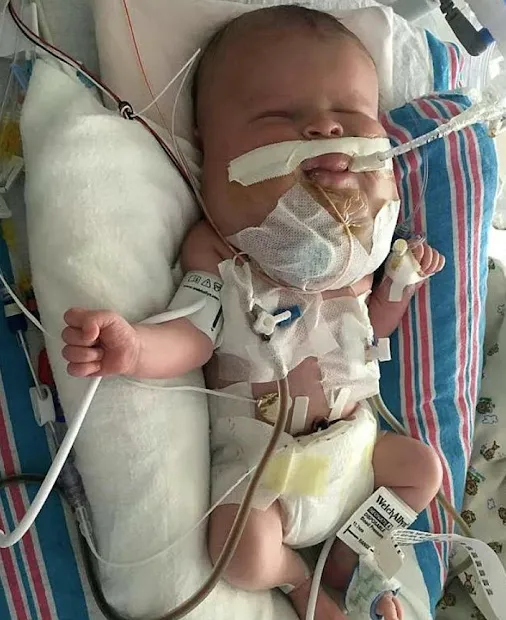
For more than three months, Victoria has sat beside her son’s hospital bed listening to machines instead of a newborn’s voice. She watches the steady rise and fall of his chest, waiting for a sound she has never heard.
“He tries,” she says softly. “But he can’t. I’ve never once heard Gavin cry.”
Gavin’s entire life has been spent in intensive care. Machines hum constantly around him, monitors tracking every breath, every heartbeat, every small change.
He has already endured a grueling seven-hour surgery to remove dead tissue from his face caused by the cysts. His tiny body is still healing, and doctors must wait before determining the next steps.
Despite everything his body has endured, Victoria says Gavin is calm in a way that surprises everyone. There is a gentleness to him that feels almost unreal given what he has been through.
“He’s such a little warrior,” she says. “He’s peaceful. It’s incredible.”
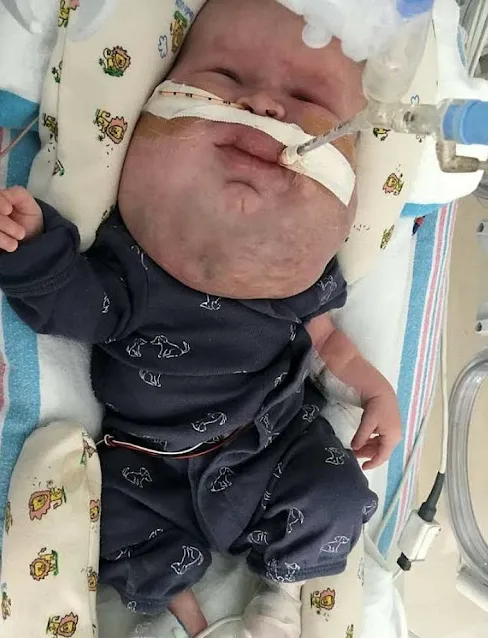
The hardest moments come unexpectedly. Not during procedures or surgeries, but in ordinary conversations.
Victoria hears other mothers talk about sleepless nights, about babies who cry endlessly, about exhaustion that comes from being up all night soothing their newborns. Those conversations cut deeper than anyone realizes.
“A lot of mums take for granted bringing a baby home,” she says. “It hurts, because I would give anything to be up all night listening to my baby cry.”
To her, crying does not mean inconvenience. It means breath. It means freedom.
Still, hope remains.
Doctors believe Gavin will need more procedures, but his parents are holding onto the possibility that he could finally come home next month. Once his surgical incision heals, doctors plan to fit him with a tracheostomy tube.
That single step could allow him to leave the hospital for the first time.
At home, Gavin’s room is already waiting. His crib stands empty, untouched and patient.
His clothes are folded neatly. His toys sit where they were placed months ago, waiting for hands that have not yet explored the world.
Sometimes Victoria goes home for a few hours. She walks into his room and imagines him there.
“Everything is ready for him,” she says quietly.
On her hardest days, she draws strength from other parents who have walked similar paths. She connects with families whose children were born with cystic hygroma and are now thriving.
One mother she met had a baby with the same condition just months earlier, and today that child is doing well. That story keeps Victoria standing when her knees feel weak.
The road ahead remains uncertain. There are no guarantees, no promises carved in stone.
But Victoria holds onto one simple dream. A moment most parents never stop to consider.
“The first time I hear him laugh,” she says, her voice breaking. “Or the first time I hear him cry. That will be everything.”
Until that day comes, she waits by his side. She listens to the quiet.
She learns that courage does not always roar. Sometimes it does not make a sound at all.
Sometimes courage looks like sitting beside a hospital bed day after day, loving a child whose voice you have never heard. Sometimes strength lives in silence.
And sometimes hope is not something you hear. It is something you believe in, even when the world is quiet.