Molly, a loggerhead sea turtle, had already survived decades in the wild around the Florida Keys. She had seen storms, avoided predators, and navigated the treacherous waters with the instinct of her species. Yet nothing in her life could have prepared her—or those who would later care for her—for the unexpected and life-threatening challenge she would face in August 2025.

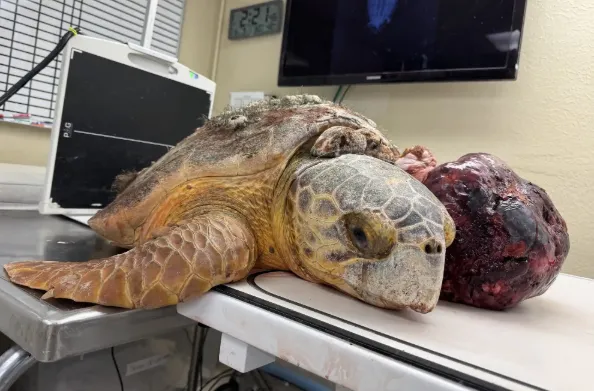
A local fisherman first spotted her tangled in commercial fishing lines attached to a crab trap. On top of the entanglement, a massive, bulbous tumor had grown on her neck, weighing an astonishing 10 pounds. For a creature already accustomed to the dangers of the ocean, this tumor was a threat like no other. It sapped her strength, restricted her movements, and left her vulnerable in ways that could have ended her life.
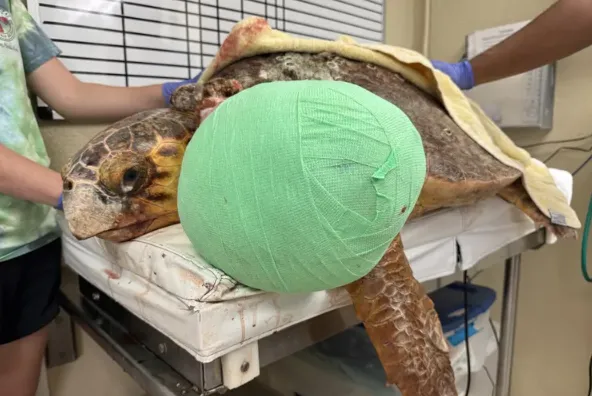
Rescue came in the form of The Turtle Hospital, a specialized facility in the Florida Keys dedicated to rehabilitating injured sea turtles. The staff, led by experienced veterinarians like Dr. Terry Norton and overseen by manager Bette Zirkelbach, immediately recognized the severity of Molly’s condition. Not only was she entangled, but the tumor had caused her to become extremely anemic, further compromising her chances of survival.
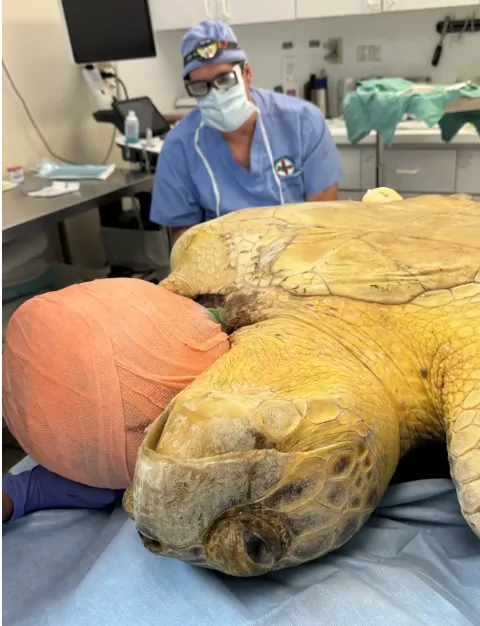
Just three days after her rescue, Molly underwent a three-hour-long surgery to remove the life-threatening tumor. The procedure was delicate and complex; the tumor’s size and placement posed unique risks. Every incision, every movement had to be calculated to prevent further injury and give Molly a chance to heal. After years in the wild, facing the unpredictability of the ocean, she now faced the equally uncertain hands of human intervention.
The surgery was a success. The 10-pound tumor, the largest ever successfully removed from a sea turtle, was gone, and Molly began the slow road to recovery. Yet recovery was only the first step. For weeks, she had to regain her strength, recondition her muscles, and adapt to life without the tumor that had been a constant, crushing presence. Her diet was carefully monitored—mackerel, squid, and lobster—to ensure she had the energy needed for her second surgery and for full rehabilitation.
On September 24, over a month after her first surgery, Molly returned to the operating room. Smaller tumors were removed during this second procedure, giving her the final step she needed to be fully free from the ailments that had threatened her life. Each surgery, each day of care, each feeding session represented a triumph over adversity—not just for Molly, but for the team that had dedicated themselves to her survival.
The staff at The Turtle Hospital monitored her every move, documenting progress with meticulous notes, photographs, and observations. For a creature who could not speak, every blink, every nudge, every slight movement was a story of resilience. She was more than a patient; she was a survivor, a symbol of hope for all endangered sea turtles, and a reminder of the delicate balance between human care and natural life.
On November 25, after months of careful monitoring and rehabilitation, Molly was returned to the ocean. Higgs Beach became a scene of celebration, where hundreds of supporters, conservationists, and animal lovers gathered to witness her return to the waters that were rightfully hers. As she glided into the Gulf of Mexico, a satellite tracker—carefully attached to her shell—would allow her caretakers and the public to follow her journey for the next two years, keeping tabs on her movements and ensuring her safety.
Molly’s story is extraordinary not only for the physical challenges she overcame but for the emotional journey she inspired. Her survival depended on the compassion, expertise, and tireless effort of the staff at The Turtle Hospital. Each act—from the delicate surgery to the feeding, from monitoring her vitals to celebrating her first swim without aid—was a testament to human empathy and the belief that every life matters.
She is a reminder that even in the harshest circumstances, intervention and care can transform despair into hope. From the moment she was entangled and weighed down by a tumor to the day she returned to the Gulf, Molly’s journey demonstrates the resilience of life and the power of second chances.
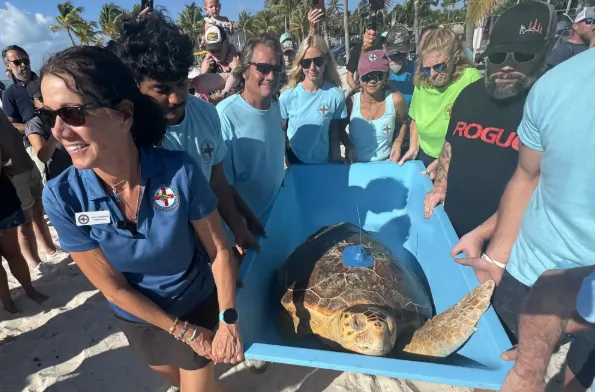
Her release was more than a return to the wild; it was a celebration of perseverance. It highlighted the importance of conservation, the critical role of specialized care facilities, and the bond between humans and the creatures they protect. It gave hope to advocates, volunteers, and ordinary people alike, reminding them that dedication can literally save a life.
In the end, Molly’s story transcends her species. It is a universal tale of survival, hope, and the profound impact one life can have on many. While her struggles were silent, her triumph resounds loudly, echoing across oceans, hearts, and minds. For those who watched her fight, for those who cared for her tirelessly, and for those who celebrated her freedom, Molly is a symbol of the miracles that happen when compassion meets action.