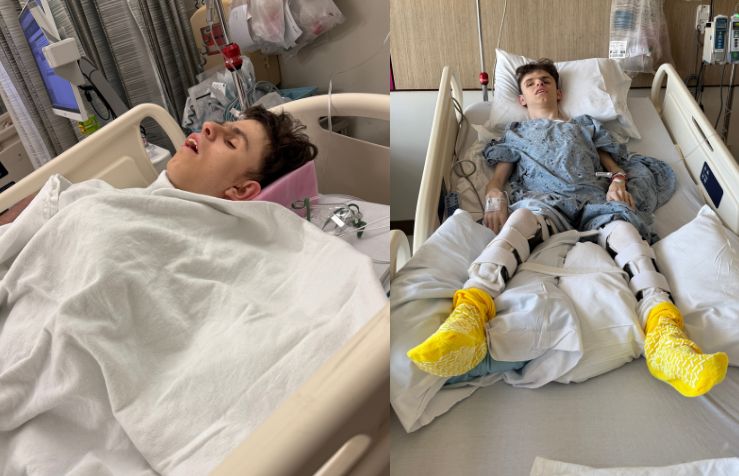
Olaf came into this world far too early, born at just 28 weeks of pregnancy. From the very beginning, life tested him in ways most people will never understand. On the third day after birth, he suffered cerebral hypoxia and cardiac arrest. In that moment, his heart stopped. Olaf died for the first time — and was brought back. It was only the beginning of a journey marked by pain, resilience, and unimaginable strength.

He survived, but survival came at a terrible cost. In the weeks and months that followed, Olaf developed sepsis, meningitis, and a severe E. coli infection. He suffered a quadriplegic stroke that led to posthemorrhagic hydrocephalus, requiring the insertion of a peritoneal shunt. His tiny body faced anemia, retinopathy, and eventually a diagnosis that would define much of his life: cerebral palsy. Olaf’s childhood was never about play or carefree days. It was about survival. His parents have said goodbye to him three times already — each time unsure if it would be the last.
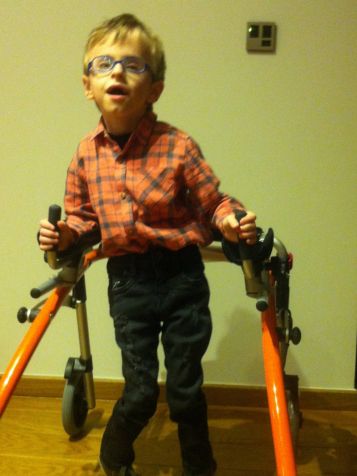
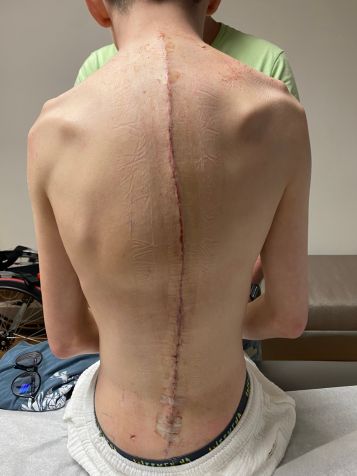
During his 17 years, Olaf has undergone countless complex surgeries. His heart valve, eyes, and spine have all required surgical intervention. At the age of six, he developed rapidly progressing kyphoscoliosis — a severe posterior-lateral curvature of the spine that compressed his organs and threatened his life. Breathing became difficult. Eating was a struggle. Pain was constant. In 2022, after years of searching for help, Olaf underwent a life-saving spine surgery at the Paley Clinic in the United States.
That surgery changed everything. For the first time, Olaf could breathe deeply. His organs returned to their proper positions. He could eat normal meals again. The pain that had dominated his life eased. His parents dared to hope that perhaps the worst was finally behind them.
But happiness, for Olaf, never lasts long.
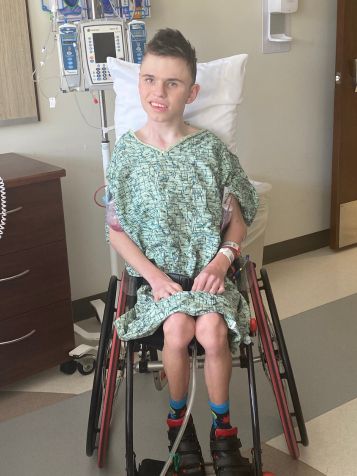
In 2024, he underwent another surgery in the US — a femoral derotation. The goal was to reduce tension in his legs and protect the reconstructed spine. Instead, tragedy struck again. A severe complication occurred: damage to the peroneal nerve. Olaf’s pain returned, stronger than ever. He could no longer sleep through the night. Nothing brought him joy — not even singing, the one thing he loved most. As if that weren’t enough, his epilepsy returned with increasing frequency and intensity.
An urgent gluteal muscle transplant became necessary. The surgery alone cost over 200,000 PLN, followed by six months of intensive on-site rehabilitation costing another 100,000 PLN. Because of Olaf’s condition, travel had to be arranged in a higher class so he could remain bedridden. And even this was not the end — a tibial derotation surgery still lies ahead. The fight seemed endless.
In April 2025, Olaf underwent the muscle transplant and leg surgery. The excruciating pain that had tormented him finally stopped — a small but meaningful victory. Long-term rehabilitation began immediately. Yet epilepsy continued to haunt him, refusing to let go.
During their stay in the United States, doctors told Olaf’s parents about something extraordinary: NeuroCytotron therapy. This innovative treatment, available only in Monterrey, Mexico, uses electromagnetic waves to rebuild damaged neuronal connections in the brain. For children like Olaf, whose brain was damaged after a quadriplegic stroke, this therapy represents a true breakthrough — hope where medicine had nearly given up.
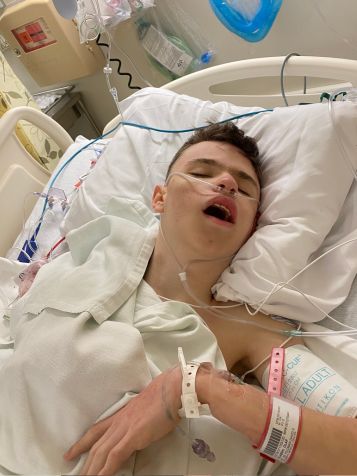
Thanks to funds raised earlier, Olaf completed his first NeuroCytotron protocol. The results, even after one cycle, were undeniable. His parents watched in amazement as small changes appeared day by day. Olaf became calmer and more focused. His concentration improved. He began seeing more clearly at a distance. His speech grew more logical — he started forming sentences, using more words, and connecting them to real situations. His sleep improved too. For the first time, he began sleeping on his back, stretching after waking, a sign of deeper, more restful sleep. His facial expressions softened; spasticity decreased. He even began, at times, to close his mouth — something he had never been able to do before.
These may seem like small things. For Olaf, they are monumental.
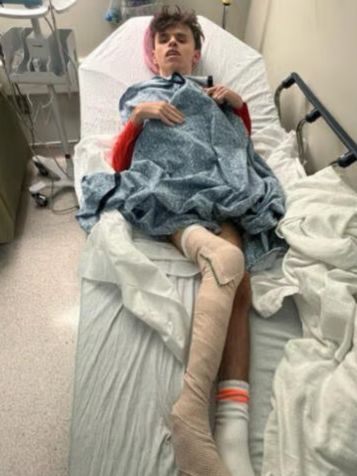
After completing the first protocol, Olaf qualified for the second NeuroCytotron cycle, scheduled for April 2026. However, the gluteal muscle transplant did not bring the full results doctors had hoped for. His leg remains shorter, and his foot is still positioned in a clubfoot posture. His parents are now seeking help at another specialized clinic in the United States.
NeuroCytotron therapy has already proven it can restore circulation in Olaf’s legs, reduce spasticity, and offer hope of controlling his epilepsy. It can rebuild neurons and their connections. But the cost is staggering. A single treatment cycle costs approximately
300,000 PLN, and Olaf needs several more. Travel and accommodation add even more to the burden — far beyond what his parents can manage alone.
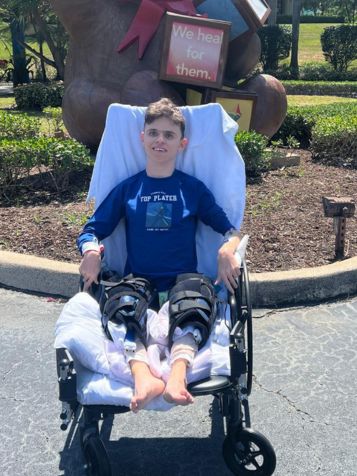
Today, Olaf is back in Poland, stronger in some ways, still fragile in many others. His parents are exhausted — physically, emotionally, financially. They have given everything. And yet, they keep going, because Olaf is still here. Still fighting. Still responding to treatment.
They are asking for help not because they want to, but because they have no other choice.
Olaf’s life has been saved more times than most people can count. With support, it can continue — with less pain, fewer seizures, and more moments of peace, clarity, and joy.