When we received the diagnosis during the fourth month of pregnancy, our world collapsed in an instant. The doctors spoke calmly, but their words cut through us like cold steel: our daughter, Blanka, had an extremely complex and incurable heart defect — DORV, TGA, SV, HAA, CoA, VSD, ASD II — along with multiple systemic hypoplasia and even an inverted position of her organs. We sat there in silence, holding hands, unable to breathe. We knew her life would be a constant struggle from the moment she entered this world, yet we also knew with absolute certainty that we would fight for her with everything we had.
Blanka was born on September 16, 2025. She took exactly one breath before doctors placed her in a medically induced coma. She stayed that way until October 20. For more than a month, our newborn daughter lived connected to cables and machines, her fragile body fighting harder than any child ever should. On the third day of her life, surgeons wheeled her into the operating room for the Norwood procedure. But her tiny heart was so swollen that it was impossible to close her chest afterward. They covered it only with gauze, and we prayed that it would be enough to keep her alive.
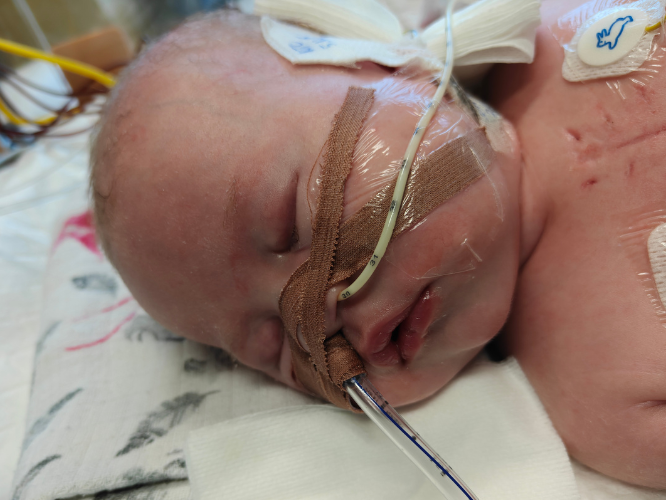
Every two days, we drove 300 kilometers each way just to see her — because we weren’t allowed to stay overnight. Those drives were heavy with fear. Each time the phone rang, our hearts stopped, terrified that it might be
the call no parent ever wants to answer. Then, on October 20, something miraculous happened. Blanka opened her eyes. She looked at us, fragile but determined, and offered the faintest smile. It felt like she was whispering,“Mom, Dad… I’m here. I’m fighting.” In that moment, all the exhaustion, fear, and despair lifted just enough for hope to breathe again. That tiny smile became our strength.
We were finally able to take her home on November 26 — but home does not mean safety. Blanka is still fed through a nasogastric tube, and her life depends on constant medication and careful monitoring. Any change in her breathing, any moment of choking or breathlessness, could mean danger. We watch her monitors the way other parents watch baby monitors for bedtime cries. Every number, every beep matters to her survival.
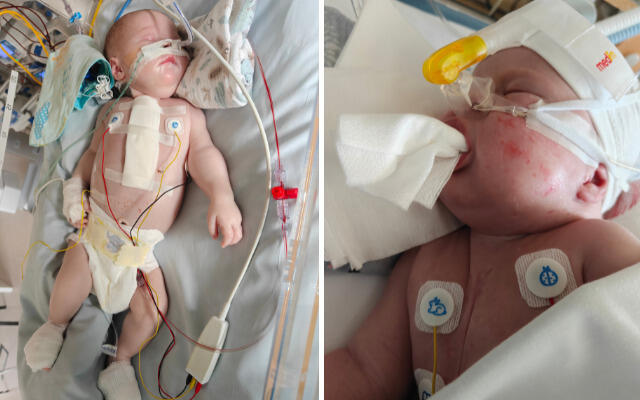
And her journey is far from over. Blanka still needs two major, complex heart surgeries ahead of her. The first, the Glenn procedure, is scheduled for the spring of 2026. The second, the Fontan surgery, will take place when she is around three years old. Together, these surgeries will help create a single functional circulation system, allowing her blood to oxygenate more effectively and easing the impossible burden currently placed on her lone functioning ventricle. Without these surgeries, she cannot survive. With them, she may have a chance at a childhood beyond hospital walls.
But the challenges don’t end there. Blanka’s organs are reversed — a mirror image of how they should be — making every medical examination more complicated and every diagnosis more uncertain. Even her heart sits on the right side, not the left. Because she spent so long in a coma, her development is delayed, and she is currently too weak to qualify for rehabilitation. Every milestone is harder, every movement slower, every hope more fragile.
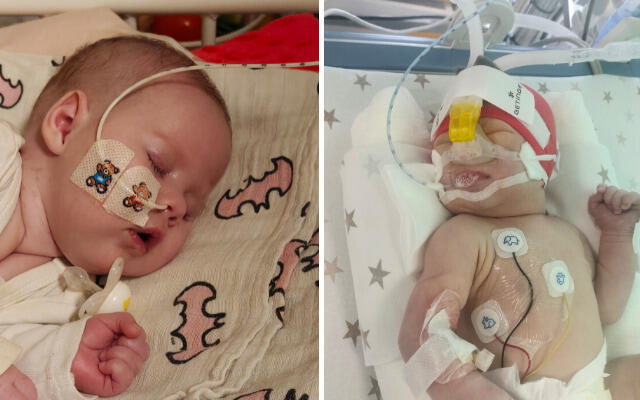
At home, we are trying to balance life as a family of five. We have two other young children who need attention, care, and stability. My wife watches over Blanka constantly, living in a state of alertness no mother should ever have to endure. She is under the care of specialists herself because the emotional weight of the diagnosis has been crushing from the very beginning. I work two shifts to pay our mortgage and try to provide everything Blanka and our family need. As a driver, I must stay calm and focused, but my thoughts never leave home. The first thing I do when I walk through the door is rush to check the monitor, needing to see with my own eyes that our daughter is breathing.