Boris was born three months prematurely, weighing barely as much as a bag of sugar. From his very first breath, he had to fight for his life. The premature birth unleashed a series of complications that would challenge him — and our family — in ways we could never have imagined.
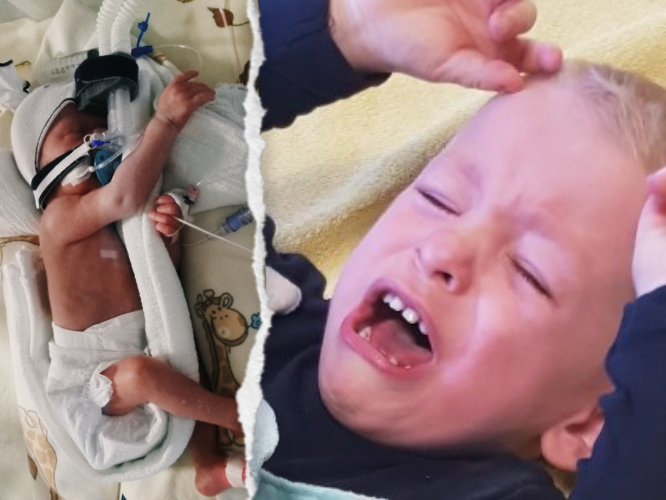
When he was born, there were no joyful tears. Instead, there were tears of fear and despair. I could not hold him, hug him, or kiss him like any mother dreams of doing when welcoming her child into the world. For the first month of his life, he was on a ventilator. Each day I walked into the hospital, my heart raced with anxiety, unsure if I would see him alive again. The first weeks of his life were filled with uncertainty and heartache — a struggle far beyond what any parent can imagine.
After two months, we were finally able to bring him home. I hoped life would begin to feel normal, but our challenges had only just begun. Day by day, Boris grew increasingly irritable, crying for hours without relief. Doctor after doctor could not find answers. He did not begin to sit on his own until he was 1.5 years old, while other children his age were already exploring, playing, and learning to ride bikes. It was then that he received his first of many diagnoses: cerebral palsy.
As Boris grew, new complications appeared. His body bent unnaturally, and seizures began to manifest. Further examination revealed West syndrome, a neurological disorder that disrupts brain development. Today, he also has a condition called paucisystole, affecting the development of his cerebral cortex. Every stage of his growth has been a struggle, a new hurdle to overcome, and a constant source of concern for our family.
By age four, despite multiple diagnoses, his behavior became more complex. He lined up objects compulsively, was highly sensitive to food, and would throw tantrums without warning. A psychiatrist eventually diagnosed him with childhood autism. In August 2023, another diagnosis followed: mild intellectual disability. Each label explained part of his struggles, yet the challenges remained real and demanding.
Feeding is one of the most persistent obstacles. Boris will not chew his food and eats only three items: formula, strawberry-flavored cheese, and a jarred lunch of the same flavor. Therapy addresses many aspects of his development, but feeding remains a daily struggle. Still, I do not give up. I massage his body and face, creating sensory experiences that help him release tension and stimulate his development. I built a sensory room in our home, a safe space where he can explore, regulate his emotions, and strengthen his body.
Thanks to the generosity of donors, we have been able to provide Boris with ongoing rehabilitation, sensory therapy, speech therapy, and educational support. These interventions have been vital, yet his progress is slow. He was meant to start first grade this year, but schooling had to be postponed. He is still dependent on help for basic activities such as dressing and putting on his shoes. His need for intensive therapy remains urgent.
To give him a chance at a brighter future, Boris needs to attend monthly therapeutic retreats in Warsaw. This requires frequent travel or even temporary residence in the capital, to access the specialized care he cannot receive locally. The cost is high, but every session brings him closer to independence, better mobility, and improved quality of life.