Carter entered the world on April 23, 2024, in St. Louis, already carrying a burden no newborn should have to bear. From the moment he was born, it was clear his heart was extraordinarily complex. Doctors diagnosed him with multiple severe congenital heart conditions, including Dextrocardia, Double Outlet Right Ventricle, Congenitally Corrected Transposition of the Great Arteries, and a hypoplastic aortic arch, among others. His heart was anatomically unique, fragile, and destined for a long surgical journey.

At just eight days old, Carter underwent his first open-heart surgery. Against the odds, he recovered well enough to come home two weeks later. Over the following months, he amazed everyone. He grew, gained strength, and met every developmental milestone. To his parents, he wasn’t just a medical diagnosis—he was a thriving baby with a bright future, smiling and learning like any other child.
But as Carter approached his first birthday, subtle signs of trouble returned. His oxygen levels began to drop significantly. Surgery was planned again and again, only to be postponed repeatedly due to illness. One delay was especially hard, sending Carter home on supplemental oxygen for an entire month. When the outlook for surgery at home became less promising, his parents made the difficult decision to seek second opinions far away from everything familiar.
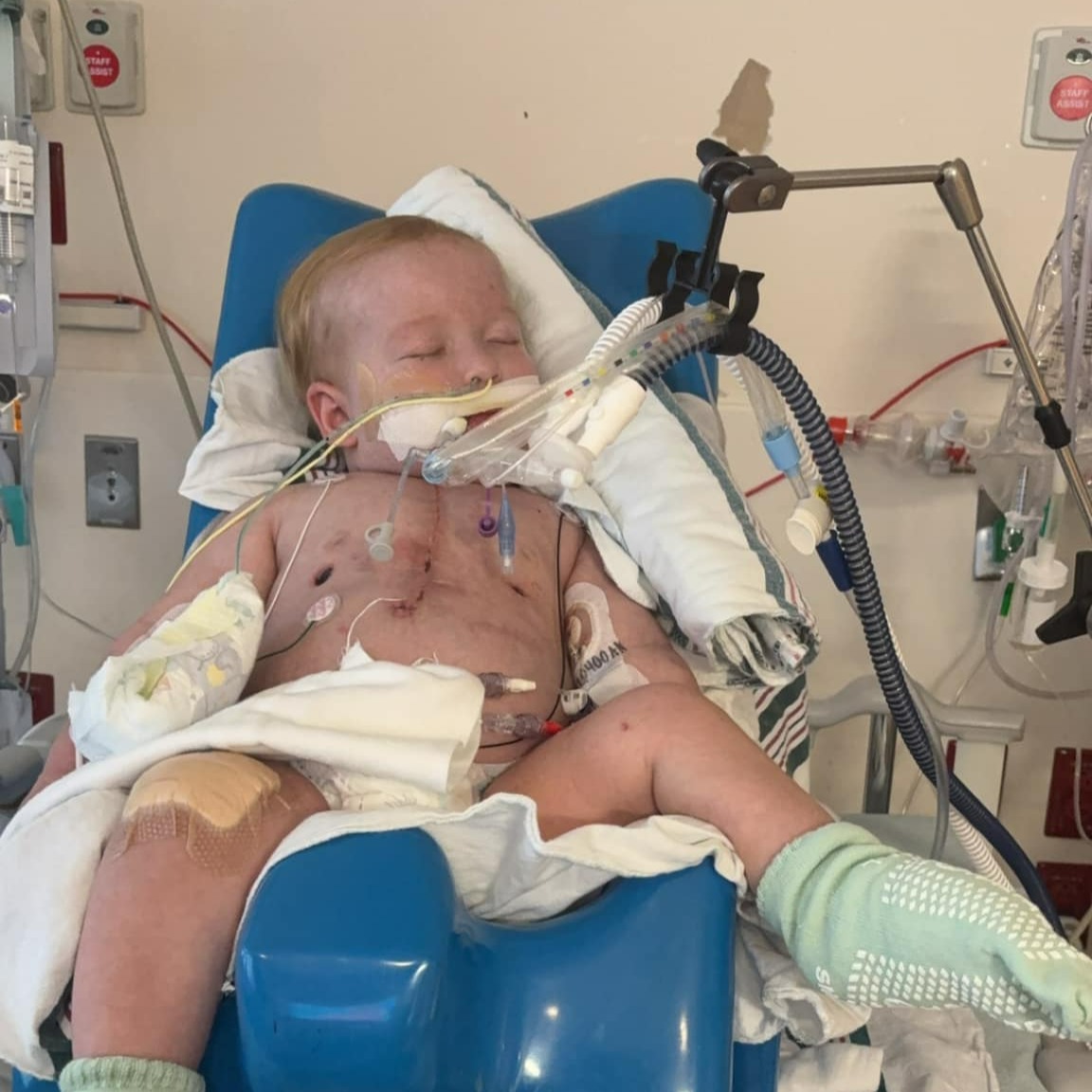
That decision led them seven hours from home to C.S. Mott Children’s Hospital in Ann Arbor.
They were told the stay would likely be ten to fourteen days. Carter’s surgery took place on May 27. What was expected to be a complex but hopeful operation quickly turned into something far more complicated. Surgeons were unable to perform the planned double switch procedure, changing the course of his care entirely. Carter went into complete heart block, and six days later, he was rushed back to the operating room to receive a permanent pacemaker.
That intervention saved his life—but it also changed the geometry of his heart.
The pacemaker caused severe mitral valve regurgitation, a new and dangerous complication. Carter was extubated four days later, but breathing remained a struggle. Three days after that, he suddenly deteriorated and had to be emergently reintubated after a vagal episode. A CT scan suggested possible pneumonia. Five days later, he was extubated again, and for a brief moment, it seemed like things were finally stabilizing.
But his body was still fighting.
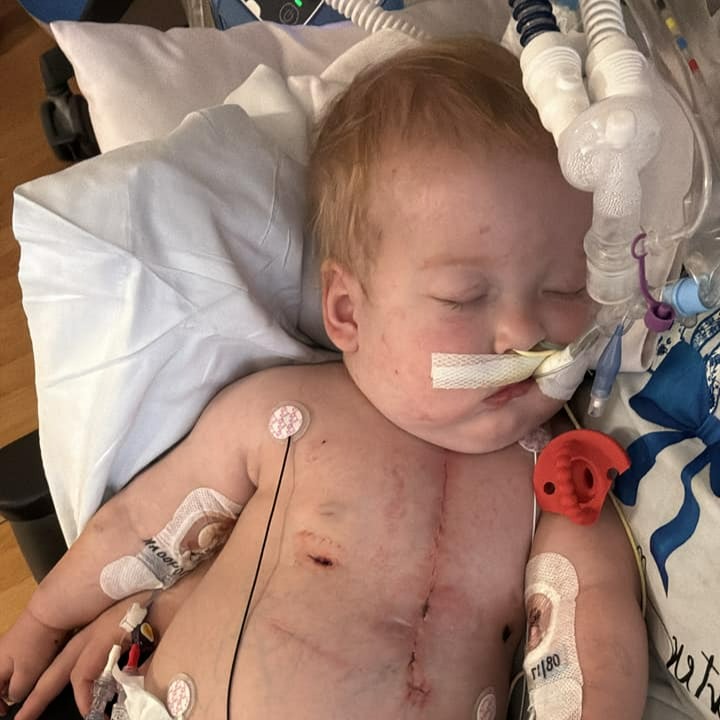
Sedation weans caused vomiting, tremors, agitation, and dangerously high heart rates. His parents raised concerns repeatedly about his blood pressure and heart rate, but no immediate changes were made. Then came the night that changed everything.
On Sunday, July 29, Carter enjoyed a bath and a video call with his three-year-old brother at home—a moment of normalcy in a hospital life. Fifteen minutes later, after routine suctioning, Carter’s eyes rolled back. He went into cardiac arrest. CPR was performed for two relentless hours before doctors placed him on ECMO, a last-resort life support system.
Five days later, Carter came off ECMO. Once again, hope cautiously returned.
Plans were made for mitral valve surgery. That surgery took place on July 9, and surgeons attempted four repairs. When none succeeded, they replaced the valve—then had to replace it again, requiring even more time with his heart clamped. Carter survived, but his left ventricular function was now severely weakened.
Still, he fought.
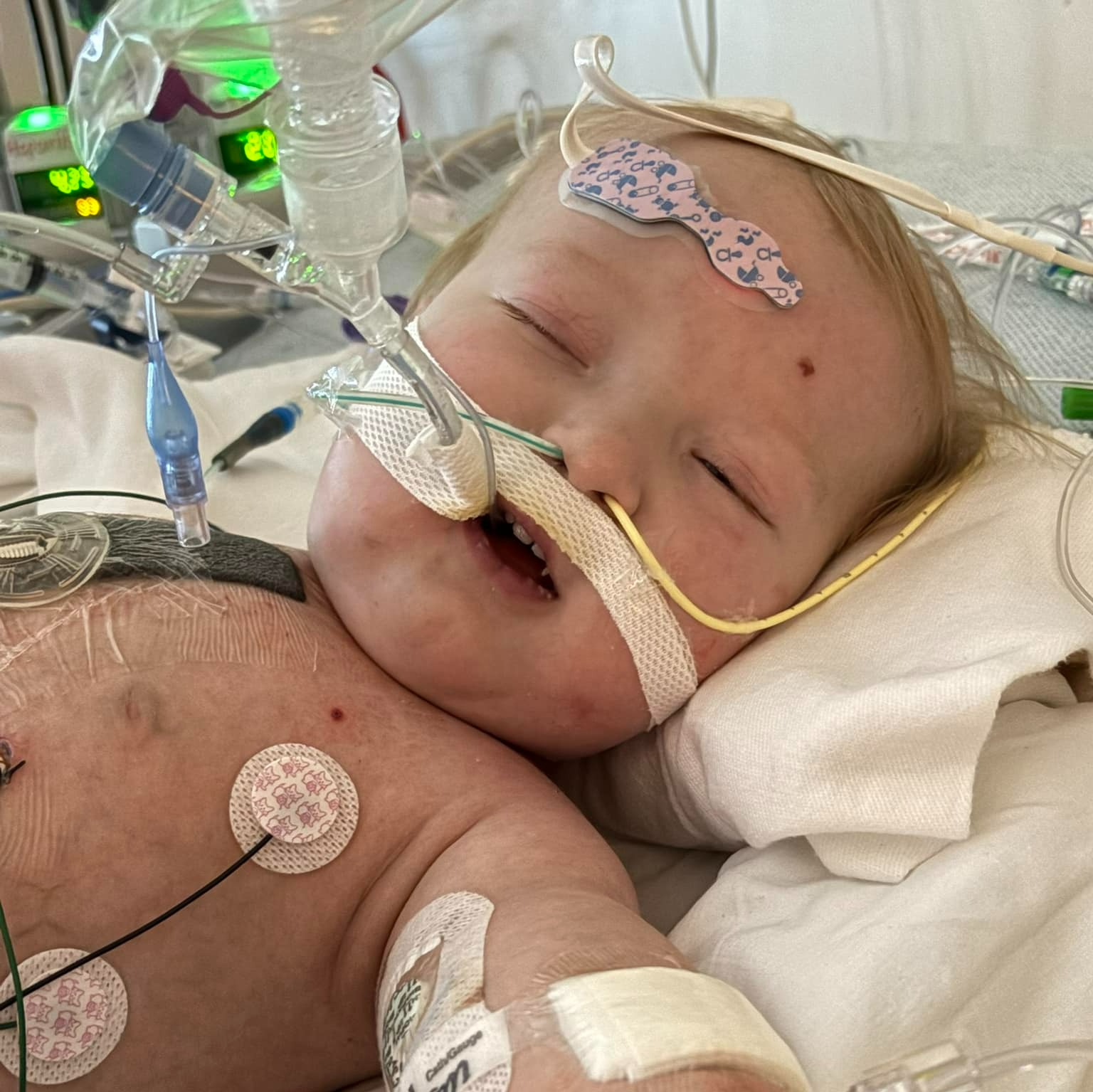
Doctors began to wean the ventilator. Then suddenly, his condition worsened again. Chest retractions appeared. His temperature rose. Blood tests revealed nothing conclusive. One morning, his blood pressure crashed. He was in septic shock and came dangerously close to needing ECMO again. Somehow, he stabilized.
The next day, his mother arrived and immediately noticed something terrifying—Carter’s feet were deep purple. Within hours, doctors confirmed Disseminated Intravascular Coagulation, a catastrophic clotting response to sepsis. A CT scan revealed bleeding in his brain and clots throughout his body—despite being on blood thinners for his heart valve.
An echocardiogram delivered devastating news. A clot had formed in his baffle and mitral valve, causing the valve to malfunction. Surgeons explained the impossible choice: operating now carried a zero percent survival chance due to his clotting disorder. But doing nothing would also mean death. The only option was to optimize medication and hope.
When the echo was repeated days later, the situation had worsened.
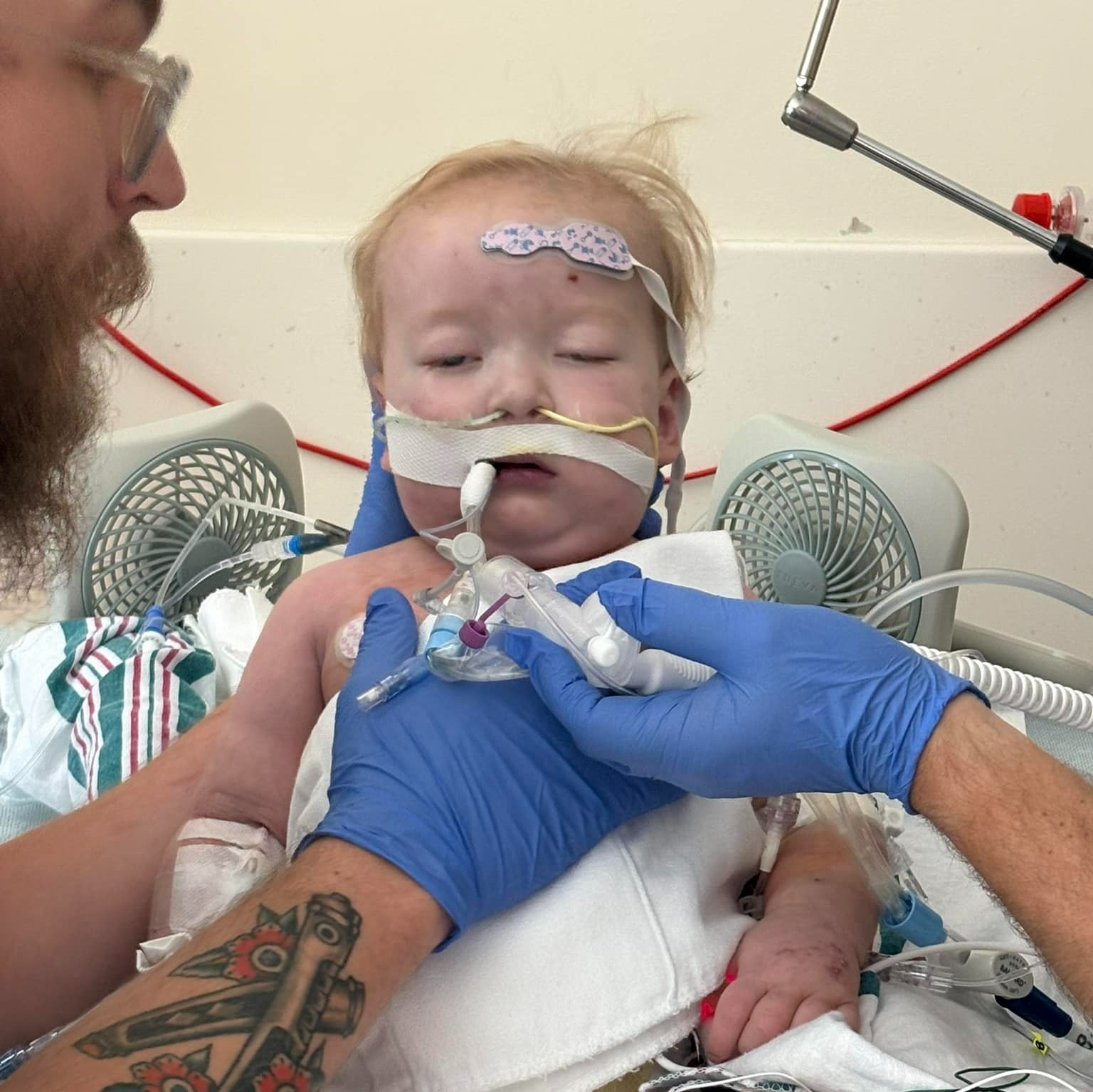
Doctors concluded that surgery—despite the overwhelming risk—was Carter’s only chance. He is scheduled for surgery on Thursday, July 31. His parents have been told he will almost certainly return to ECMO afterward. Compounding everything, a bronchoscopy revealed a structural airway issue, meaning Carter may require a tracheostomy if he cannot be safely extubated.
Carter’s life has been a series of battles fought breath by breath.
He has endured more surgeries, complications, and near-losses than most people face in a lifetime—all before learning to speak. His parents remain by his side, holding onto hope where logic no longer applies, loving fiercely in moments that feel impossibly heavy.
This is not just a story about medicine.
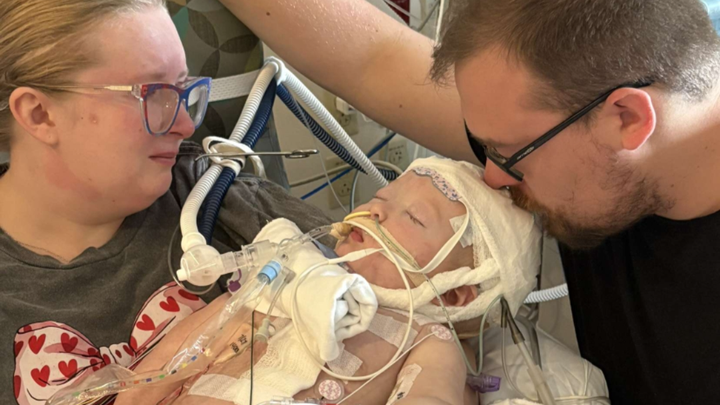
It is a story about resilience. About a tiny heart that refuses to stop. About parents who keep showing up, no matter how many times the ground falls away beneath them. And about a little boy who continues to fight—not because he understands what’s happening, but because he is deeply loved.
Carter’s journey is not over.
And right now, he needs every prayer, every ounce of hope, and every moment of courage his family—and the world—can offer.