Coping with your child’s disability is a pain no parent is ever prepared for. It is not something you get used to. It does not become easier with time. Instead, you learn to carry it quietly, day after day, while doing everything in your power to protect, support, and save the little life entrusted to you.
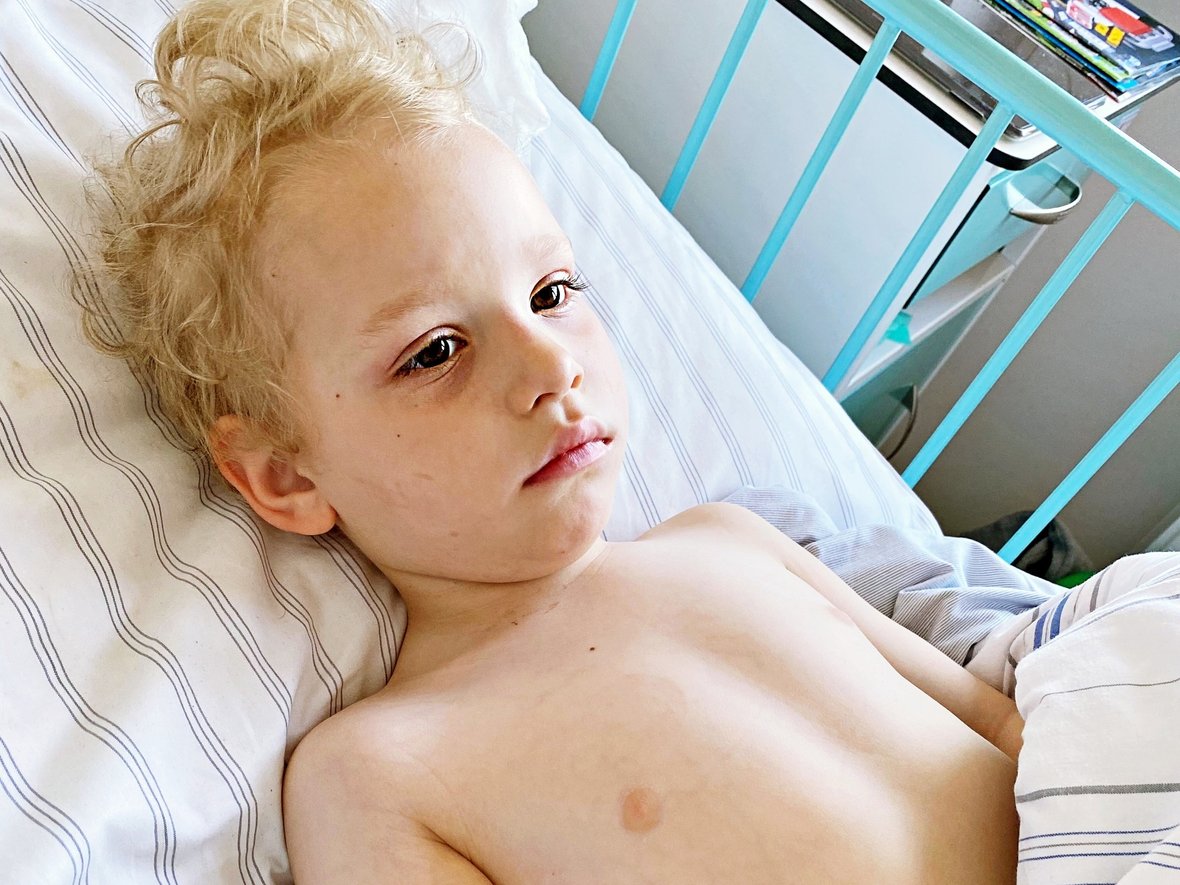
Kacperek will turn five this December. He is still so small, still a child who should be running freely, laughing without pain, discovering the world without obstacles. But from the moment he was born, his life has been shaped by conditions far beyond his control..

Kacper was born with a congenital defect known as Arnold–Chiari Malformation. Because his skull is too small, the back part of his brain is forced downward into the spinal canal, where the spinal cord is located. This causes constant pressure and damage, leading to a wide range of neurological symptoms that affect his everyday life.
Pain is part of his reality.
So is muscle stiffness.
So are movement disorders that make even simple actions exhausting.
And this diagnosis was only the beginning.
As if one serious condition were not enough, last year Kacper received another diagnosis after an evaluation at a psychological and educational counseling center. He is on the autism spectrum. Suddenly, so many behaviors we struggled to understand had names. Sensory overload. Communication difficulties. Emotional dysregulation. Challenges that make the world overwhelming and unpredictable for him.
Since toddlerhood, Kacper has also lived under the strict rules of a special diet due to celiac disease. Even the smallest trace of gluten causes severe reactions—diarrhea, dehydration, rapid deterioration of his condition. We have already been hospitalized five times because of accidental exposure. Five times of fear, IV drips, and watching our child weaken because his body cannot tolerate what others consume without a second thought.
Our lives are ruled by calendars and schedules. Doctor appointments. Physical therapy. Neurological consultations. Dietary supervision. Psychological support. Speech therapy. There is hardly a free day left. Each week is a careful balance between medical visits and moments of recovery.
We are constantly planning what comes next.
Which treatment must not be delayed.
Which therapy is essential now.
Which surgery or intervention we must prepare for.
Everything we do today is about Kacper’s future. About whether he will be able to function independently one day. Whether he will be able to communicate his needs without fear, frustration, or behaviors that frighten others who do not understand him.
Rehabilitation is not optional. It is survival.
Speech therapy is not a luxury. It is his voice.
Psychological sessions are not extra support. They are his chance to navigate a world that often overwhelms him.
What nature has taken from Kacper, he must make up for with the help of specialists. With hours of therapy. With patience measured not in days or weeks, but in years. With repetition that seems endless but is necessary for even the smallest progress.
He is a child for whom the world is far more complicated than it is for his peers. Simple things—changes in routine, unfamiliar sounds, physical discomfort—can feel like chaos to him. And yet, he tries. Every day, he tries.
There is no time left to ask “Why?”
No energy to dwell on what could have been.
As a mother, the only thing I can do is love my child with all my strength and search for support wherever it exists.
Some days, that love is gentle.
Some days, it is fierce.
Some days, it is the only thing holding us together.