That all changed on Halloween. Samuel began struggling to keep his balance. At first, his family thought it was nothing serious—a stumble here or there.
But the problem didn’t go away. His grandmother, Lupe Gaudalcazar, soon realized it was far more serious than she had imagined.
“I remember telling him not to run around the house,” she said. “I wish I could have stopped him from running. When we got home, he just sat on the couch and started crying.”
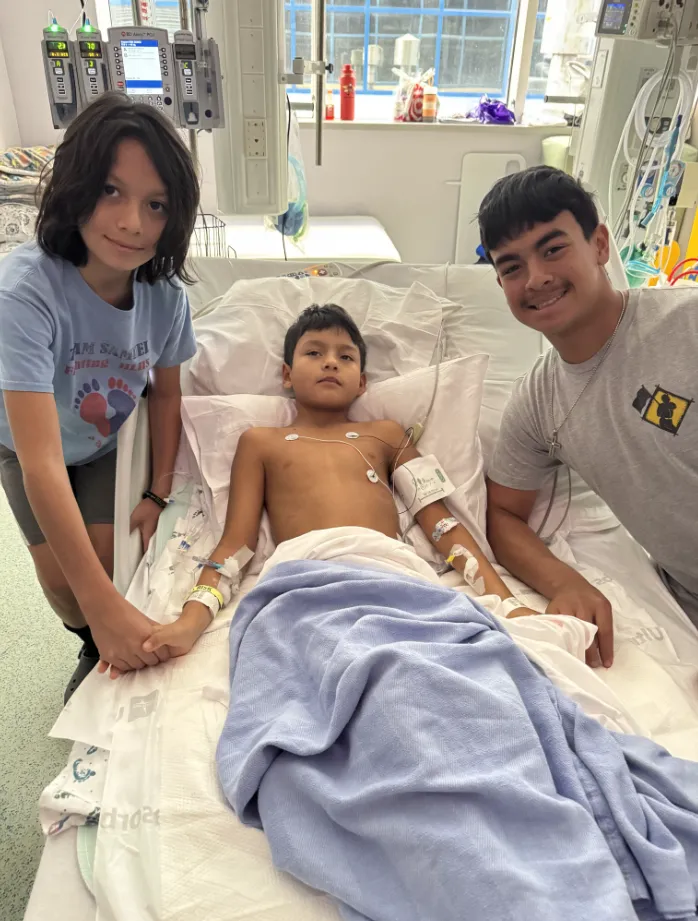
Samuel whispered words that no child should ever have to say: “I can’t walk. I keep falling. I don’t even want to go outside.”
The family grew increasingly worried. Samuel had a history of heart complications as a baby, and now his coordination was deteriorating rapidly.
They rushed him to Cook Children’s Medical Center in Fort Worth. Tests began immediately, but Samuel’s condition continued to decline.
Within days, the boy they had known was slipping away before their eyes. He began losing motor function in front of them.
“The first two days, he recognized us,” Gaudalcazar said. “Then suddenly he didn’t recognize his mom anymore. They asked him, ‘Who is this?’ He looked at them like he didn’t know.”
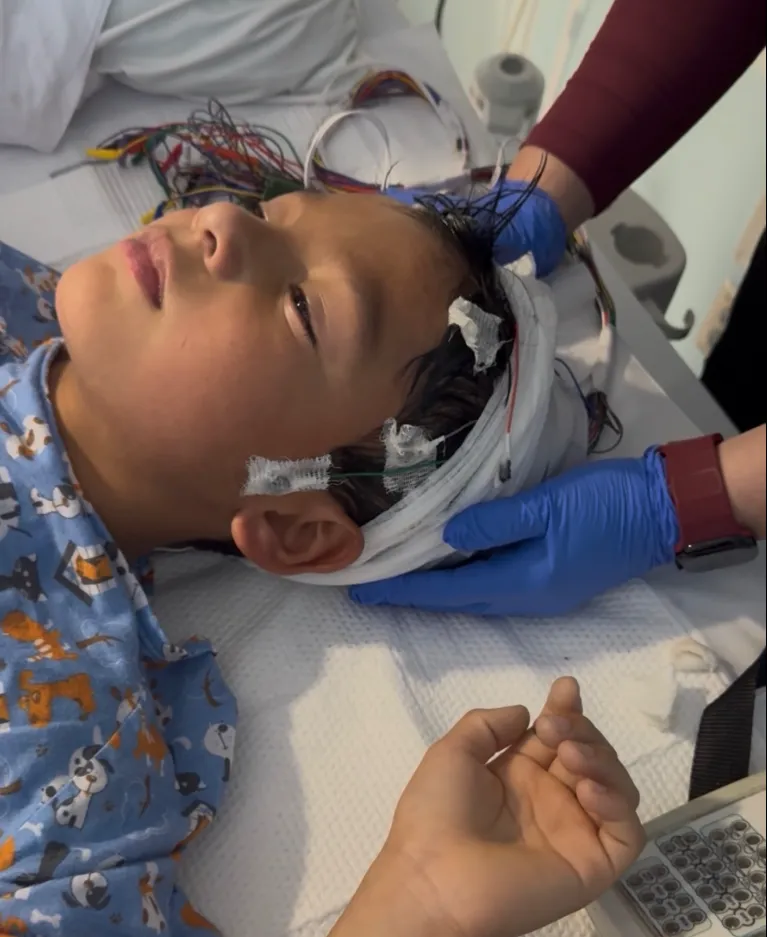
Samuel, a nine-year-old boy, had become like a newborn trapped in an older body. His family had to teach him everything—how to eat, how to walk, even how to hold a spoon.
After a spinal tap and extensive testing, doctors finally had answers. Samuel had anti-NMDA receptor encephalitis, a rare brain disease first identified in 2007.
In this condition, the body attacks the brain using antibodies. These antibodies can destroy healthy brain tissue, causing severe neurological symptoms.
“It felt like his brain was on fire,” Gaudalcazar said. “The antibodies, triggered by an infection we couldn’t even identify, were attacking his brain and destroying it.”
The diagnosis was overwhelming. Samuel’s life, and the lives of his family, were suddenly thrown into uncertainty.
Doctors warned that recovery could take up to a year and a half. Every skill Samuel had learned—walking, talking, eating—might need to be relearned from scratch.
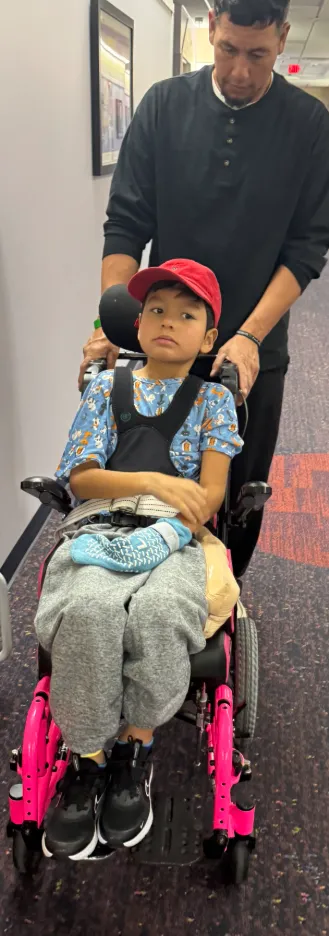
“We could teach him everything again, like teaching a baby,” his grandmother said. “We will teach him the alphabet, how to hold a fork and spoon, every motor skill. We’ll teach him everything.”
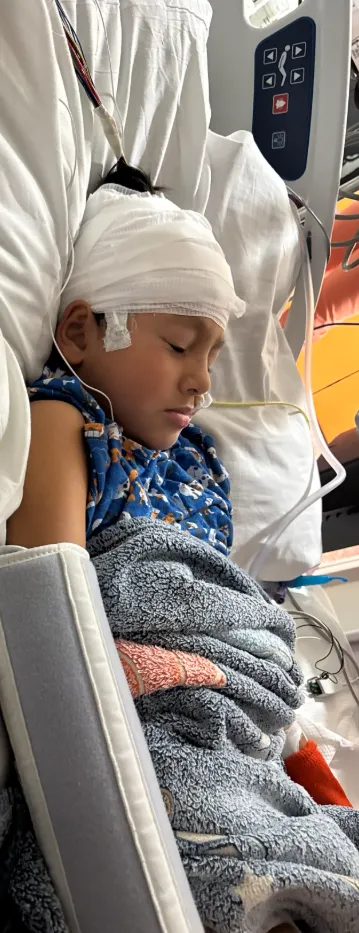
Even in the midst of despair, hope glimmered. Gaudalcazar whispered to Samuel while he lay in the hospital bed: “You’re still in there. You’ll come home. We’ll take you outside. We’ll get you through this.”
Treatment began immediately. Samuel is now receiving immunotherapy at Cook Children’s, aiming to suppress the antibodies attacking his brain and give him a chance at recovery.
It is a long, difficult road. Physical therapy will be grueling. Emotional challenges will test Samuel and his family every day.
But Samuel has already shown resilience beyond his years. His fight is not just medical—it is a battle for his identity, his independence, and his childhood.
The family has leaned on the community for support. Friends, neighbors, and local groups have organized fundraisers to help cover medical expenses and show solidarity.
Through it all, Gaudalcazar has become an advocate for awareness. Anti-NMDA receptor encephalitis is rare but can affect anyone, and early diagnosis is critical for recovery.
“People need to know about this disease,” she said. “It can happen to anyone. We hope Samuel’s story will help other families recognize the signs early.”
The journey is far from over, but Samuel’s family refuses to give up. Every small victory—lifting a hand, recognizing a face, taking a step—is a triumph.
Even in the hospital, Samuel’s presence inspires hope. Nurses, therapists, and family members are constantly amazed by his determination to fight.
This story is not only about a rare disease. It is about the courage of a nine-year-old facing the unimaginable, the unwavering love of a family, and the power of a community coming together in a time of crisis.
Samuel’s struggle reminds us how fragile life can be, and yet how resilient the human spirit is when faced with adversity.
He is learning to walk, talk, and eat again. Each day is a testament to the strength of children, the dedication of families, and the tireless work of medical professionals.
The family hopes that sharing Samuel’s story will increase awareness and inspire action. The fight against rare diseases is a collective effort, requiring compassion, research, and attention.
Samuel’s life is a beacon for other families enduring similar challenges. His story is a reminder that even in the darkest moments, hope is never lost.
Through tears, sleepless nights, and endless therapy, Samuel is reclaiming his childhood, step by step, smile by smile.
While the path to full recovery is long, every small milestone matters. Every recognition, every step, every word is a victory over a disease that could have taken everything from him.
Samuel Sotelo’s story teaches us that courage is not defined by age, that hope can shine in the bleakest places, and that love—family, friends, and community—can carry us through the impossible.
As the weeks and months unfold, Samuel’s journey will continue to inspire. His fight is far from over, but his story is already one of resilience, determination, and unwavering spirit.
Through advocacy, community support, and relentless love, Samuel’s family aims to give him every chance to reclaim his life. His journey serves as a powerful example of human courage in the face of a rare and devastating disease.
This is not just Samuel’s battle—it is a story for every child and family facing the unimaginable. It is a story of hope, strength, and the power of never giving up.