We learned we were expecting twins in June 2023, and for a brief and beautiful stretch of time life felt soft, bright, and full of promise. There is a kind of joy that comes with hearing two heartbeats for the first time, a feeling that the world has quietly doubled in meaning.

We carried that joy with us through each early appointment, each gentle flutter, each ordinary day made extraordinary by the thought of welcoming not just one child but two. Everything seemed smooth, almost effortless, and we allowed ourselves to imagine the future they would have. But at the beginning of the fifth month, our world began to shift, slowly at first and then in a way that felt like the ground crumbling beneath our feet.
My wife started bleeding, and what we hoped was temporary quickly became a terrifying pattern. Within two weeks we rushed to the A&E at NUH multiple times, each visit blurring into the next, each scan tightening the knot of fear growing inside us.
On the seventh of October the doctors told us something we were not prepared to hear: they detected leakage of amniotic fluid on top of the bleeding. That moment marked the beginning of a one-month hospitalization journey for my wife, a month defined by quiet dread and the fragile discipline of hope. The medical team did everything they could to monitor the pregnancy and prolong it, knowing every additional day inside the womb could make a life-changing difference. My wife was placed on strict bed rest to minimize the fluid leakage, lying still for hours that turned into days, days that turned into weeks. We clung to the idea that if she could hold on just a little longer, the twins would have a better chance, that the sacrifices she made within those hospital walls would somehow be enough. Yet no matter how tightly we held on to optimism, the weekly ultrasound scans told a different story. The amniotic fluid continued to decrease, and each appointment brought news that felt like being struck in the same wound over and over again.
The neonatal doctor came to meet us once the severity of our case could no longer be softened by hopeful phrasing. They explained that one of the twins had almost no amniotic fluid left, a condition that restricted his growth and placed his lungs at serious risk. They told us that the chance of extremely premature delivery was now high, given the continuous bleeding and the worsening fluid loss. They also explained the complications our babies might face and spoke honestly about the financial burden, a burden so heavy it nearly took the air from my lungs. If the twins were born at an extremely preterm stage, the estimated medical expenses could exceed a million dollars, with at least six months of intensive care required to give them a fighting chance. Hearing those numbers while imagining our children struggling to breathe in an incubator was like standing at the edge of a cliff with nowhere to turn. We wanted to give them everything, yet we felt the enormity of what lay ahead pressing down on us.
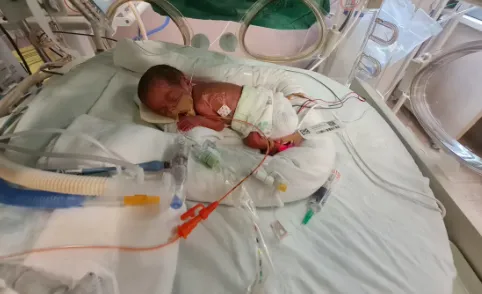
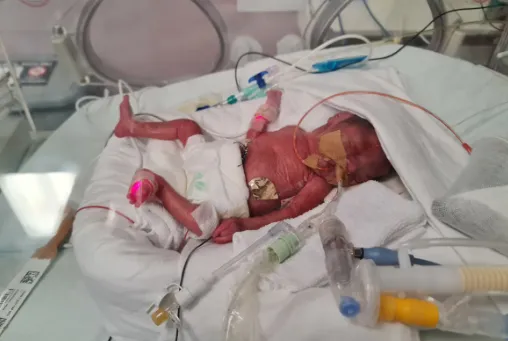
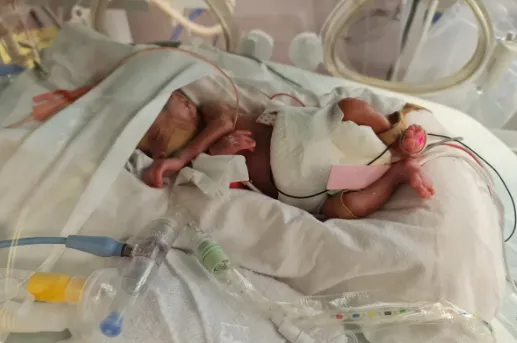
On the night of November tenth, our twins arrived into the world at just twenty-five weeks. The delivery room felt still for a moment, and then everything moved all at once. They were whisked away to the Neonatal Intensive Care Unit, surrounded by a team of professionals who worked with precision and urgency. Seeing them for the first time was a moment that carved itself into my memory. They were impossibly small, their bodies fragile, their breaths supported by machines. No parent imagines meeting their newborns like this, under sterile lights, through the walls of an incubator instead of the warmth of an embrace. But these were the circumstances of our first moments as parents of two, moments filled with fear yet also an overwhelming, instinctive love that made everything else fade away.
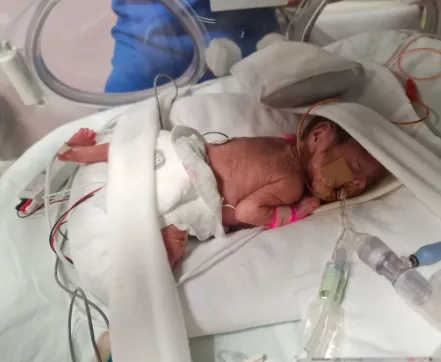
Since that night they have remained in the NICU, fighting with a kind of quiet bravery that has humbled and astonished us every single day. The medical team at NUH has cared for them with a dedication that we are deeply grateful for, and we believe wholeheartedly that our twins are in the best hands possible. But the road ahead is long. Their bodies are still learning what most babies already know how to do: breathe, swallow, fight infection, grow. Each day is a step forward or a step back, and we live within that delicate balance, counting their progress not in milestones but in grams gained, breaths stabilized, heartbeats steadied. We sit beside their incubators, watching the machines that pulse with their rhythms, whispering encouragements through the hum of technology that keeps them alive.
In just three weeks the hospital bills reached one hundred and thirty thousand dollars, and the numbers continue to climb. As we focus our hearts and minds on sustaining our children’s medical journey, the financial burden grows silently in the background, becoming a shadow that follows us into every decision and every attempt to look toward the future. We never imagined being in a situation where survival depended not only on medical care but on our ability to withstand the cost of keeping them alive. Yet here we are, fighting not one battle but two, and both feel impossible to carry alone.
We find ourselves turning outward, reaching for the compassion of those willing to listen. Any help, no matter the size, becomes part of the strength that holds our family together. It eases the weight pressing down on us, gives us room to breathe, and allows us to put our energy where it is most needed—on our babies, who are still learning how to exist in a world they were forced to greet far too soon. Your kindness would not just support medical bills; it would give us hope, reinforce our courage, and remind us that we are not navigating this storm alone. Every act of generosity becomes a quiet reminder that even in the darkest seasons, humanity still has the power to lift, to steady, and to carry.
Our twins continue to fight bravely, and every day we whisper the same wish: that they will grow strong enough to come home, to be held without tubes or wires, to wake to the soft morning light in the room waiting for them. Until then, we will remain by their sides, loving them through every setback and every fragile triumph, holding on to the belief that one day this chapter will be something we survived together.
Thank you for listening, for caring, and for sharing even a small part of this journey with us. Your compassion brings light into a time of shadows, and we carry that light with us as we face each new day.